
Raccoons can cause significant damage to your property, but with the right tactics, you can effectively deter them. This guide outlines 11 foolproof strategies to stop raccoons from invading your yard and home, ensuring a safe and peaceful environment.
Table of Contents
Understand Raccoon Behavior and Attractants
To effectively stop raccoons, you need to understand their habits and why they’re drawn to your yard. Knowing what attracts them is half the battle. Let’s dive into their food preferences and shelter-seeking behavior!
Raccoon Food Preferences
Raccoons are opportunistic eaters. They will munch on just about anything. Here are some common food sources that attract them:
- Trash: Unsecured garbage cans are like buffets for raccoons.
- Pet Food: Leaving pet food outside overnight is a huge draw.
- Gardens: Fresh fruits and veggies are a tasty treat.
- Bird Feeders: Seeds attract birds, but also these clever critters.
Did you know raccoons can smell food from over a mile away? If they catch a whiff of something tasty, they’re on their way.
Nocturnal Habits and Shelter Seeking
Raccoons are night owls. They are most active from sunset to around 4 a.m. This is when you might hear them rummaging through your trash or climbing on your roof. They seek warm, safe spots to hide during the day.
Common places they nest include:
- Attics
- Garages
- Crawlspaces
If you live in a colder climate, they might even look for cozy spots in your home to wait out the winter.
Why Knowing Their Behavior Matters
Understanding raccoon behavior is crucial for effective deterrence.
- Anticipate Their Moves: If you know they’re most active at night, secure your trash and food sources before sunset.
- Remove Attractants: By eliminating food sources, you make your property less appealing.
- Choose Effective Deterrents: Options like a Raccoon Repellent Spray can help keep them away without harm.
By being proactive and aware of their habits, you can significantly reduce the chances of raccoons invading your space.
Secure Your Trash and Food Sources

Keeping raccoons away starts with securing your trash and food sources. These clever critters are always on the lookout for easy meals. Let’s dive into practical ways to keep them at bay.
Using Wildlife-Proof Containers
Investing in wildlife-proof trash bins is a game changer. Look for containers with secure, lockable lids. Here are some top picks:
- Rubbermaid Brute: Durable and tough, perfect for outdoor use.
- Toter Wheeled Trash Can: Easy to move and highly secure.
- Suncast Outdoor Trash Can: Blends in with your yard while keeping raccoons out.
These bins not only keep raccoons away but also help with odor control. Make sure to store them in a garage or shed when not in use.
Timing Your Trash Disposal
Timing is everything. Raccoons are nocturnal, meaning they’re most active at night. Here’s a quick checklist for your trash disposal routine:
- Put trash out the morning of collection: Don’t leave it out overnight.
- Use a sealed container for compost: If you compost, ensure it’s raccoon-proof too.
- Avoid putting food scraps in outdoor bins: This is a major attractant.
By following these steps, you significantly reduce the chances of attracting unwanted guests.
Keeping Pet Food Indoors
Don’t forget about pet food! Leaving it outside is like rolling out the welcome mat for raccoons. Here’s how to manage it:
- Feed pets indoors: Keep food bowls inside, especially at night.
- Store pet food in sealed containers: Use airtight bins to prevent smells.
- Clean up spills immediately: Any leftover food can attract raccoons.
By securing these food sources, you make your home less appealing to raccoons. Every little bit helps!
Using these tactics can significantly reduce raccoon visits. Remember, prevention is key! For added protection, consider using a Raccoon Repellent Spray to keep them away without harm. Check Price on Amazon.
Create Physical Barriers to Deter Raccoons

Building physical barriers is a smart way to keep raccoons at bay. Fencing and other deterrents can create an effective shield around your property. Here are some options to consider.
Building Raccoon-Proof Fencing
When it comes to fencing, not all options are created equal. Here are some types to consider:
| Fencing Type | Pros | Cons |
|---|---|---|
| Chain Link Fencing | Durable and affordable | Can be climbed by determined raccoons |
| Wooden Privacy Fencing | Aesthetic appeal and sturdy | Requires maintenance and can rot |
| Electric Fencing | Highly effective deterrent | Safety concerns; can be costly to install |
| Underground Barrier | Prevents digging | Labor-intensive to install |
Tip: If you’re building a fence, make sure it’s at least 4-5 feet high and extends underground about a foot to prevent digging.
Installing Motion-Activated Deterrents
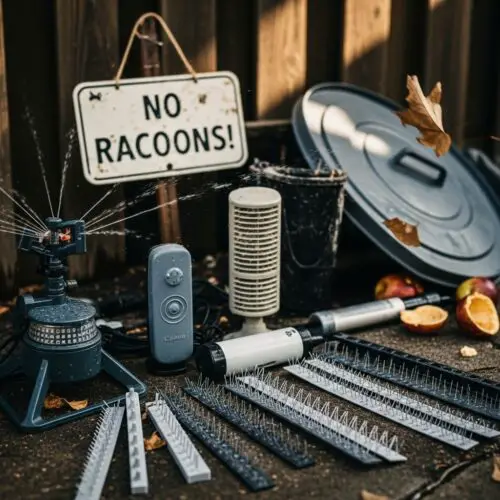
Motion-activated lights and sprinklers can startle raccoons. These devices detect movement and react quickly, making your yard less inviting.
- Motion-activated lights: Bright lights can scare raccoons away at night.
- Motion-activated sprinklers: Sudden bursts of water can deter raccoons without harming them.
Using Garden Netting for Protection
Garden netting is a simple and effective way to protect your plants. It creates a physical barrier that keeps raccoons from digging through your flower beds or vegetable patches.
- Easy to install: Just drape it over your plants and secure it to the ground.
- Invisible barrier: Raccoons can’t see it, which adds an element of surprise.
Combining these strategies can enhance your raccoon-proofing efforts. Creating a multi-layered defense makes it harder for these clever critters to find a way in.
Utilize Natural Repellents

Natural repellents can be a great way to keep raccoons away without harming them. These options often use scents and substances raccoons dislike. Let’s dive into some effective natural deterrents and how to use them.
Common Natural Repellents
Here are some popular natural repellents that can help keep raccoons at bay:
- Cayenne Pepper: Raccoons hate the spicy smell. Sprinkle it around entry points or known raccoon paths.
- Ammonia: The strong scent can deter raccoons. Soak rags in ammonia and place them near areas you want to protect.
- Predator Urine: This repellent mimics the scent of natural predators. You can find it at garden supply stores.
- Essential Oils (like peppermint or eucalyptus): These oils can be effective when mixed with water and sprayed around your yard.
- Vinegar: The pungent smell can work wonders. Spray a vinegar-water mix in areas raccoons frequent.
Application Techniques for Best Results
Using these natural repellents effectively can make a big difference. Here’s how:
- Strategic Placement: Focus on entry points, garbage cans, and garden beds. Raccoons are creatures of habit. If they detect an unpleasant scent, they may choose a different route.
- Reapply Regularly: Rain and weather can wash away scents quickly. Reapply your repellents every few days for sustained effectiveness.
- Combine Methods: Use several repellents together. For example, cayenne pepper and ammonia can create an even more unwelcoming environment.
Potential Risks of Using Off-The-Shelf Products
While many store-bought repellents can be effective, they may come with risks. Some can harm plants or pets. Always read labels carefully. If possible, opt for natural alternatives to minimize any negative impact on your yard and local wildlife.
Example Scenario
Imagine you have a raccoon problem near your vegetable garden. Start by sprinkling cayenne pepper around the edges. Next, place ammonia-soaked rags near your compost bin. Monitor the area for signs of raccoon activity, like overturned soil or knocked-over pots. If you notice raccoons still visiting, try adding predator urine to the mix. This layered approach can help create a raccoon-free zone.
By utilizing these natural repellents and techniques, you can effectively deter raccoons while keeping your yard safe and friendly for the environment.
Monitor and Seal Entry Points
Raccoons are clever little critters. They can squeeze through surprisingly small gaps. It’s essential to monitor and seal any potential entry points in your home to keep them out.
Common Entry Points in Homes
Raccoons often look for easy access. Here are common spots to check:
- Attics: Look for loose vents or openings.
- Basements: Check for gaps around windows or vents.
- Garages: Inspect doors and any cracks in the walls.
- Roofs: Look for damaged shingles or openings around chimneys.
Best Practices for Sealing Cracks and Holes
Sealing entry points is your best defense. Here’s how to do it effectively:
1. Use Durable Materials: Opt for metal mesh or heavy-duty caulk.
2. Cover Vents: Install raccoon-proof vent covers to prevent access.
3. Secure Openings: Use a one-way door if you suspect a raccoon is inside, allowing it to exit but not re-enter.
Regular Maintenance Checks
Don’t just seal it and forget it. Regular checks can help you stay ahead of raccoon problems. Here’s a quick checklist:
- Inspect Monthly: Look for new gaps or signs of wear.
- Check After Storms: Severe weather can cause damage that raccoons might exploit.
- Maintain Yard: Keep trees trimmed and away from your roof to prevent raccoons from jumping onto your home.
By staying vigilant and proactive, you can significantly reduce the chances of raccoons making your home their own.
Recognize Signs of Raccoon Infestation
Identifying a raccoon problem early can save you a lot of trouble. Here are some common signs that might indicate raccoons are hanging around your property.
Tracks and Droppings
Raccoons leave evidence of their presence. Look for:
- Tracks: Raccoon footprints have five toes on each foot. Their front paws are smaller than their back paws.
- Droppings: Raccoon droppings are usually cylindrical and can be up to 2 inches long. They often contain seeds and fur.
Example: If you spot tracks or droppings near your trash cans or garden, it’s a strong signal that raccoons are nearby.
Nocturnal Noises and Disturbances
Raccoons are active at night. If you hear strange noises, they could be raccoons. Pay attention to:
- Chirping or Chattering: These sounds often come from a group of raccoons.
- Scratching Noises: This could mean they’re trying to get into your attic or shed.
Action Step: If you hear these sounds, check your property immediately to find potential entry points.
Physical Damage to Property
Keep an eye out for any unusual damage. Raccoons are notorious for:
- Ripped Open Garbage Bags: If your trash looks like it had a party, raccoons likely had a feast.
- Damaged Roofs or Siding: They can tear into soft spots to gain entry.
Checklist for Damage Assessment:
- Inspect your garbage areas for signs of disturbance.
- Look closely at your roof and siding for any new holes or scratches.
By staying alert to these signs, you can act quickly and implement effective strategies to keep raccoons at bay.
Understand Legal Considerations for Trapping Raccoons
Knowing the legal implications of trapping raccoons is crucial. It can save you time, money, and potential legal trouble. Different states have different rules, so it’s essential to be informed.
State Regulations on Raccoon Trapping
Raccoon trapping laws vary widely across the United States. Some states allow trapping with minimal restrictions, while others have strict regulations or even ban it altogether. Here are some key points to consider:
- Licensing Requirements: Many states require a license to trap raccoons legally. Check if you need to apply for one.
- Protected Species: In some areas, raccoons are considered a protected species. Trapping them may be illegal without specific permits.
- Seasonal Restrictions: Certain states have designated seasons for trapping raccoons. Trapping outside these periods may lead to fines.
- Relocation Laws: Even if you trap a raccoon, relocating it might not be permitted. Many states require you to release it on your property.
Humane vs. Non-Humane Trapping
While you may feel tempted to use any method necessary to get rid of raccoons, legality and ethics matter. Here’s a breakdown:
- Humane Trapping: This method involves using live traps to catch raccoons without harming them. Always check local regulations to ensure humane methods are allowed.
- Non-Humane Trapping: Using lethal traps or poisons can lead to legal issues. Many jurisdictions prohibit these methods due to animal cruelty laws.
When to Contact Wildlife Professionals
If you’re unsure about the laws or how to proceed, it might be time to call in the experts. Here’s when to consider professional help:
- Legal Confusion: If the regulations are unclear, professionals are well-versed in local laws.
- Persistent Problems: If raccoons keep returning despite your efforts, wildlife control experts can provide effective, lawful solutions.
- Safety Concerns: Dealing with wildlife can pose risks. Professionals have the tools and experience to handle raccoons safely.
Understanding the legal landscape can make your efforts to stop raccoons more effective and hassle-free. Always prioritize humane methods and consult local regulations to ensure you’re on the right side of the law.
Compare Different Raccoon Deterrent Methods
When it comes to keeping raccoons at bay, not all methods are created equal. Here, we’ll dive into the pros and cons of various deterrent techniques. This way, you can find the best fit for your situation.
Scent-Based vs. Motion-Activated Deterrents
Both scent-based and motion-activated deterrents aim to scare raccoons away, but they do so in different ways.
| Method | Pros | Cons |
|---|---|---|
| Scent-Based | – Easy to apply. | – Needs regular reapplication. |
| – Uses natural ingredients. | – May not work in heavy rain. | |
| Motion-Activated | – Effective at startling raccoons. | – Can be costly to install. |
| – Works day and night. | – Requires power source. |
Physical Barriers vs. Natural Repellents
Creating barriers or using natural repellents can deter raccoons effectively. Here’s how they stack up.
| Method | Pros | Cons |
|---|---|---|
| Physical Barriers | – Provides strong protection. | – Can be expensive to install. |
| – Long-lasting solution. | – May require maintenance over time. | |
| Natural Repellents | – Eco-friendly options available. | – Often less effective over time. |
| – Safe for pets and children. | – May need frequent application. |
Efficacy of Trapping vs. Prevention Strategies
Trapping can be a last resort, but prevention is often the best approach. Let’s compare these two methods.
| Method | Pros | Cons |
|---|---|---|
| Trapping | – Can remove raccoons quickly. | – Requires knowledge of local laws. |
| – Immediate results. | – Risk of injury to animals if not done right. | |
| Prevention Strategies | – Safer and humane. | – Takes time to see results. |
| – Reduces the chances of future infestations. | – Requires ongoing effort and vigilance. |
Practical Decision Framework
To help you decide which method to choose, ask yourself these questions:
- What is my budget?
- How severe is the raccoon problem?
- Am I willing to commit time to maintenance?
- Do I prefer humane methods?
For example, if you notice raccoon tracks in your yard regularly, opting for a physical barrier combined with a motion-activated deterrent may provide the most effective, long-term solution. On the other hand, if you’re dealing with occasional visits, a natural repellent could do the trick without breaking the bank.
By evaluating these methods, you can find the right strategy to protect your space from raccoons effectively.
Implement Year-Round Raccoon Control Strategies
Raccoon management is an ongoing effort. To keep these clever critters at bay, you need consistent strategies throughout the year. Here’s how to stay ahead of the game.
Seasonal Changes and Their Impact
Raccoon behavior shifts with the seasons. Knowing these changes helps you adjust your strategies.
- Spring: Raccoons seek food for their young. Secure trash and compost bins tightly.
- Summer: They’re more active at night. Consider motion-activated lights to deter them.
- Fall: They gather food for winter. Remove fallen fruit and nuts from your yard.
- Winter: They look for warmth. Seal entry points to your home and sheds.
Year-Round Maintenance Tips
Keeping raccoons away requires routine maintenance. Here’s a checklist to follow:
- Secure Garbage: Use raccoon-proof bins with tight lids.
- Close Off Entry Points: Regularly check your home for gaps and holes.
- Remove Attractants: Clean up pet food, bird seed, and outdoor treats.
- Install Motion Deterrents: Use lights or sprinklers that activate with movement.
- Regular Yard Clean-Up: Keep your yard tidy to minimize hiding spots.
Adjusting Strategies Based on Local Conditions
Your local environment plays a big role. Tailor your tactics based on where you live.
- Urban Areas: Raccoons may be more accustomed to human food. Increase security on your trash and reduce outdoor food sources.
- Rural Areas: Wildlife may be more abundant. Consider using natural repellents like strong-smelling plants or commercial products designed to deter raccoons.
Example Scenario
Imagine you live in a suburban area. You notice raccoon tracks in your garden. Here’s a quick decision framework:
1. Evaluate Attractants: Check for pet food or open trash.
2. Increase Deterrents: Add motion-activated lights.
3. Seal Entry Points: Inspect fences and sheds for gaps.
Following these steps can help prevent raccoons from making your backyard their new hangout.
Engage Professional Help When Necessary
Sometimes, raccoons can be tricky. If you find yourself overwhelmed, it might be time to call in the pros. Here are some signs that professional wildlife control services are needed.
Signs You Need Professional Assistance
1. Frequent Raccoon Sightings: If you see raccoons regularly, especially during the day, it’s a clear sign they’re comfortable in your area.
2. Property Damage: Raccoons can cause significant damage by digging, tearing at roofs, or knocking over trash cans.
3. Health Concerns: If you notice raccoon droppings or signs of rabies-like behavior (aggression, disorientation), it’s crucial to get help fast.
4. Nesting in Your Home: If you hear noises in your attic or walls, you might have a raccoon family making themselves at home.
5. Ineffective DIY Methods: If your home remedies aren’t keeping them away, it’s time to consider professional help.
How to Choose a Reputable Wildlife Control Service
Selecting the right service can feel daunting. Here’s a quick checklist of questions to ask before you hire someone:
- Are they licensed and insured? This protects you and ensures they operate legally.
- What methods do they use? Ensure they use humane tactics for removal.
- Can they provide references? Talk to past clients about their experiences.
- What is the estimated timeline? Knowing how long the process might take helps manage your expectations.
- What are the costs involved? Get a clear breakdown of fees to avoid surprises.
Understanding the Costs of Professional Help
Costs can vary widely based on the service and location. Here’s a rough breakdown of what to expect:
- Inspection Fees: $50 – $150 for an initial assessment.
- Removal Services: $200 – $500 depending on the complexity.
- Exclusion Work: $100 – $1,500 for sealing entry points and preventing future issues.
Always get multiple quotes to compare services and ensure you’re making a well-informed decision.
Final Thoughts on Raccoon Prevention
Keeping raccoons away takes effort, but it’s worth it. A proactive approach can save you from damages and headaches down the line. Let’s recap the effective tactics you can use.
Recap of Effective Tactics
Here are some key strategies to keep raccoons at bay:
- Secure Trash: Use raccoon-proof bins.
- Seal Entry Points: Check your roof, vents, and foundation.
- Use Deterrents: Consider motion-activated lights or noise-making devices.
- Limit Food Sources: Keep pet food and birdseed indoors.
- Maintain Your Garden: Trim back bushes and remove fallen fruit.
The Importance of Consistency
Raccoons are clever. They quickly adapt to changes. So, consistency is key. Regularly check your property for new attractants and ensure you’re following your prevention plan. If you notice signs of raccoon activity, act fast to reinforce your barriers.
Encouraging Community Awareness
Talk to your neighbors! Raccoons don’t respect property lines. If everyone in your area takes preventive measures, it’s more effective. Share tips and strategies. You could even start a neighborhood watch for wildlife.
Taking these steps not only protects your home but also contributes to a safer community. So, roll up your sleeves and get started!
Frequently Asked Questions
These quick answers cover the most common questions about this topic, including key details, practical tips, and common concerns.
What do raccoons hate the most?
Raccoons dislike strong, pungent scents such as ammonia, cayenne pepper, and predator urine. They also avoid bright lights and sudden movements. Using these natural repellents around entry points and food sources can effectively deter them without harm.
What is the fastest way to get rid of raccoons?
The quickest method is to trap and remove them using live traps, especially if they have established a den in your property. However, always check local laws and consider hiring a professional to ensure humane and legal removal.
Do raccoons sleep in the same place every night?
Raccoons are nocturnal and tend to return to the same nesting sites, like attics, garages, or crawlspaces, for multiple nights. They seek warm, safe spots to rest, so identifying and sealing these areas is key to preventing ongoing issues.
Does Dawn dish soap deter raccoons?
Dawn dish soap is not an effective raccoon deterrent. While some people use it to clean areas or mask odors, it does not emit the scents or signals that raccoons find unpleasant. Relying on proven deterrents like repellents or physical barriers is more effective.
What are the signs of a raccoon infestation?
Signs include footprints with five toes, droppings containing seeds or fur, unusual noises at night, torn trash bags, and damage to roofs or siding. You might also notice a strong smell or see raccoons during daylight hours if they are comfortable in your area.
How can I prevent raccoons from entering my attic?
Seal all potential entry points such as vents, gaps around chimneys, and damaged roof shingles. Install raccoon-proof vent covers and consider using one-way doors if raccoons are already inside, allowing them to leave but not re-enter.
What should I do if I see a raccoon during the day?
Seeing a raccoon during daylight may indicate it’s sick, injured, or habituated to humans. Keep your distance and avoid approaching. Contact a wildlife professional for safe removal and assessment.
What should readers know about detailed step-by-step guides for installing physical barriers and deterrents?
Proper installation involves measuring and building fences at least 4-5 feet high, extending underground about a foot, and securing gates. Use durable, wildlife-proof materials. Follow manufacturer instructions carefully for motion-activated deterrents to ensure safety and effectiveness.
What should readers know about in-depth explanation of raccoon behavior and attractants?
Raccoons are highly intelligent and curious animals. They are attracted to accessible food sources like trash, pet food, and ripe fruit. They are most active at night, seeking shelter in warm, hidden spots. Removing attractants and understanding their habits are crucial for effective prevention.
What should readers know about legal and humane trapping procedures?
Humane trapping involves using live traps and releasing raccoons away from your property, following local laws. Always use appropriate traps and check them frequently. It’s best to hire licensed wildlife professionals to ensure compliance with regulations and humane treatment.