
If you have cats, finding indoor plants that are safe for them is crucial [1]. With a variety of non-toxic options available, you can beautify your home without harming your feline friends. Here’s a comprehensive list of 27 houseplants that are safe for cats, along with care tips and insights.
Table of Contents
1. Boston Fern (Nephrolepis exaltata)
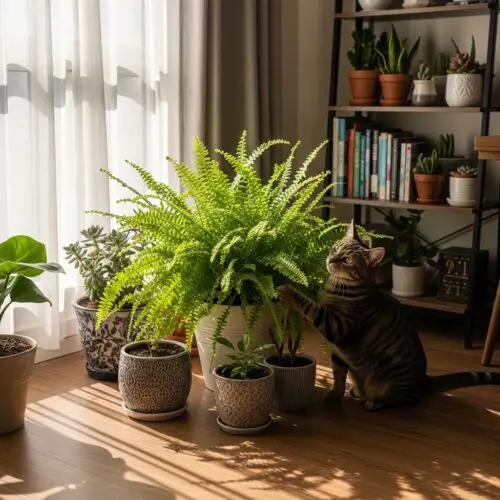
The Boston Fern is a lush, non-toxic plant that thrives in humidity and indirect light. It’s a perfect choice for homes with cats, ensuring a safe and vibrant environment.
Boston Fern is non-toxic
This fern is safe for both cats and dogs, making it a great addition to pet-friendly households. Its non-toxic nature means you can enjoy its beauty without worrying about your feline friend’s health.
Care tips for Boston Fern
- Watering: Keep the soil consistently moist but not soggy. Water when the top inch of soil feels dry.
- Humidity: Boston ferns love humidity. Consider misting the leaves regularly or placing a humidity tray beneath the pot.
- Light: Provide bright, indirect light. Avoid direct sunlight, which can scorch the leaves.
Placement suggestions for optimal growth
- Bathroom: Ideal for high humidity areas, like bathrooms.
- North-facing windows: Great for indirect light, helping the fern flourish.
- Avoid drafty spots: Keep away from vents or drafts, which can dry out the plant.
By following these care tips and placement suggestions, you can ensure that your Boston Fern not only survives but thrives in a cat-friendly environment.
Boston Fern (Nephrolepis exaltata)
2. African Violet (Saintpaulia)

African violets are a popular choice for indoor gardening. Not only do they provide vibrant color, but they are also safe for cats. This makes them a perfect addition to cat-friendly homes.
Optimal care conditions for African Violets
These plants thrive in moderate temperatures and average humidity. Here are the optimal care conditions:
- Light: Bright, indirect light is ideal. Too much direct sunlight can scorch the leaves.
- Water: Water when the top inch of soil feels dry. Avoid letting them sit in water to prevent root rot.
- Soil: Use a loose, well-draining potting mix.
They are safe for pets
African violets are non-toxic to cats. This means your feline friends can explore without risk. Always monitor your pets’ behavior around new plants. While African violets pose no toxicity risk, some cats may still nibble on leaves out of curiosity.
Best locations for flowering
Place African violets in spots with bright, filtered light. Here are some suggested locations:
- Near windows: A spot that receives morning sun but is shaded during the afternoon.
- Shelves: Elevate them on shelves to protect from playful paws.
Encouraging blooming can be simple. Regular deadheading (removing spent flowers) encourages more blooms. For pet owners, using non-toxic fertilizers will help maintain plant health without harming your cats [4].
African Violet (Saintpaulia)
3. Baby’s Tears (Soleirolia soleirolii)

Baby’s Tears is a charming plant featuring tiny, round leaves. It is non-toxic to cats, making it a safe choice for indoor environments. This plant thrives in various indoor conditions, adding beauty without compromising your pet’s safety.
Care instructions for Baby’s Tears
- Light: Prefers indirect sunlight. Too much direct light can scorch its leaves.
- Watering: Keep the soil consistently moist but not soggy. Water regularly to maintain humidity.
- Soil: Use well-draining potting soil to prevent root rot.
- Humidity: Enjoys high humidity; consider placing it in a bathroom or kitchen.
It’s a safe choice
Baby’s Tears is known for being non-toxic to both cats and dogs. This quality makes it an excellent option for pet owners. You can feel secure knowing that your curious feline can explore without risk.
Use it in home decor
This versatile plant works well in terrariums, hanging baskets, or as a ground cover. Its trailing nature adds a lush touch to any space. Pair it with other plants for a stunning display or use it to soften hard surfaces.
Quick Tips:
- Ideal for small spaces due to its low height.
- Can help deter cats from digging in other plants by covering the soil.
- Easy to propagate; simply snip and replant cuttings for more greenery.
By integrating Baby’s Tears into your home, you enhance your decor while ensuring a safe environment for your pets.
Baby’s Tears (Soleirolia soleirolii)
4. Chinese Money Plant (Pilea peperomioides)

The Chinese Money Plant, also known as the pancake plant, is a popular choice for cat owners. This trendy houseplant is not only safe for cats but also easy to care for.
Caring for Chinese Money Plant
The Chinese Money Plant thrives in bright, indirect light. It can tolerate moderate to low light, making it adaptable for various indoor settings. Here are key care tips:
- Watering: Water deeply but infrequently. Allow the soil to dry out between watering sessions.
- Soil: Use well-draining potting mix. A loamy soil blend works best.
- Fertilization: Feed with a balanced fertilizer every month during the growing season.
Safety for Pets
The Chinese Money Plant is non-toxic to cats. This means you can enjoy its beauty without worrying about your feline friends. If your cat does nibble on it, they may experience mild digestive upset, but it is generally safe.
Propagation Techniques
Propagating the Chinese Money Plant is straightforward. Here’s how to do it:
- Select a Healthy Leaf: Choose a healthy leaf with a stem.
- Cut the Stem: Use clean scissors to cut the stem just below a node.
- Water Method: Place the cutting in water. Change the water regularly until roots develop.
- Planting: Once roots are a few inches long, transfer the cutting to soil.
This method allows you to expand your plant collection safely while ensuring your home remains cat-friendly.
Chinese Money Plant (Pilea peperomioides)
5. Areca Palm (Dypsis lutescens)

The Areca Palm is a stunning addition to any indoor space. It’s non-toxic to cats and doubles as an excellent air purifier.
Care requirements for Areca Palm
- Light: Prefers bright, indirect sunlight. A south- or west-facing window works best.
- Water: Allow the soil to dry out between waterings. Over-watering can lead to root rot.
- Soil: Use well-draining potting mix to ensure healthy growth.
- Humidity: Enjoys a humid environment. Misting the leaves or placing a tray of water nearby can help.
It’s safe for cats
The Areca Palm poses no toxicity risks for cats. This means you can enjoy its beauty without worrying about your pet’s health. If your cat likes to play with the fronds, consider placing the palm out of reach or providing alternative toys.
Air quality benefits of Areca Palm
The Areca Palm is not just beautiful; it also enhances indoor air quality. It effectively filters pollutants like formaldehyde and xylene from the air, contributing to a healthier home for both you and your cat [10]. This plant can significantly improve the atmosphere in your living space, making it a perfect choice for pet-friendly households.
In summary, the Areca Palm is an ideal indoor plant. It’s safe for cats, easy to care for, and offers air purification benefits. Choose this palm to elevate both your decor and indoor air quality.
Areca Palm (Dypsis lutescens)
6. Spider Plant (Chlorophytum comosum)
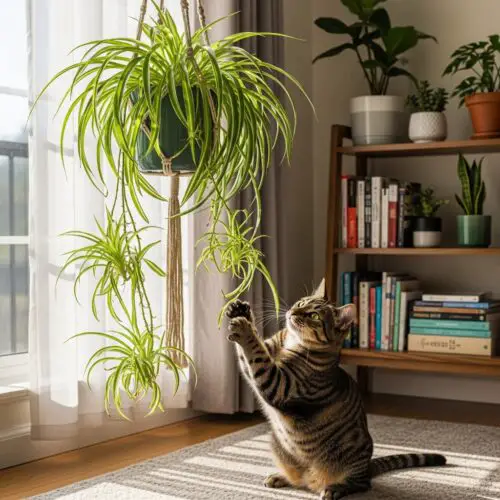
The Spider Plant is a resilient houseplant that thrives in various environments. It is also non-toxic to cats, making it a top choice for pet owners.
Easy care tips for Spider Plant
- Light Requirements: Prefers bright, indirect light but can tolerate lower light conditions.
- Watering: Water regularly, allowing the top inch of soil to dry out between waterings.
- Soil: Use loose, loamy soil for optimal growth.
- Humidity: Enjoys humidity; consider misting or placing it in a bathroom with natural light.
It’s non-toxic
The Spider Plant is safe for cats and dogs. It poses no toxicity risk, allowing your feline friends to explore without concern. If ingested in large amounts, some pets may experience mild digestive upset, but this is rare [4].
Keep it thriving
To maintain a healthy Spider Plant, avoid the following common mistakes:
- Overwatering: This can lead to root rot. Always let the soil dry slightly before the next watering.
- Direct Sunlight: Too much sun can scorch the leaves. Position it where it receives filtered light.
- Neglecting Propagation: Spider Plants produce “pups.” Propagate these by planting them in their own pots for more greenery.
By following these care tips, you can enjoy a vibrant Spider Plant in your home, enriching your indoor space while keeping your cats safe.
Spider Plant (Chlorophytum comosum)
7. Calathea (Calathea spp.)
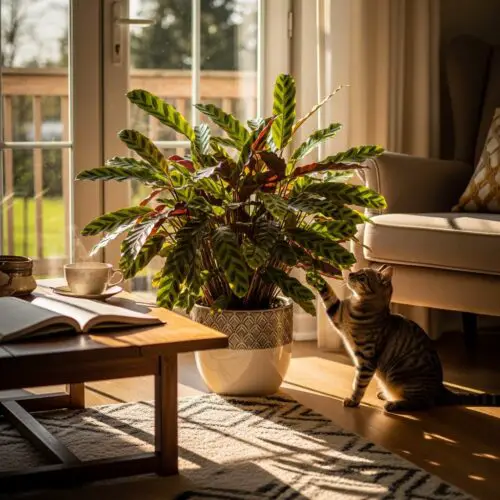
Calathea plants are beautiful, colorful houseplants that are safe for cats. They add a vibrant touch to your home while keeping your feline friend safe.
Caring for Calathea plants
Calathea requires specific care to thrive indoors. Here are some essential tips:
- Light: Place them in indirect sunlight. Direct light can fade their stunning colors.
- Water: Keep the soil consistently moist but avoid overwatering. Let the top inch dry out before watering again.
- Temperature: Maintain temperatures between 70°F and 85°F. Never let it drop below 60°F.
- Humidity: These tropical plants love humidity. Aim for levels above 50% to keep them happy.
Pet safety information
Calathea is non-toxic to cats, making it an excellent choice for pet-friendly households. If your cat plays with the leaves, there’s no need to worry. Their curiosity won’t harm them.
Best humidity levels for growth
To ensure optimal growth for your Calathea, humidity plays a crucial role.
- Ideal Range: Keep humidity levels between 50% to 65%.
-
Methods to Increase Humidity:
- Use a humidifier.
- Group plants together.
- Place the pot on a tray filled with water and pebbles.
By following these care tips, you can maintain a healthy Calathea in your home while providing a safe environment for your cat.
Calathea (Calathea spp.)
8. Parlor Palm (Chamaedorea elegans)
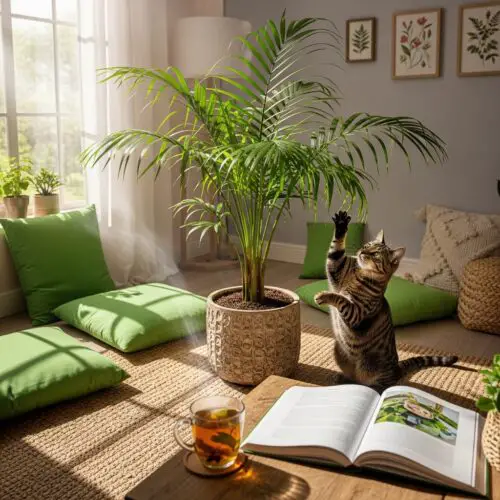
The parlor palm is a classic choice for indoor spaces. It adds a touch of greenery while being completely safe for your cats. This low-maintenance plant is perfect for busy pet owners.
Care instructions for Parlor Palm
- Light: Prefers indirect light. Avoid direct sunlight to prevent leaf scorch.
- Water: Water when the top inch of soil feels dry. Ensure drainage to prevent root rot.
- Humidity: Thrives in moderate humidity. Mist the leaves occasionally for added moisture.
- Fertilization: Feed with a balanced liquid fertilizer every month during the growing season.
It’s safe for pets
The parlor palm is non-toxic to cats and dogs. Its playful fronds may attract your cat’s attention, but there’s no need for concern. Their playful nibbling won’t harm them, allowing you to enjoy the beauty of this plant without worry[14].
Ideal placements in the home
- Living Room: Place near a window with filtered light for optimal growth.
- Office: Adds a refreshing touch to your workspace, enhancing productivity.
- Cat’s Play Area: Position it out of reach if your cat tends to tug on leaves. Alternatively, provide a nearby cat grass to satisfy their curiosity and keep them away from the palm.
By choosing a parlor palm, you can create a safe indoor environment for both your plants and your pets.
Parlor Palm (Chamaedorea elegans)
9. Friendship Plant (Pilea involucrata)
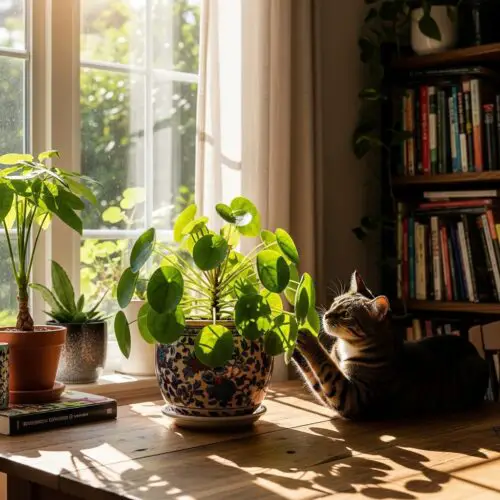
The Friendship Plant is a delightful addition to any indoor garden. Its textured leaves are not only beautiful but also safe for cats.
Caring for Friendship Plant
This plant thrives in high humidity and indirect light. It prefers moist soil, so water it regularly without over-saturating. Here are key care tips:
- Light: Bright, indirect sunlight is ideal. It can tolerate low light but may not grow as vigorously.
- Water: Keep the soil consistently moist. Avoid letting it dry out completely.
- Humidity: Enjoys humid environments. Consider placing it in a bathroom or kitchen.
Pet Safety Details
The Friendship Plant is non-toxic to cats, making it a great choice for pet owners. Unlike many houseplants, it poses no risk if your cat decides to nibble on its leaves. However, monitor your pet’s behavior. Some sensitive cats might experience mild digestive upset if they consume large quantities, so it’s wise to keep an eye on their interactions with the plant [1].
Visual Identification Tips
Identifying a Friendship Plant is easy. Look for:
- Textured Leaves: The leaves are round and have a unique, quilted appearance.
- Color: They are typically a vibrant green with a slightly reddish tint around the edges.
- Growth Habit: The plant has a trailing growth habit, making it suitable for hanging baskets or elevated spaces.
Tips for Sharing with Kids and Pets
To ensure safe interactions with the Friendship Plant:
- Educate: Teach children to admire plants without touching.
- Placement: Position the plant out of direct reach of pets.
- Alternatives: Provide cat grass or other safe plants to satisfy your cat’s curiosity and prevent them from being drawn to this plant.
By following these care tips, you can enjoy the beauty of the Friendship Plant while keeping your indoor environment safe for your feline companions.
Friendship Plant (Pilea involucrata)
10. Prayer Plant (Maranta leuconeura)
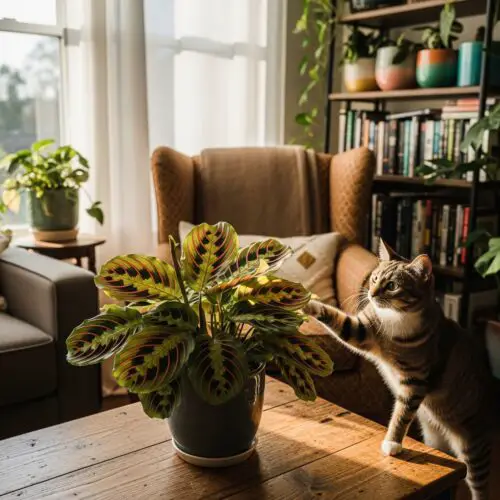
The prayer plant captivates with its unique leaf movement and vibrant foliage. It is non-toxic to cats, making it a perfect choice for pet-friendly homes.
Care guidelines for Prayer Plant
- Light Conditions: The prayer plant thrives in bright, indirect light but can adapt to lower light levels. Avoid direct sunlight, as it can scorch the leaves.
- Watering Needs: Keep the soil consistently moist, but not soggy. Water regularly, especially during dry spells, to prevent the leaves from curling.
- Humidity Levels: This plant loves humidity. Mist the leaves frequently or place the pot on a pebble tray filled with water to maintain moisture.
Safety for cats
The prayer plant is safe for feline companions. Unlike many common houseplants, it does not contain toxic compounds that could harm cats if ingested. However, it’s important to monitor your cat’s behavior around plants. Even non-toxic plants can cause mild digestive upset if consumed in large amounts.
Enhance growth
To promote healthy growth, consider these tips:
- Fertilization: Use a balanced liquid fertilizer every four to six weeks during the growing season (spring and summer).
- Pruning: Remove any yellow or dead leaves to encourage new growth and maintain plant health.
- Repotting: Repot every couple of years in fresh potting soil to provide nutrients and space for growth.
By following these care guidelines, you can enjoy the beauty of the prayer plant while ensuring a safe environment for your cats.
Prayer Plant (Maranta leuconeura)
11. Peperomia (Peperomia spp.)
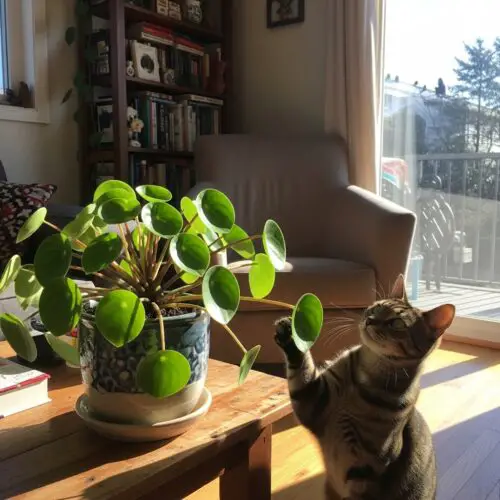
Peperomia plants are compact and visually appealing. They are safe for cats and come in a variety of forms, making them ideal for indoor spaces.
Caring for Peperomia plants
Peperomia requires minimal care, making them perfect for busy pet owners. Here are some essential tips:
- Light: They thrive in indirect light but can tolerate low-light conditions.
- Watering: Allow the soil to dry out between waterings to prevent root rot.
- Humidity: Average household humidity is sufficient; however, they enjoy occasional misting.
- Temperature: Keep them in a warm environment, ideally between 65°F and 80°F.
Pet safety information
Peperomia is non-toxic to cats, which means your feline friends can safely explore and interact with these plants. Unlike many houseplants, they do not pose a risk of poisoning or severe digestive issues if ingested, making them a popular choice for cat owners [18].
Exploring various Peperomia types
Peperomia boasts numerous varieties, each offering unique aesthetics. Some popular types include:
- Peperomia obtusifolia (Baby Rubber Plant): Features thick, glossy leaves that are easy to care for.
- Peperomia caperata (Ripple Peperomia): Known for its textured leaves and compact size.
- Peperomia clusiifolia (Red Margin Peperomia): Displays striking red edges on its leaves.
When choosing a variety, consider your home’s light conditions and your ability to care for specific needs. All Peperomia types are safe for cats, offering beauty without worry.
Peperomia (Peperomia spp.)
12. Nerve Plant (Fittonia spp.)

The Nerve Plant, or Fittonia, captivates with its vibrant leaf veins. This plant is non-toxic to cats, making it an excellent choice for pet owners who want to add greenery to their homes.
They are non-toxic
Nerve Plants are safe for both cats and dogs. Their non-toxic nature allows you to enjoy their beauty without worrying about your furry friends. This feature makes them a reliable choice for households with curious pets.
Caring for Nerve Plants
- Light Requirements: Nerve Plants thrive in low-light conditions. They prefer bright, indirect light but can adapt to lower light levels. Avoid direct sunlight, as it may scorch their leaves.
- Watering: Keep the soil consistently moist. Water when the top inch of soil feels dry. Overwatering can lead to root rot, so ensure proper drainage.
- Humidity: Nerve Plants love humidity. If your home is dry, consider misting the leaves regularly or placing a humidity tray nearby.
Growing tips for low-light conditions
- Location: Position your Nerve Plant in a spot that receives filtered light. A north-facing window is often ideal.
- Soil Type: Use a well-draining potting mix. A blend designed for tropical plants works best.
- Temperature: Keep the plant in a warm environment, ideally between 65°F to 80°F (18°C to 27°C).
By following these care tips, you can maintain a healthy Nerve Plant while ensuring your cat’s safety.
Nerve Plant (Fittonia spp.)
13. Cast Iron Plant (Aspidistra elatior)
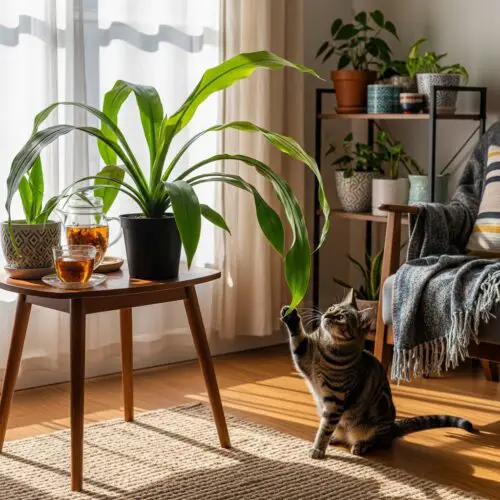
The Cast Iron Plant is a resilient choice for pet-friendly homes. Its non-toxic nature makes it safe for cats, while its hardiness allows it to thrive in various conditions.
Care requirements for Cast Iron Plant
- Light: Prefers low to moderate light. It can tolerate shade, making it suitable for darker rooms.
- Soil: Use well-draining potting mix. A general-purpose mix works well.
- Water: Water when the top inch of soil feels dry. Overwatering can lead to root rot.
Safety information for pets
The Cast Iron Plant is safe for cats. It poses no toxicity risk if ingested. This makes it ideal for curious pets who may nibble on houseplants.
Handling neglect and care
This plant excels in neglectful environments. Its ability to withstand periods of drought and low light makes it perfect for busy households. If you forget to water it, the Cast Iron Plant will likely bounce back.
By choosing the Cast Iron Plant, you can enjoy greenery in your home without worrying about your cat’s safety.
Cast Iron Plant (Aspidistra elatior)
14. Ponytail Palm (Beaucarnea recurvata)

The Ponytail Palm is an eye-catching indoor plant that is safe for cats. Its unique appearance adds a touch of elegance to any room, making it a popular choice among pet owners.
Caring for Ponytail Palm
The Ponytail Palm thrives on minimal care. Here are some essential tips:
- Light: Prefers bright, indirect sunlight.
- Watering: Water when the top inch of soil feels dry. Overwatering can lead to root rot.
- Soil: Use well-draining potting soil to prevent excess moisture.
Pet safety details
This plant is non-toxic to cats, making it a worry-free choice for pet owners. However, its long, swinging leaves might entice your cat to play. If your cat shows interest, consider providing cat grass as an alternative toy to prevent damage to the plant and keep your cat engaged.
Ensure optimal growth
To keep your Ponytail Palm healthy:
- Humidity: Enjoys moderate humidity but can tolerate dry air.
- Fertilizer: Feed with a balanced houseplant fertilizer during the growing season.
- Repotting: Repot every 2-3 years to refresh the soil and provide room for growth.
The Ponytail Palm not only enhances your home’s aesthetics but also ensures a safe environment for your feline friend. By following these care tips, you can enjoy a vibrant plant without compromising your cat’s safety.
Ponytail Palm (Beaucarnea recurvata)
15. Rattlesnake Plant (Calathea lancifolia)
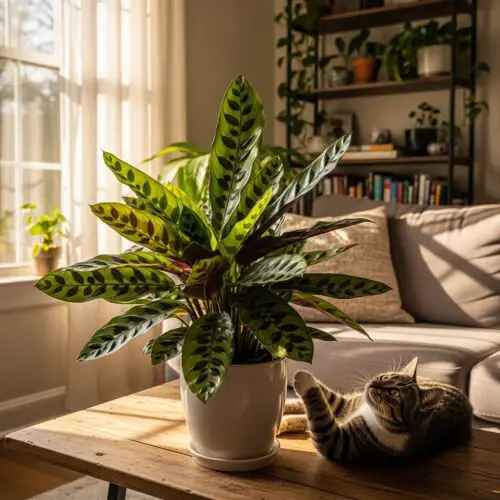
The Rattlesnake Plant is a striking addition to your indoor garden. Its unique leaves are safe for cats, making it an excellent choice for pet-friendly homes.
It’s non-toxic
The Rattlesnake Plant is non-toxic to cats. This means your feline friend can explore and interact with it without risk. The ASPCA lists it as safe, alleviating concerns about potential toxicity.
Humidity requirements for growth
Rattlesnake Plants thrive in high humidity. Maintaining the right humidity level is crucial for healthy growth. Here are some tips to keep your Rattlesnake Plant happy:
- Humidity Levels: Aim for 50% humidity or more. This plant loves moisture.
- Watering: Keep the soil consistently moist but not soggy. Check the top inch of soil; if it feels dry, it’s time to water.
- Location: Place it in a bathroom or kitchen, where humidity levels are naturally higher. Alternatively, use a humidifier.
By ensuring optimal humidity, you create a flourishing environment for your Rattlesnake Plant while keeping it safe for your cat.
Rattlesnake Plant (Calathea lancifolia)
16. Zebra Plant (Guzmania spp.)

The Zebra Plant is a stunning choice for cat owners. It is non-toxic and easy to care for, making it a perfect addition to your indoor garden.
Care tips for Zebra Plant
- Light: Place in bright, indirect sunlight. Too much direct sunlight can scorch the leaves.
- Water: Water when the top inch of soil feels dry. Maintain consistent moisture but avoid soggy soil.
- Humidity: Prefers higher humidity levels. Aim for 50% or more for optimal growth.
- Temperature: Keep in a warm environment, ideally between 65°F to 75°F.
Pet safety information
The Zebra Plant is safe for cats. Unlike many houseplants, it does not pose any toxicity risk. This allows your curious feline to explore without worry. Always monitor your pets to ensure they don’t chew on leaves excessively, as this could lead to mild digestive upset.
Ensure longevity
To maintain the beauty and health of your Zebra Plant:
- Fertilizing: Feed with a balanced fertilizer every 4-6 weeks during the growing season.
- Repotting: Consider repotting every couple of years to refresh the soil and allow for growth.
- Pest control: Check regularly for pests like spider mites and aphids. Treat promptly with insecticidal soap if necessary.
By following these care tips, you can enjoy the vibrant beauty of the Zebra Plant while ensuring a safe environment for your cat.
Zebra Plant (Guzmania spp.)
17. Lavender (Lavandula spp.)
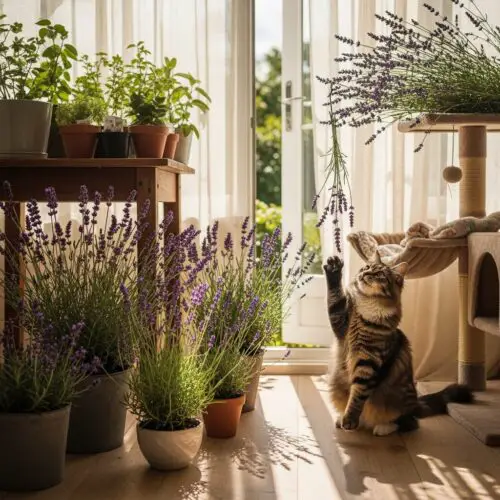
Lavender is a fragrant herb that is safe for cats. It enhances indoor air quality while providing a calming scent.
Caring for Lavender indoors
Lavender thrives in bright light. Place it near a sunny window for at least six hours each day. It prefers well-drained soil. Ensure the pot has drainage holes to prevent waterlogging. Water when the top inch of soil feels dry.
It’s safe for pets
Lavender is non-toxic to cats, making it a great choice for pet-friendly homes. Unlike many other plants, it poses no risk if your cat decides to take a nibble. This quality makes it a popular option for cat owners seeking greenery without worry [28].
Health benefits of Lavender
Lavender offers more than just visual appeal. Its calming scent can reduce anxiety for both humans and pets. Studies show that inhaling lavender can lower stress levels and promote relaxation [30]. Additionally, lavender can improve air quality by filtering out toxins [29]. Consider placing lavender in common areas to enhance your home environment while ensuring it remains safe for your feline friends.
- Light Requirements: Bright, indirect sunlight.
- Watering Needs: Water when the soil dries out.
- Safety: Non-toxic to cats.
- Benefits: Calming effects and air purification.
By integrating lavender into your indoor space, you create a serene atmosphere that benefits both you and your cat.
Lavender (Lavandula spp.)
18. Basil (Ocimum basilicum)
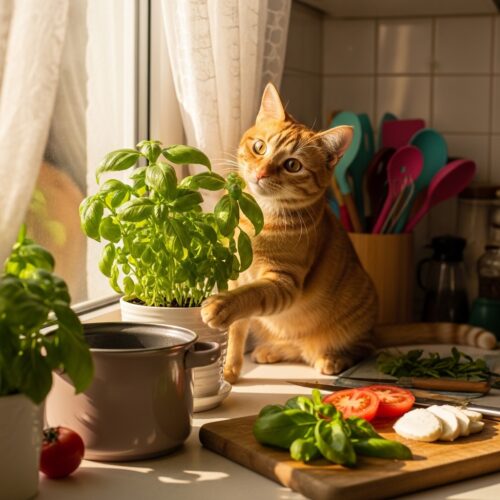
Basil is a culinary favorite that is safe for cats. This aromatic herb can thrive indoors, providing fresh flavors for your meals while ensuring your feline friends are protected.
Caring for indoor Basil
Basil requires specific care to flourish indoors. Here are key guidelines:
- Light Requirements: Place basil in bright, indirect sunlight.
- Watering Needs: Water when the top inch of soil feels dry.
- Soil Type: Use well-draining potting soil to prevent root rot.
Pet safety information
Basil is non-toxic to cats, making it an excellent choice for pet-friendly households. According to the ASPCA, basil does not pose any health risks to your furry companions. This means you can enjoy its culinary benefits without worrying about your cat’s safety.
Harvesting tips for fresh use
Harvesting basil is easy and rewarding. Follow these tips:
- Pruning: Pinch off leaves regularly to encourage bushier growth.
- Timing: Harvest leaves in the morning for the best flavor.
- Storage: Store fresh basil in a glass of water at room temperature or refrigerate wrapped in a damp paper towel.
Basil adds flavor to numerous dishes. Try it in pasta sauces, salads, or homemade pesto for fresh, vibrant meals.
Basil (Ocimum basilicum)
19. Mint (Mentha spp.)
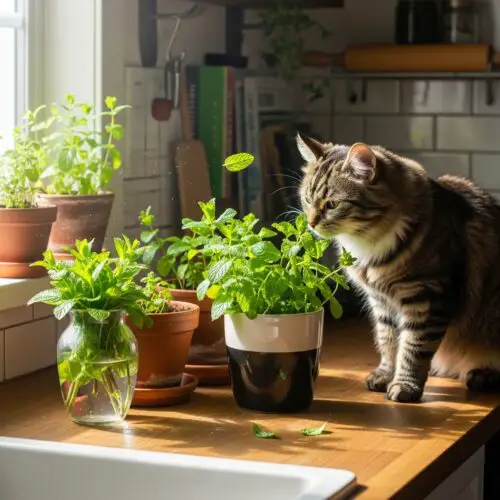
Mint is another safe herb for cats. It can add flavor to your dishes and is easy to grow indoors. This aromatic plant not only enhances your meals but also creates a pleasant atmosphere in your home.
Caring for Mint indoors
Growing mint indoors requires minimal effort. Here are some essential care tips:
- Light: Place mint in bright, indirect sunlight.
- Water: Keep the soil consistently moist but not soggy. Water when the top inch feels dry.
- Temperature: Aim for a temperature between 65°F and 70°F (18°C to 21°C).
- Fertilization: Use a balanced fertilizer every month during the growing season.
It’s safe for pets
Mint is non-toxic to cats, making it a great choice for pet-friendly households. Your feline friends can safely nibble on the leaves without health risks [34]. Additionally, mint can help freshen your cat’s breath, offering a natural alternative to commercial products.
Common issues with mint care
Mint can face a few challenges indoors. Be aware of these common problems:
- Pests: Spider mites and aphids may infest your mint. Use insecticidal soap to treat these pests.
- Overwatering: This can lead to root rot. Ensure proper drainage to prevent water accumulation.
- Legginess: If your mint becomes leggy, it may need more light. Trim back to encourage bushier growth.
When introducing mint to your home, monitor your cat’s interactions. This will help you ensure a safe and enjoyable environment for both your plants and your pets.
Mint (Mentha spp.)
20. Rosemary (Rosmarinus officinalis)

Rosemary is a fragrant herb that is safe for cats and thrives indoors. This versatile plant adds flavor to dishes and fresh aroma to your home.
Caring for indoor Rosemary
Rosemary prefers bright, indirect sunlight. Aim for at least six hours of light daily. Use well-draining soil to prevent root rot. Water when the top inch of soil feels dry. Avoid overwatering, as this is a common mistake among indoor gardeners.
Pet safety information
Rosemary is non-toxic to cats, making it a safe choice for households with pets. If your cat nibbles on the leaves, there’s no need to worry. The ASPCA confirms its safety for both cats and dogs.
Harvesting tips for use in cooking
You can harvest rosemary regularly. Snip off sprigs as needed for cooking. Use fresh rosemary in recipes such as roasted vegetables, soups, or marinades. Its savory flavor enhances many dishes.
Quick Reference:
- Light: Bright, indirect sunlight
- Watering: When the top inch of soil is dry
- Safety: Non-toxic for cats
- Uses: Culinary seasoning, aromatic herb
Rosemary (Rosmarinus officinalis)
21. Boston Ivy (Parthenocissus tricuspidata)
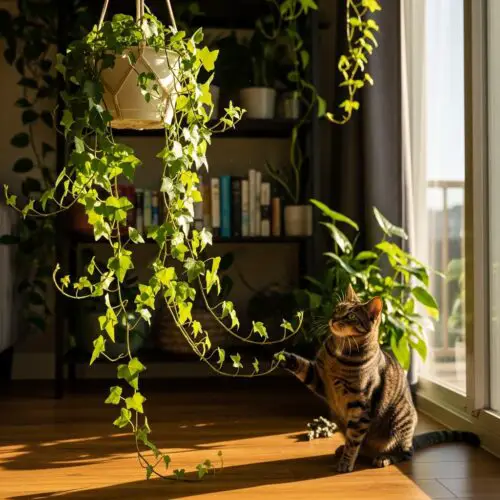
Boston Ivy is a climbing plant that adds beauty and greenery to your indoor space. This non-toxic plant is safe for cats, allowing you to enjoy its aesthetic appeal without worrying about your furry friend.
Caring for Boston Ivy indoors
Boston Ivy thrives in indirect sunlight and requires moderate watering. Here are some care tips:
- Light: Prefers bright, indirect sunlight to grow well.
- Watering: Allow the top inch of soil to dry out before watering again.
- Humidity: Enjoys a humid environment, so misting the leaves can be beneficial.
Pet safety information
Boston Ivy is safe for cats. If your cat decides to nibble on its leaves, there’s no need for concern. The ASPCA confirms this plant is non-toxic to both cats and dogs, making it a perfect choice for pet-friendly homes [4].
Best locations for growth
Boston Ivy is versatile and can be placed in various locations:
- Walls: Use it to cover bare walls for a natural look.
- Shelves: Position it on floating shelves to create a cascading effect.
- Terrariums: Incorporate it into terrariums for a stylish indoor garden.
Using climbing plants like Boston Ivy creatively enhances your decor while keeping your cat safe. Consider placing it in a hanging basket to make the most of its growth habits.
Boston Ivy (Parthenocissus tricuspidata)
22. Christmas Cactus (Schlumbergera)

The Christmas Cactus is a festive plant that adds vibrant color to your home during the holiday season. It is safe for cats, making it an excellent addition to pet-friendly households.
It’s safe for pets
This plant is non-toxic to cats, which means you can enjoy its beauty without worrying about your furry friend. Unlike many holiday plants, the Christmas Cactus poses no risk if nibbled on.
Flowering tips for the holiday season
To encourage blooming, follow these care tips:
- Light: Place in bright, indirect light.
- Water: Keep the soil slightly moist but not soggy.
- Temperature: Maintain a temperature of 60-70°F for optimal growth.
The Christmas Cactus typically blooms from late November to January, offering beautiful flowers in shades of pink, red, and white. It thrives with a little extra care during the holiday season, ensuring your home remains festive and safe for your cats.
Be mindful that while the plant is safe, overconsumption can still lead to mild digestive upset in sensitive pets. Always monitor your cat’s behavior around new plants to ensure a happy household.
Christmas Cactus (Schlumbergera)
23. Haworthia (Haworthia spp.)
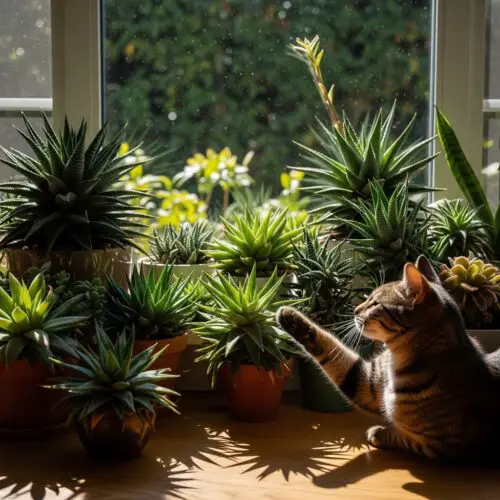
Haworthia is a resilient succulent perfect for homes with cats. This plant is non-toxic, ensuring your feline friends can safely explore and enjoy their surroundings.
Caring for Haworthia
Haworthia thrives on minimal care, making it ideal for busy pet owners. Follow these simple tips:
- Light: Place in bright, indirect light.
- Water: Allow the soil to dry out between waterings. Overwatering can lead to root rot.
- Temperature: Keep in a warm environment, ideally between 60-75°F.
Pet Safety Information
Haworthia is safe for both cats and dogs. It is listed as non-toxic by the ASPCA, so you can have peace of mind while enjoying this attractive plant in your home [43]. Although it’s non-toxic, always observe your cat’s interactions with plants. Some cats may chew on leaves, which could cause mild digestive upset.
Common Care Mistakes to Avoid
To keep your Haworthia healthy, avoid these common pitfalls:
- Excess Watering: Ensure the pot has good drainage. Too much water can harm the plant.
- Poor Light Conditions: Insufficient light can lead to leggy growth. Place it where it receives adequate indirect sunlight.
- Neglect: While Haworthia is low-maintenance, it still requires periodic attention. Check for pests and dust buildup on leaves.
Incorporating Haworthia into your home not only enhances your decor but also keeps your pets safe. Consider adding this hardy succulent to your collection of cat-friendly plants.
Haworthia (Haworthia spp.)
24. Christmas Fern (Polystichum acrostichoides)

The Christmas fern is a classic choice for cat owners. This pet-safe plant brings lush greenery into your home without posing any toxicity risks to your feline friends.
Caring for Christmas Fern
Christmas ferns thrive in moderate to high humidity. They prefer moist, well-drained soil. Here are some care tips:
- Watering: Keep the soil consistently moist, but avoid waterlogging.
- Humidity: Increase humidity with a pebble tray or room humidifier.
- Fertilization: Use a balanced, diluted fertilizer during the growing season.
It’s safe for pets
The Christmas fern is non-toxic to cats, making it a worry-free addition to your indoor garden. Unlike many popular houseplants, this fern does not cause digestive issues or other health problems if your cat decides to nibble on its leaves [44].
Best light conditions for ferns
These ferns prefer indirect sunlight. Here are the ideal conditions:
- Light: Bright, filtered light is best. Avoid direct sunlight, which can scorch the leaves.
- Placement: A north-facing window or a spot with dappled light works well.
By choosing the Christmas fern, you create a safe environment for both your plants and your pets. This fern not only adds beauty but also enhances the overall atmosphere of your home.
Christmas Fern (Polystichum acrostichoides)
25. Aloe Vera (Aloe barbadensis miller)

Aloe Vera is a popular houseplant known for its healing properties and safety for cats. This succulent not only beautifies your home but also supports skin health for both humans and pets.
Caring for Aloe Vera
Aloe Vera thrives in bright, indirect sunlight. Here are key care tips:
- Watering: Allow the top inch of soil to dry out before watering. Overwatering can lead to root rot.
- Soil: Use well-draining potting soil. A cactus mix works well.
- Temperature: Keep it in a warm environment, ideally between 60°F to 75°F (15°C to 24°C).
Safety Information for Cats
Aloe Vera is non-toxic to cats, making it a safe choice for homes with pets. If your cat nibbles on its leaves, it won’t experience digestive issues or other health problems [46]. However, it’s wise to monitor your cat’s interactions, as excessive chewing may lead to mild gastrointestinal upset.
Healing Benefits of Aloe Vera
Aloe Vera has renowned healing properties. It can soothe minor cuts, burns, and skin irritations. For humans, applying the gel from the leaves can provide relief. Ensure you keep the plant out of reach of your pets to prevent excessive nibbling while still enjoying its benefits.
Quick Reference Care Tips
- Light: Bright, indirect sunlight.
- Water: Allow soil to dry out between waterings.
- Soil: Well-draining potting mix.
- Safety: Non-toxic to cats.
By choosing Aloe Vera, you create a safe and beneficial environment for both your plants and your feline friends.
Aloe Vera (Aloe barbadensis miller)
26. Bamboo Palm (Chamaedorea seifrizii)

The Bamboo Palm is a popular choice for indoor plant lovers, especially in homes with cats. This plant is not only safe for your furry friends, but it also enhances indoor air quality.
Caring for Bamboo Palm
Caring for the Bamboo Palm is straightforward. Here are some essential care tips:
- Light: Thrives in bright, indirect sunlight.
- Water: Keep the soil moist but not soggy. Water when the top inch of soil feels dry.
- Soil: Use a well-draining potting mix to prevent root rot.
Pet Safety Information
The Bamboo Palm is non-toxic to cats. You can rest easy knowing your curious cat can explore without the risk of poisoning. This plant offers a safe environment for both you and your feline companion.
Air Quality Benefits
Bamboo Palms contribute to improved indoor air quality. They filter out common indoor air pollutants, making your home healthier. According to research, they are effective at removing toxins like formaldehyde and benzene from the air [49]. This makes them an excellent addition to a pet-friendly home.
Checklist for Introducing Bamboo Palm in a Cat-Friendly Home
- Placement: Choose a high spot or a shelf if your cat is prone to nibbling.
- Monitoring: Observe your cat’s interactions with the plant initially.
- Edible Alternatives: Provide cat grass nearby to deter them from the Bamboo Palm.
By selecting the Bamboo Palm, you create a safe and inviting indoor space for both your plants and your cats.
Bamboo Palm (Chamaedorea seifrizii)
27. Venus Fly Trap (Dionaea muscipula)

The Venus Fly Trap is a captivating plant that is safe for your feline friends. This unique carnivorous plant adds a touch of intrigue to any indoor garden while ensuring your cats remain unharmed.
Caring for Venus Fly Trap
Caring for a Venus Fly Trap requires attention to its specific needs. Here are essential care tips:
- Light: Place the plant in bright, indirect sunlight. Too much direct sun can scorch its leaves.
- Water: Use distilled water to keep the soil moist. Tap water can harm the plant.
- Humidity: Maintain a humid environment. This plant thrives in higher humidity levels.
- Feeding: If kept indoors, the plant may need occasional feeding with insects to stay healthy.
It’s safe for cats
The Venus Fly Trap poses no toxicity risk to cats, making it a safe option for pet owners. Curious cats may be tempted to nibble on its traps without any adverse effects. This unique characteristic allows pet owners to enjoy a carnivorous plant without worry [50].
Interesting facts about Venus Fly Trap
- Conversation Starter: Its snapping traps make it a fascinating topic for guests [51].
- Growth Habit: The plant can reach up to 5 inches in height and spreads about 6 inches wide.
- Native Habitat: It is native to subtropical wetlands in the United States, particularly in North and South Carolina.
By choosing the Venus Fly Trap, you create a vibrant, pet-friendly indoor space. Just remember to monitor your cat’s interactions with the plant, especially during the initial introduction.
Venus Fly Trap (Dionaea muscipula)
Frequently Asked Questions

These quick answers cover the homeowner questions that come up most often about hackberry trees, including growth, care, and common problems.
What indoor plants are ok with cats?
Indoor plants that are safe for cats include the Boston Fern, African Violet, Baby’s Tears, Chinese Money Plant, Areca Palm, Spider Plant, and many more. These plants are non-toxic, meaning they won’t harm your feline friends if they decide to nibble on them. Always check the ASPCA’s list of non-toxic plants for further assurance.
What plants won’t harm cats?
Plants that won’t harm cats are typically labeled as non-toxic. Examples include the Calathea, Friendship Plant, Lavender, Basil, Mint, and Aloe Vera. These plants can coexist safely in homes with cats, allowing you to enjoy greenery without worry about your pet’s health [4][14].
Can I have flowers in my house if I have a cat?
Yes, you can have flowers in your house if you have a cat, but it’s essential to choose non-toxic varieties. Safe flowering plants include African Violets and certain herbs like Basil and Lavender. Always research specific flowers to ensure they are safe for feline companions, as some common houseplants can be toxic [16][41].
How to tell if a plant is safe for my cat?
To determine if a plant is safe for your cat, check for labels indicating non-toxicity. You can also refer to resources like the ASPCA’s list of toxic and non-toxic plants. Additionally, observe your cat’s behavior; if they show signs of discomfort after interacting with a plant, consult a veterinarian.
What should I do if my cat eats a toxic plant?
If you suspect your cat has eaten a toxic plant, contact your veterinarian immediately. Provide details about the plant ingested and any symptoms your cat displays. Common signs of plant toxicity include vomiting, diarrhea, lethargy, and difficulty breathing. Quick action can be crucial in ensuring your cat’s safety.
What are some signs of plant toxicity in cats?
Signs of plant toxicity in cats can include vomiting, diarrhea, drooling, lethargy, and difficulty breathing. If you notice any of these symptoms after your cat interacts with a plant, seek veterinary assistance promptly. Early intervention is key to resolving potential poisoning issues.
Best cat-friendly houseplants for beginners?
For beginners, the best cat-friendly houseplants are those that are easy to care for and non-toxic. Options include the Spider Plant, Boston Fern, and African Violet. These plants are resilient and can thrive in various indoor conditions, making them ideal for novice plant owners [1][4][11].
References

1. Nephrolepis exaltata (Bostonfern, Boston Fern, Fluffy Ruffles …
3. Boston Fern
4. Pet-safe plants: What to know and what to grow
6. Sedum album (Hardy Baby Tears, Stonecrop, White Stonecrop)
7. Growing Indoor Plants with Success – CAES Field Report – UGA
8. Pilea peperomioides (Chinese Money Plant, Coin Plant …
9. Chrysalidocarpus lutescens (Areca Palm, Bamboo Palm …
10. Mitigation of indoor air pollutants using Areca palm potted …
11. Spider plant, Chlorophytum comosum – Wisconsin Horticulture
12. Goeppertia insignis (Prayer Plant, Rattlesnake Calathea …
13. Calathea, Zebra Plant | Interior Plants | Landscape Plants
14. Pet Safe Plants Brochure 2021
15. Indoor Palms | Home & Garden Information Center
16. How To Choose Cat-Safe Houseplants Leimone Waite, …
17. Maranta leuconeura (Cathedral Windows, Herringbone Plant …
18. Houseplants Poisonous to Cats and Dogs
19. Peperomia – North Carolina Extension Gardener Plant Toolbox
20. Fittonia albivenis (Jewel Plant, Mosaic Plant, Nerve Plant …
21. Aspidistra elatior (Bar Room Plant, Barroom Plant, Cast Iron …
22. Role of Materials Selection in the Resilience of the Built … – PMC
23. Cast Iron Plant – UF/IFAS Gardening Solutions
24. Beaucarnea recurvata (Bottle Palm, Elephant-foot Tree …
25. 18. Plants Grown in Containers
26. Rattlesnake Plant · Group 2: Houseplant Haven
27. Zebra Plant as a Houseplant
29. The Role of Indoor Plants in air Purification and Human Health …
30. Anxiety-Reducing Effects of Lavender Essential Oil Inhalation
31. Ocimum basilicum (Basil, Genovese Basil, Purple Basil, Saint …
32. Growing basil in home gardens
33. Basil | Herbs | Illinois Extension | UIUC
34. A Scent-sitive Subject: Essential Oil Diffusers and Your Cat
35. Multiple Uses for Mint – UF/IFAS Extension Bay County
36. Indoor Mint Growing Tips for Fresh Tea and Recipes
37. Safety and efficacy of two solvent extracts of rosemary … – PMC
38. Dakota Gardener: The houseplant you didn’t know …
39. Rosemary (Salvia rosmarinus): Health-promoting benefits and …
40. Ivy | Home & Garden Information Center – HGIC@clemson.edu
41. Which Holiday Plants Are Safe for My Cats and Dogs?
42. Holiday Cactus – Wisconsin Horticulture
43. Haworthia – Toxic and Non-toxic Plants
44. Polystichum acrostichoides
45. Christmas Fern | Missouri Department of Conservation
46. Potentially Dangerous Items for Your Pet
47. Pharmacological Update Properties of Aloe Vera and its Major …
49. Houseplants for Healthier Indoor Air
50. Dionaea muscipula (Meadow Clams, Venus Flytrap, Venus …
51. Venus Fly Trap (Dionaea muscipula)