
A balanced 10-10-10 NPK fertilizer provides equal parts nitrogen, phosphorus, and potassium, essential for overall plant health. This guide reviews the top eight options, comparing organic and synthetic formulations, application methods, and suitability for different plants and soil types to help gardeners make informed choices.
Table of Contents
What is 10-10-10 NPK Fertilizer and Why It Matters

NPK fertilizer combines three essential nutrients: nitrogen, phosphorus, and potassium. The 10-10-10 ratio signifies an equal balance, providing comprehensive nutrition that supports various plant growth stages.
Understanding NPK and Its Role in Plant Nutrition
- NPK Defined: NPK stands for Nitrogen (N), Phosphorus (P), and Potassium (K), the primary macronutrients plants need in large quantities.
- NPK Ratio Significance: The ratio indicates the proportion of each nutrient. A 10-10-10 ratio means 10% nitrogen, 10% phosphorus, and 10% potassium by weight.
- Balanced Nutrition: This ratio supplies plants with equal parts of each nutrient, supporting overall growth and health.
Why a 10-10-10 Ratio Is a Versatile Choice
- Supports Multiple Growth Phases: It facilitates root development, foliage growth, and flowering.
- Ideal for General Use: Suitable for vegetables, flowers, shrubs, and lawns.
- Adaptable to Soil Types: Works well in loamy soils, offering balanced nutrient availability.
How 10-10-10 Fertilizer Supports Different Growth Stages
| Growth Stage | Nutrient Focus | Role of 10-10-10 Fertilizer | Example Use |
|---|---|---|---|
| Vegetative Growth | Nitrogen dominance | Promotes lush, green foliage | Early-stage vegetable seedlings |
| Flowering & Fruiting | Phosphorus and potassium emphasis | Encourages blooms and fruit development | Tomato plants during flowering phase |
| Root Development | Balanced nutrients | Strengthens root systems | Newly transplanted shrubs or trees |
Practical Example
A gardener applying 10-10-10 fertilizer to a vegetable garden ensures all plants receive equal nutrients, supporting healthy foliage and abundant fruiting. For instance, tomatoes benefit from the balanced blend during both vegetative and fruiting stages, reducing the need for multiple formulations.
Decision Rule for Application
- Conduct a soil test to check existing nutrient levels.
- Apply 10-10-10 fertilizer evenly across the garden.
- Adjust application frequency based on soil type and plant maturity.
- Use slow-release formulations for sustained feeding over several weeks.
This understanding helps gardeners optimize plant health, ensuring their garden thrives throughout the season.
Boost your garden’s vitality with 10-10-10 Fertilizer — Available on Amazon now!
Types of 10-10-10 Fertilizers: Organic, Synthetic, and Slow-Release
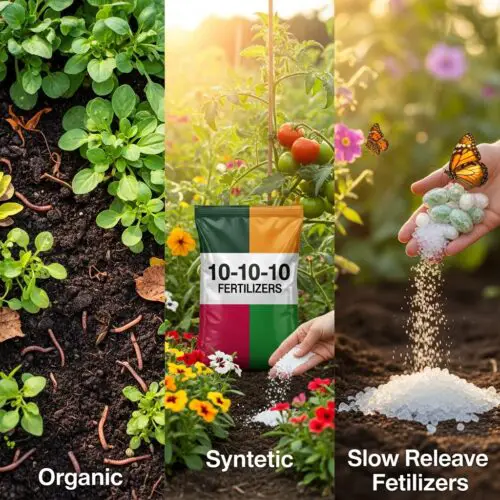
Choosing the right 10-10-10 fertilizer depends on your garden’s needs, environmental goals, and management style. Each formulation offers distinct characteristics, benefits, and limitations. Understanding these helps you select the most effective option for your plants.
Organic 10-10-10 Fertilizers
Organic 10-10-10 fertilizers derive nutrients from natural sources such as compost, manure, bone meal, and plant extracts. They promote soil health by supporting microbial activity and improving soil structure over time.
Benefits:
- Enhances soil microbiome
- Improves long-term soil fertility
- Reduces risk of nutrient runoff
Drawbacks:
- Slower nutrient availability
- Often more expensive
- Nutrient content can vary between batches
Application Scenario:
Ideal for organic gardening or projects prioritizing soil regeneration. For example, a vegetable garden using organic 10-10-10 can foster a resilient soil ecosystem, supporting sustained crop growth over seasons.
Best Organic 10-10-10 Fertilizers — Shop on Amazon!
Synthetic (Chemical) 10-10-10 Fertilizers
Synthetic fertilizers are manufactured with precise nutrient formulations, delivering instant nutrients to plants. They typically come in granular or liquid forms, offering quick correction of deficiencies.
Benefits:
- Rapid nutrient absorption
- Easy to apply and measure
- Consistent nutrient levels
Drawbacks:
- Potential for over-fertilization
- Can harm soil microbiota
- Risk of environmental runoff
Application Scenario:
Suitable for lawns or ornamental plants needing immediate nutrient boosts. For example, applying synthetic 10-10-10 to a lawn after a soil test can quickly restore vigor.
Boost your garden’s growth with synthetic 10-10-10 fertilizers — Shop now on Amazon!
Slow-Release 10-10-10 Fertilizers
Slow-release formulations are designed to gradually release nutrients over weeks or months. They often combine organic ingredients with coating technologies to extend nutrient availability.
Benefits:
- Steady nutrient delivery
- Reduces risk of over-fertilization
- Supports sustained plant growth
Drawbacks:
- Higher initial cost
- Less flexibility for immediate needs
- May require specific application timing
Application Scenario:
Optimal for perennial beds and container plants. For instance, using slow-release 10-10-10 in flower beds ensures continuous feeding without frequent reapplication, promoting consistent flowering.
Achieve lush, vibrant gardens with Slow-Release 10-10-10 Fertilizers — Shop on Amazon!
Decision Matrix for Fertilizer Selection
| Garden Size | Plant Type | Environmental Goals | Recommended Fertilizer Type |
|---|---|---|---|
| Small, intensive garden | Vegetables, herbs | Organic, microbe-friendly | Organic 10-10-10 |
| Large lawn or landscape | Lawns, ornamentals | Quick results, ease of use | Synthetic 10-10-10 |
| Perennials, containers | Flowering plants | Steady nutrition, minimal maintenance | Slow-release 10-10-10 |
This matrix guides you in choosing the best formulation based on your specific garden parameters and goals.
How to Choose the Best 10-10-10 Fertilizer for Your Garden
Selecting the right 10-10-10 fertilizer involves assessing your soil, understanding your plants, and considering environmental factors. A systematic approach ensures optimal nutrient delivery, promotes healthy growth, and prevents wasteful overapplication.
Conduct a Soil Test to Determine Nutrient Deficiencies
Start with a soil test to evaluate nutrient levels and pH. This step reveals whether your soil needs additional nitrogen, phosphorus, or potassium. For example, sandy soils often lack nutrients and drain quickly, requiring more frequent fertilization. Clay soils retain nutrients longer but risk runoff if overapplied. Loamy soils typically offer the best balance for 10-10-10 fertilizers. Conducting a soil test provides a factual basis to customize your fertilization plan. It helps avoid over- or under-fertilizing, which can harm plants and soil health.
Match Fertilizer Type and Application to Plant Needs
Identify your plant types and their growth stages. Vegetables, especially fruiting ones like tomatoes, benefit from steady nutrient supply. Leafy greens prefer nitrogen-rich feeds, while root vegetables need balanced formulations. Consider fertilizer release patterns: slow-release options deliver nutrients gradually, supporting long-term health; quick-acting fertilizers provide immediate nutrition during rapid growth phases. For example, applying a slow-release 10-10-10 before planting ensures consistent feeding over weeks, reducing application frequency. Use granular fertilizers for large beds and liquid formulations for spot feeding or containers.
Evaluate Environmental and Cost Factors
Factor in your climate and garden size. In hot, dry climates, slow-release fertilizers minimize leaching and runoff. Larger gardens may require more cost-effective options, like bulk granular fertilizers, versus premium organic solutions for small, ornamental beds. Environmental goals influence your choice—organic options support soil microbiome health, while synthetic fertilizers offer quick results. Calculate your budget and select a product that balances cost, environmental impact, and performance. For example, a gardener prioritizing sustainability might choose organic 10-10-10 formulations, even if slightly more expensive.
Use a Decision Framework for Personalized Selection
Apply this flowchart to guide your choice:
-
Soil Test Results?
- Deficient in nutrients?
- pH imbalance?
-
Plant Type and Growth Stage?
- Vegetables, flowers, lawns?
- Seedlings or mature plants?
-
Environmental Conditions?
- Climate, soil drainage, moisture?
-
Budget and Sustainability Goals?
- Organic or synthetic?
- Long-term soil health or immediate results?
Based on these factors, choose a fertilizer with the appropriate release pattern, formulation, and nutrient ratio. For example, a vegetable garden in a temperate climate might benefit from a slow-release, organic 10-10-10, applied at planting and supplemented as needed.
Example: Practical Decision-Making Scenario
Suppose you have a small vegetable garden with clay soil and limited budget. Your soil test shows low nitrogen and pH imbalance. You want steady growth and eco-friendly practices. The ideal choice: a slow-release, organic 10-10-10 fertilizer, applied at planting, with periodic reapplications based on plant performance. This method balances soil health, plant needs, and cost efficiency.
Step-by-Step Application Techniques and Timing
Applying 10-10-10 fertilizers correctly ensures optimal plant growth, soil health, and environmental safety. Follow these precise methods for dosage, timing, and safety precautions tailored to your garden’s needs.
How to Apply 10-10-10 Fertilizer Effectively
-
Determine the correct dosage:
Use a dosage calculator based on garden size and plant type. For example, a standard recommendation for a vegetable garden is approximately 1 pound per 100 square feet for granular fertilizer. Adjust according to specific plant needs and soil conditions. -
Select the application method:
Choose between granular or liquid fertilizers based on your garden size and maintenance preference. Granular fertilizers are suitable for larger areas, while liquids work well for smaller, high-maintenance beds. -
Follow the recommended application rate:
Over-application risks nutrient runoff and plant damage. Under-application may lead to nutrient deficiencies. Always adhere to manufacturer instructions or soil test recommendations.
When to Apply During the Growing Season
| Plant Type | Application Timing | Frequency |
|---|---|---|
| Vegetables | At planting, early vegetative stage, and during peak growth | Every 3-4 weeks, or as per crop needs |
| Lawns | Early spring, mid-season, and late fall | Monthly during active growth |
| Ornamentals | At planting, early bloom, and mid-season | Every 4-6 weeks |
- Vegetables: Apply at transplanting or sowing, then every 3-4 weeks during active growth for steady nutrition.
- Lawns: Fertilize in early spring, mid-summer, and fall to maintain vigor.
- Ornamentals: Use during initial planting and throughout the flowering season to support continuous development.
Safety Precautions to Prevent Over-Fertilization
-
Wear protective gear:
Use gloves, masks, and eye protection when handling fertilizers. -
Apply during dry weather:
Avoid applying before heavy rain to prevent runoff. -
Avoid overapplication:
Use the dosage calculator and follow label instructions precisely. Excess fertilizer can cause root burn, nutrient imbalance, and environmental harm. -
Incorporate granules into soil:
Lightly raking granules into the topsoil enhances nutrient absorption and minimizes runoff. -
Water thoroughly after application:
Light watering helps dissolve nutrients, promoting uptake and reducing the risk of fertilizer burn.
Practical Example: Small Vegetable Garden
Suppose you have a 200-square-foot vegetable plot.
- Fertilizer choice: Granular 10-10-10 fertilizer
- Dosage: 2 pounds total (based on 1 pound per 100 sq ft)
- Application timing: At planting, then every 3 weeks during the growing season
- Method: Broadcast evenly, lightly rake into the soil, then water thoroughly
This approach ensures consistent nutrient delivery, supports healthy plant development, and minimizes environmental impact.
Benefits, Drawbacks, and Environmental Considerations
10-10-10 fertilizers offer a balanced supply of nitrogen, phosphorus, and potassium, making them popular for various gardening applications. However, their use involves specific benefits and potential risks that gardeners must understand to optimize growth and minimize environmental impact.
Advantages of Balanced Nutrition
- Uniform nutrient delivery: The 10-10-10 ratio provides equal parts of N, P, and K, supporting overall plant health, flowering, and fruiting.
- Ease of use: These fertilizers are widely available in granular, liquid, and slow-release forms, simplifying application.
- Versatility: Suitable for lawns, vegetables, ornamentals, and trees, making them a flexible choice for diverse gardens.
- Consistent results: Steady nutrient supply reduces the need for frequent applications, saving time and effort.
Potential Environmental Risks and How to Mitigate Them
-
Runoff and water pollution: Excess fertilizer can leach into waterways, causing eutrophication. To reduce this risk:
- Apply only as much as plants need based on soil testing.
- Use slow-release formulations to control nutrient release.
- Incorporate fertilizers into the soil to minimize runoff.
-
Soil imbalance: Overuse may disrupt soil microbiomes, reducing soil health over time.
- Conduct periodic soil tests to monitor nutrient levels.
- Rotate fertilization practices with organic amendments to maintain microbial diversity.
-
Carbon footprint: Synthetic 10-10-10 fertilizers often involve energy-intensive manufacturing processes.
- Opt for organic or biodegradable options when possible.
- Choose formulations that match specific crop needs to avoid overapplication.
Sustainable Use and Organic Alternatives
-
Organic options: Natural sources such as composted manure, bone meal, or fish emulsion provide nutrients in a more sustainable manner.
- These enhance soil microbial activity and improve long-term soil health.
- Integrated practices: Combine organic fertilizers with practices like crop rotation, cover cropping, and reduced tillage.
- Scenario-based decision: For example, a vegetable garden with poor soil may benefit from organic amendments first, supplemented with 10-10-10 synthetic fertilizer if nutrient deficiencies persist.
Example Case Study
A homeowner used a synthetic 10-10-10 fertilizer on a lawn prone to runoff after heavy rains. After soil testing, they realized nitrogen levels were excessive, leading to algae blooms in nearby ponds. Switching to a slow-release organic fertilizer improved soil health and minimized environmental impact. Regular soil testing and tailored application prevented further issues and supported sustainable gardening practices.
Real-World Scenarios and Recommendations for Different Garden Types
Choosing the right 10-10-10 NPK fertilizer depends on your garden’s specific needs. Here are scenario-based guidelines to help you select the optimal formulation and application strategy for vegetable plots, lawns, flower beds, and fruit trees.
Vegetable Gardens: Optimal Fertilizer Choices
Vegetable plants often require balanced nutrients for vigorous growth and high yields. A 10-10-10 fertilizer provides uniform nitrogen, phosphorus, and potassium, supporting overall development.
- Best choice: Use granular or slow-release 10-10-10 fertilizers for consistent feeding.
- Application timing: Apply at planting and then every 4-6 weeks during the growing season.
- Considerations: Vegetables like tomatoes and peppers benefit from additional micronutrients such as magnesium and boron. Conduct soil tests to tailor applications.
Example: For a tomato bed, a 10-10-10 fertilizer supplemented with micronutrients improves fruit set and flavor.
Lawns: Maintaining Vibrant Green Turf
Lawns need steady nitrogen supply for lush, green growth. A synthetic 10-10-10 fertilizer offers rapid nutrient availability, ideal for initial establishment or recovery.
- Best choice: Use granular, quick-release formulations for immediate response.
- Application schedule: Fertilize every 6-8 weeks, avoiding over-application to prevent runoff.
- Soil considerations: Conduct a soil test to determine if pH adjustments or micronutrient supplements are necessary.
Example: A lawn prone to nitrogen deficiency may require a spring and fall application of 10-10-10 to maintain color and density.
Flower Beds and Fruit Trees: Tailored Approaches
Flowers and fruit trees thrive with balanced nutrients that promote flowering and fruiting. Organic 10-10-10 fertilizers enhance soil microbiome, supporting long-term health.
- Best choice: Opt for organic formulations with added micronutrients and beneficial microbes.
- Application timing: Apply in early spring before bloom and again during fruit set.
- Soil type impact: Sandy soils need more frequent applications; clay soils require larger doses less often.
Example: A fruit orchard benefits from slow-release organic 10-10-10 applied in early spring, combined with micronutrient supplements like zinc and manganese.
Decision Tree for Garden Fertilizer Selection
| Scenario | Soil Condition | Plant Type | Recommended Fertilizer Type | Application Schedule |
|---|---|---|---|---|
| Poor soil, vegetable garden | Sandy or depleted soil | Vegetables | Granular or slow-release 10-10-10 | At planting, then every 4-6 weeks |
| Established lawn, nutrient deficiency | Well-drained, pH balanced | Turfgrass | Quick-release granular 10-10-10 | Spring and fall, every 6-8 weeks |
| Flower beds, fruit trees | Loamy or clay soil | Ornamentals, fruit trees | Organic 10-10-10 + micronutrients | Early spring, during flowering & fruiting |
Additional Tips
- Always perform a soil test before applying fertilizer.
- Match fertilizer form (granular, liquid, slow-release) to your garden’s needs.
- Avoid over-fertilizing, which can harm plants and the environment.
- Incorporate micro-nutrients for enhanced plant health and productivity.
This scenario-based approach ensures you choose the most effective 10-10-10 fertilizer for your garden’s unique conditions, promoting optimal growth and sustainability.
Long-Term Soil Health and Micro-Nutrient Considerations
Using 10-10-10 fertilizers affects soil microbial activity, micronutrient balance, and sustainability. Proper management ensures a healthy soil ecosystem that supports ongoing plant growth.
Impact on Soil Microbial Activity
10-10-10 fertilizers supply essential nutrients for plants, but they also influence soil microbiomes. Synthetic formulations often deliver nutrients rapidly, which can temporarily suppress beneficial microbes. Organic 10-10-10 fertilizers, especially those with micronutrients and beneficial microbes like mycorrhizae, enhance microbial diversity and activity. A thriving microbiome improves nutrient cycling, disease resistance, and soil structure. For example, organic formulations can increase microbial biomass by up to 30% over a growing season, fostering long-term soil fertility.
Balancing Micro-Nutrients for Long-Term Fertility
Micronutrients such as boron, manganese, copper, iron, and zinc are vital for plant health. Over-reliance on 10-10-10 fertilizers can create imbalances, leading to deficiencies or toxicities. Regular soil testing guides supplementation, ensuring micro-nutrient levels remain optimal. For instance, if soil tests reveal iron deficiency, applying chelated iron can correct it without disrupting other nutrients. Maintaining a balanced micronutrient profile prevents issues like stunted growth, poor flowering, and reduced fruiting. Incorporating organic amendments or micro-nutrient blends supports a sustainable nutrient cycle.
Strategies for Sustainable Fertilizer Use
To promote long-term soil health with 10-10-10 fertilizers, consider these strategies:
- Conduct soil tests before application to identify deficiencies and pH levels.
- Use slow-release or organic formulations to prevent nutrient leaching and promote microbial activity.
- Apply micronutrient supplements selectively based on test results.
- Integrate crop rotation and cover cropping to naturally replenish soil nutrients and improve structure.
- Limit fertilizer frequency to avoid soil imbalance and environmental runoff.
- Monitor plant response and adjust application rates accordingly.
Practical Example: Organic vs. Synthetic 10-10-10
A vegetable garden using synthetic 10-10-10 may show quick growth initially but can lead to reduced microbial diversity after several seasons. Conversely, organic 10-10-10, enriched with micro-nutrients and beneficial microbes, sustains soil health over multiple years. For example, a tomato crop grown with organic formulations showed a 15% increase in microbial diversity and better soil structure after two seasons compared to synthetic fertilizer use.
Decision-Making Checklist
| Step | Action | Consideration |
|---|---|---|
| 1 | Conduct soil test | Identify deficiencies and pH |
| 2 | Choose fertilizer type | Organic for microbiome, synthetic for immediate needs |
| 3 | Incorporate micro-nutrient supplements | Based on test results |
| 4 | Apply fertilizer | Match plant growth stage and soil conditions |
| 5 | Monitor soil and plant health | Adjust practices as needed |
This approach ensures your garden benefits from balanced, sustainable nutrition while supporting a resilient soil ecosystem.
Final Tips, Common Mistakes, and Expert Recommendations
Optimizing your use of 10-10-10 NPK fertilizers requires understanding best practices and avoiding typical errors. Here are essential tips and insights from experts to help you achieve vibrant, healthy plants.
Top Tips for Effective Fertilizer Use
- Conduct soil testing before applying fertilizer to identify existing nutrient levels and pH. This guides precise application and prevents over-fertilization.
- Apply during active growth phases. Nutrients are most effectively absorbed when plants are actively developing, such as during early vegetative or flowering stages.
- Water thoroughly after application. Proper watering dissolves nutrients, facilitating root uptake and reducing the risk of salt buildup.
- Match fertilizer timing with watering schedules. Fertilize when soil moisture is adequate to ensure even distribution and absorption.
- Use the correct application method. Granular fertilizers work well for slow-release feeding, while liquid forms allow quick nutrient delivery—choose based on your goals.
Avoiding Common Pitfalls
- Over-fertilizing can cause salt buildup, root damage, and nutrient imbalances. Always follow recommended dosages and frequency.
- Ignoring soil pH. High or low pH levels hinder nutrient availability. Regular pH testing and adjustments are crucial.
- Applying fertilizer during drought or extreme temperatures. Stress conditions limit plant uptake and increase the risk of damage.
- Neglecting micro-nutrient needs. While N, P, and K are primary, deficiencies in micronutrients like iron or magnesium can impair growth. Incorporate micro-nutrient supplements if indicated by soil tests.
- Not keeping records. Track application dates, rates, weather, and plant responses. This helps optimize future practices and prevents repeated mistakes.
Expert Recommendations for Long-Term Success
- Use a balanced approach. Combine organic and synthetic fertilizers based on soil health, plant needs, and environmental goals. Organic options enhance soil microbiome, while synthetic fertilizers provide immediate nutrients.
- Implement a soil health management plan. Incorporate organic matter, crop rotation, and micro-nutrient supplementation to sustain soil vitality.
-
Watch for red flags:
- Leaf scorch or wilting after fertilization.
- Unusual soil crusting or salt deposits.
- Pungent odors indicating over-application.
- Adjust based on plant feedback. Yellowing leaves may signal nitrogen deficiency, while poor flowering could suggest phosphorus imbalance. Use this feedback to refine your fertilization routine.
- Prioritize environmental sustainability. Opt for slow-release or organic fertilizers to reduce runoff and pollution, supporting eco-friendly gardening practices.
Fertilizer Application Checklist
| Step | Action | Key Consideration |
|---|---|---|
| 1 | Soil test | Determine nutrient levels and pH |
| 2 | Choose fertilizer type | Organic vs synthetic based on needs |
| 3 | Calculate dosage | Follow label instructions precisely |
| 4 | Apply at optimal time | During active growth, early morning or late afternoon |
| 5 | Water thoroughly | Immediately after application |
| 6 | Record and monitor | Document results for future adjustments |
Real-World Example
A vegetable gardener notices stunted growth and yellowing leaves. A soil test reveals nitrogen deficiency. Applying a balanced 10-10-10 fertilizer at recommended rates, combined with proper watering, restores healthy foliage within weeks. Recording this application helps refine future nutrient management.
By following these targeted tips and avoiding common mistakes, you can maximize the benefits of 10-10-10 fertilizers and cultivate a thriving garden.
Frequently Asked Questions
These quick answers cover the most common questions about this topic, including key details, practical tips, and common concerns.
Which NPK fertilizer is the best?
The best NPK fertilizer depends on your specific plant needs, soil condition, and gardening goals. For general use, a balanced 10-10-10 fertilizer offers versatile nutrition for a wide range of plants. Organic options are ideal if you prioritize soil health and sustainability, while synthetic fertilizers provide quick results. Always consider soil testing to choose the most suitable formulation.
What fertilizer is good for St. Augustine?
St. Augustine grass thrives with a balanced fertilizer like 10-10-10 applied during the active growing season. It promotes lush, green turf and healthy root development. For best results, fertilize every 6-8 weeks, and consider supplementing with micronutrients like iron to enhance color. Avoid over-fertilizing to prevent thatch buildup and runoff.
What is a poor man’s fertilizer?
A poor man’s fertilizer refers to affordable, natural, and readily available materials that provide essential nutrients. Examples include compost, manure, bone meal, and kitchen scraps. These organic options improve soil fertility gradually and support microbial activity, making them sustainable choices for budget-conscious gardeners.
What is the best fertilizer for bitter melon?
Bitter melon benefits from a balanced fertilizer like 10-10-10 applied at planting and during the growing season. It supports vigorous vine growth and fruit production. Incorporate micronutrients such as boron and zinc if deficiencies are observed. Consistent, moderate feeding helps maximize yield and quality.
Does NPK Ratio Matter?
Yes, the NPK ratio influences how nutrients are supplied to plants. A balanced ratio like 10-10-10 provides equal parts of nitrogen, phosphorus, and potassium, suitable for general growth. However, specific plants or growth stages may require different ratios; for example, leafy greens need more nitrogen, while flowering plants benefit from higher phosphorus.
What Do N-P-K Numbers Mean?
The N-P-K numbers represent the percentage by weight of nitrogen (N), phosphorus (P), and potassium (K) in the fertilizer. For example, a 10-10-10 fertilizer contains 10% of each nutrient. These ratios guide gardeners in selecting fertilizers that meet their plants’ nutritional requirements.
When is the best time to apply 10-10-10 fertilizer?
Apply 10-10-10 fertilizer during active growth periods, such as early spring or early in the plant’s development. For lawns, early spring and late fall are ideal. For vegetables and flowers, apply at planting and every 4-6 weeks during peak growth. Proper timing ensures nutrients are available when plants need them most.
How to avoid over-fertilizing with 10-10-10?
Follow manufacturer instructions and base applications on soil test results. Use the correct dosage and avoid applying before heavy rain to prevent runoff. Incorporate fertilizers into the soil and water thoroughly afterward. Regular monitoring of plant health helps detect deficiencies or excesses early.