
The black walnut tree (*Juglans nigra*) is a large native hardwood known for its valuable timber, edible nuts, and distinctive compound leaves, which can influence nearby plant growth.
This article covers how to identify black walnut trees, the role of juglone in plant interactions, key benefits of the tree, and important cultivation and safety tips for gardeners and landowners.
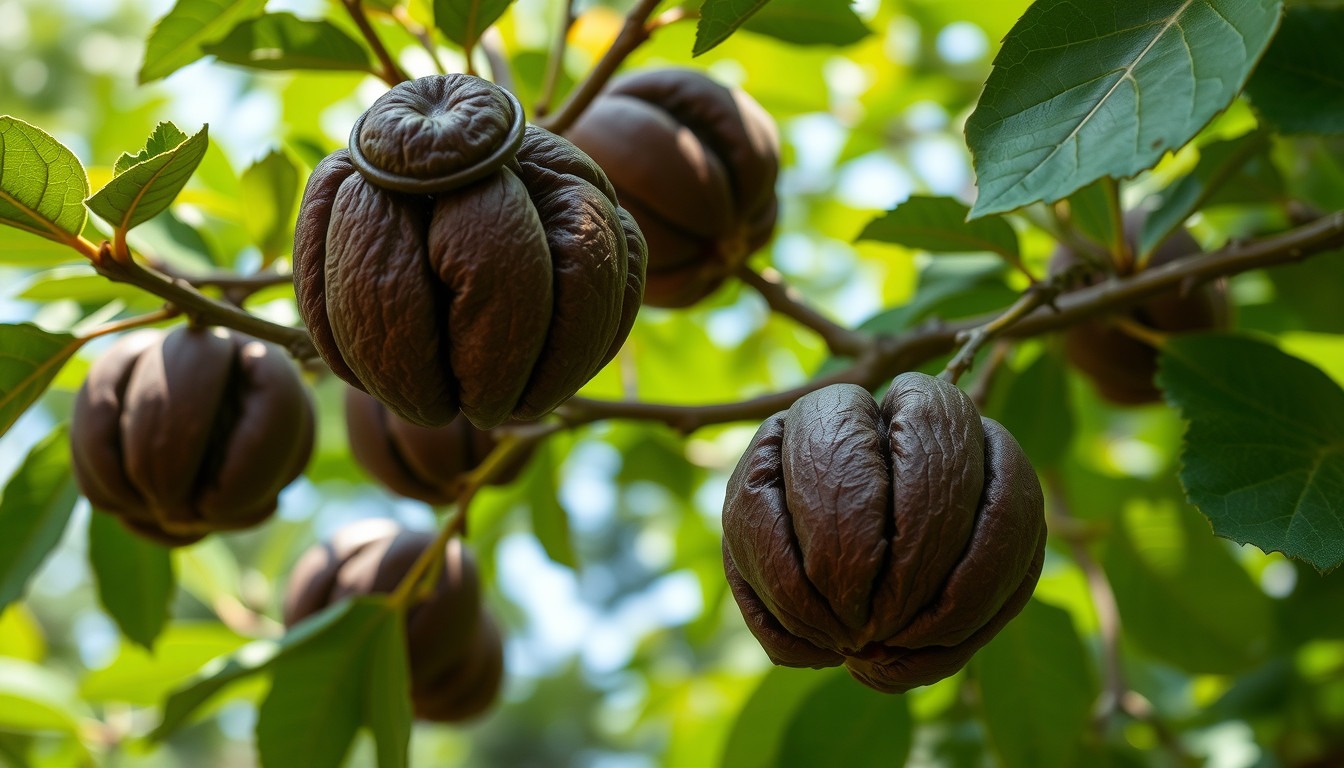
Introduction to Black Walnut Trees: Nature and Significance
Black walnut trees are iconic native hardwoods valued for their timber, nuts, and ecological contributions. Recognizing these trees involves understanding their distinctive features, natural habitat, and ecological roles.
- Scientific classification and native range: Belonging to the genus Juglans, black walnut (Juglans nigra) is native to eastern North America, thriving from southern Canada to northern Florida.
- Ecological roles and wildlife habitat: They serve as host plants for butterfly and moth caterpillars, providing food and shelter for various species, and supporting biodiversity.
- Historical and economic significance: Valued for their dense, durable timber used in fine furniture and flooring, and prized for their edible nuts, black walnuts have long been part of both natural ecosystems and human industries.
1. Identification Features
Black walnut trees are easy to identify once you know their physical traits:
- Leaves: Compound leaves with 15-23 leaflets, each with serrated edges and a pointed tip; leaves turn yellow in fall.
- Bark: Dark brown to gray, with deep, broad ridges creating a rugged, furrowed appearance.
- Fruit: Large, round to oval nuts enclosed in a thick, green husk that turns brown as it matures. The nuts are nestled in a hard shell inside.
2. Ecological and Chemical Effects
While black walnut trees offer many benefits, they produce a chemical called juglone, found in roots, leaves, and husks. This compound suppresses growth of certain nearby plants, making plant selection around black walnuts critical.
Table of Contents
3. Growth Conditions and Care
Black walnuts prefer deep, well-drained, loamy soils and full sun. They grow best in USDA zones 4-9, with ample space for a large canopy and root system. Proper planting and maintenance help ensure healthy growth while managing juglone’s influence.
4. Practical Tips for Landowners
- Assess your site’s soil and space to accommodate mature trees.
- Plan planting locations to avoid sensitive plants that may be affected by juglone.
- Regularly monitor trees for diseases like thousand cankers and root rot, common issues in black walnuts.
How to Identify a Black Walnut Tree
Recognizing a black walnut tree involves examining its leaves, bark, and fruit throughout the seasons. These distinctive features help differentiate it from other hardwoods.
1. Leaves: Shape, Arrangement, and Fall Color
Black walnut trees have large, pinnately compound leaves with 15 to 23 leaflets. Each leaflet is elliptical with a pointed tip, and the leaflets are arranged oppositely along the central stem. During fall, the leaves change to a vibrant yellow, providing an eye-catching display that aids in identification.
2. Bark: Texture and Ridges
The bark of a mature black walnut is deeply ridged and interlaced, forming a rugged, dark brown to nearly black surface. These deeply furrowed ridges tend to form irregular patterns, which become more pronounced with age. This texture is a key visual cue, especially during winter when leaves are absent.
3. Fruits: Appearance, Nut Production, and Smell
The black walnut produces green husked fruits that mature into hard, dark brown shells containing edible nuts. The husks emit a distinctive, aromatic smell, especially when fallen and decomposing. In autumn, these nuts drop beneath the tree, sometimes covered with a green or brown husk that eventually splits open to reveal the shell.
| Feature | Details |
|---|---|
| Leaves | Large, pinnately compound, 15-23 leaflets; elliptical shape; yellow in fall |
| Bark | Deeply ridged, interlaced pattern, dark brown to black |
| Fruits | Green husked, dropping in fall; strong aromatic smell; hard, dark shell with edible nut inside |
4. Additional Identification Tips
- Look for the tree’s large size and expansive canopy, typical of mature specimens.
- Check for the distinctive smell of crushed leaves or husks.
- Observe the location: black walnuts favor rich, well-drained loamy soil and full sun.
- Consider seasonal changes: leaves in summer, nuts in fall, and rugged bark in winter.
Accurately identifying a black walnut helps with proper planting, harvesting, and understanding its role in the local ecosystem, especially considering its juglone production and impacts on nearby plants.
Understanding Juglone and Its Impact on Surroundings
Juglone is a natural chemical exuded by black walnut trees that influences nearby plant growth, sometimes creating toxicity zones. Recognizing its effects helps manage landscaping and planting decisions effectively.
1. What is juglone and how is it produced?
Juglone (5-hydroxy-1,4-naphthoquinone) is a chemical produced naturally in black walnut tree roots, leaves, and husks. It acts as a herbicide, inhibiting the growth of certain plants nearby. The toxin is released into the soil through root exudation, leaf litter decomposition, and husks that fall from the tree. This process creates a zone around the tree where sensitive plants may struggle to survive. Understanding this chemical production is vital for gardeners aiming to prevent unwanted plant death or to plan compatible landscaping.
2. Range and influence of juglone’s toxicity
Juglone can affect plants up to 50 feet or more from the tree, depending on soil conditions and root spread. Its impact varies: some plants are highly susceptible to its toxicity, while others tolerate it well. The toxin binds tightly to soil particles, making its effects long-lasting, especially in well-drained, loamy soils. This creates a “toxicity zone” where planting certain plants can lead to poor growth or death, which makes site planning essential for successful planting zones near black walnuts.
3. Plants susceptible versus tolerant to juglone
- Susceptible plants: tomatoes, azaleas, rhododendrons, blueberries, and peppers often fail to thrive near black walnut trees.
- Juglone-tolerant plants: certain ground covers, some grasses, and walnut-tolerant trees such as maples and oaks can grow safely close to black walnuts.
| Plant Category | Examples |
|---|---|
| Susceptible | Tomatoes, azaleas, rhododendrons, blueberries |
| Tolerant | Maples, oaks, certain grasses, ground covers |
| Note | Placement of plants depends on proximity to black walnut roots |
Proper understanding of juglone’s production and influence supports better landscape planning, ensuring both healthy plant growth and the ecological benefits of black walnut trees.
Valuable Uses and Benefits of Black Walnut Trees
Black walnut trees offer a range of economic, ecological, and health benefits, making them valuable assets in both natural landscapes and the woodworking industry.
1. Specification Table: Key Benefits of Black Walnut Trees
| Benefit Category | Details |
|---|---|
| Wood | Premium hardwood used in furniture, gunstocks, veneers due to its durability and attractive grain. |
| Nuts | Harvested in fall; rich in flavor and oil; valued for culinary uses and nutritional content. |
| Ecological Roles | Provides food and habitat for wildlife; supports biodiversity; natural dye source due to its tannins. |
2. Wood: Qualities and Common Uses
Black walnut wood is highly prized for its fine grain, rich color, and strength. It is commonly utilized in high-end furniture, interior paneling, musical instruments, and veneers. Its durability ensures long-lasting, beautiful products that are sought after by craftsmen and industry professionals.
3. Nuts: Harvest, Nutritional Value, and Culinary Uses
Black walnuts are typically harvested in autumn. They are known for their rich, intense flavor, which makes them popular in baking, confections, and snack foods. Nut oil extracted from black walnuts is also used for cooking and dressings, offering healthful omega-3 fatty acids and antioxidants.
4. Ecological Benefits: Wildlife Habitat and Natural Dyes
Black walnut trees play an important ecological role by providing diverse habitats for birds, insects, and mammals. Their shells and husks contain tannins used historically for natural dyes, contributing to sustainable practices. Additionally, they help stabilize soil and improve local ecosystems.
Understanding these practical benefits supports better decision-making when planting and managing black walnut trees, ensuring they serve both industry needs and ecological health effectively.
Common Problems and Challenges in Cultivating Black Walnuts
This part of the article needs a final editorial check. The research and related guidance are included in the sources below.
Practical Steps for Planting, Harvesting, and Maintaining Black Walnut Trees
Growing healthy black walnut trees requires careful site selection, proper planting techniques, and attentive harvesting practices. Follow these steps to ensure successful cultivation and safe handling of walnuts and wood.
1. Site selection considering juglone effects
Choose planting locations outside the drip zone of sensitive plants to prevent juglone toxicity from affecting nearby vegetation. Typically, this zone extends 50 feet or more from the trunk, so map this area to avoid undersirable plantings.
2. Planting tips and soil requirements
Opt for well-drained, fertile soils with a pH between 6.0 and 7.5. Loamy soils enhance root development and nut production. Dig a large hole twice as wide and deep as the root ball, gently spreading out roots and filling with soil. Space trees at least 50 to 60 feet apart to accommodate growth and reduce competition.
3. Harvesting nuts and wood management
Harvest walnuts when the green husks loosen and turn brown, typically in late fall. Gather the nuts before any significant weather events to prevent loss. Crack the nuts using sturdy tools like a nutcracker, wearing protective gloves to avoid injury. For wood, thin out crowded branches and prune periodically to promote healthy growth. After harvesting, store nuts in a cool, dry place for further processing.
Legal, Safety, and Environmental ConsiderationsUnderstanding the legal, safety, and ecological aspects of black walnut cultivation and harvest is essential to responsible stewardship and personal safety.1. Legal considerations for harvesting and land managementMany regions regulate the harvesting of black walnuts and the management of land containing these trees. Always check local laws before collecting nuts or cutting trees, especially on public land or protected areas. Unauthorized harvesting may violate statutes designed to preserve native ecosystems or prevent theft. If planting or removing these trees, adhere to zoning restrictions and obtain necessary permits when applicable.2. Environmental impact of black walnut cultivationBlack walnuts produce juglone, an allelopathic chemical that suppresses some surrounding plant species. Avoid planting black walnuts in sensitive ecosystems where their chemical exudates could harm rare or vulnerable flora. In cultivated landscapes, consider buffer zones or selecting juglone-tolerant plants to prevent unintended damage. Additionally, large-scale cultivation should prioritize sustainable practices to prevent habitat degradation and maintain biodiversity.3. Safety tips for handling nuts and wood
- Use protective gloves when cracking or processing walnuts to avoid skin irritation from juglone residues.
- Wear eye protection and sturdy clothing when cutting or handling wood to prevent injuries from splinters or sharp tools.
- Ensure proper ventilation when drying or processing walnut husks, as dust and particulates may cause respiratory discomfort.
- Handle the nuts with care during harvesting; the shells are tough and brittle, risking cuts if not handled with appropriate tools.
- Store harvested nuts in a cool, dry, and well-ventilated area to prevent mold growth and spoilage.
4. Additional safety and environmental considerationsDetailed Identification Features of Black Walnut TreesAccurately identifying a black walnut tree involves examining multiple distinctive characteristics, especially during different seasons. Notably, the tree’s large, pinnately compound leaves with 15 to 23 leaflets are a primary feature, with each leaflet being elliptical and serrated. In fall, these leaves turn a vivid yellow, providing a clear seasonal marker.The bark of mature black walnuts is deeply ridged, forming irregular, interlaced patterns that become more prominent with age, making it easily distinguishable during winter and early spring when leaves are absent. The tree’s fruits are large, green husks that mature into hard, dark brown shells, often showing a spicy citrus scent when crushed or decomposing. The nuts inside are enclosed within these shells, and their strong aroma can be detected beneath the tree when fallen husks decay.Comparison of Identification FeaturesManaging Juglone and Its Effects on Nearby PlantsJuglone, a natural herbicide produced by black walnut trees, exudes from roots, leaves, and husks, affecting the growth of sensitive plants within a substantial radius. To effectively manage its influence, landowners should understand how juglone disperses and impacts nearby flora.1. Range and Influence of Juglone’s ToxicityThe herbicide can affect plants up to 50 feet or more from the trunk, depending on several factors: soil type, root spread, and water movement. In loamy, well-drained soils, juglone’s impact is particularly long-lasting because the compound binds tightly to soil particles, maintaining its toxicity over time. Knowing this helps in planning planting zones to avoid sensitive species.2. List of Juglone-sensitive and Tolerant Plants
- Susceptible plants: Tomatoes, azaleas, rhododendrons, blueberries, and peppers.
- Tolerant plants: Maples, oaks, certain grasses, and some ground covers.
- Advice: Always assess the placement of new plantings with regard to the tree’s drip line and root zone to minimize juglone’s detrimental effects.
Frequently Asked Questions1. How can I distinguish a black walnut tree from other walnuts?Black walnut trees are characterized by their large, pinnately compound leaves with 15-23 serrated leaflets that turn yellow in fall. Their bark is deeply ridged and interlaced, forming a rugged, dark surface. The tree produces green husked fruits that mature into dark, hard shells with a distinctive aromatic smell. Recognizing these features helps distinguish black walnuts from other walnut species.2. What is juglone and how does it affect my garden?Juglone is a natural chemical produced by black walnut trees that exudes from roots, leaves, and husks. It acts as a herbicide, inhibiting the growth of sensitive plants within approximately 50 feet of the tree. Soil around the tree can remain toxic to certain plants for extended periods, affecting garden planning and plant selection.3. When is the best time to harvest black walnuts?Black walnuts are best harvested in the fall, typically when the green husks begin to turn brown and decompose, usually from September to November. The nuts fall freely beneath the tree when ready, and their shells are hard and dark. Collecting them promptly after dropping helps prevent nut infestation and damage.4. Are black walnut trees safe to plant near edible garden beds?Planting black walnuts near edible garden beds can be problematic due to juglone’s toxic effects, which can inhibit or kill sensitive plants. It’s recommended to maintain a distance of at least 50 feet and to choose juglone-tolerant plants if planting closer. Regular monitoring and soil testing can also help manage potential risks.5. What are the main challenges of growing black walnuts?Main challenges include managing their large size and extensive root system, which requires ample space; overcoming the allelopathic effects of juglone on nearby plants; and addressing pests or diseases such as thousand cankers and root rot. Proper site selection, care, and monitoring are essential for healthy growth.6. Can black walnuts improve or damage nearby plants?Black walnuts can damage nearby plants primarily through the production of juglone, which suppresses the growth of susceptible species. However, some plants tolerate juglone well and can benefit from the shade and organic matter they contribute. Careful plant selection is crucial to prevent damage.7. How do I properly prune or care for a mature black walnut?Pruning should be done during late winter or early spring to remove dead or crossing branches, promote good structure, and reduce wind damage. Regular watering, mulching, and monitoring for pests or disease help maintain tree health. Avoid damaging the roots, as black walnuts have sensitive, extensive root systems that influence landscaping.8. Are there pests or diseases specific to black walnuts that I should watch for?Common concerns include thousand cankers disease, which affects the bark and wood, and root rot from overly wet soils. Monitoring for signs of fungal infections, pests like walnut husk flies, and managing soil drainage can help prevent these issues and ensure a healthy tree.
Sources and further reading
- Black Walnut Facts that Will Surprise You!
- Black Walnut Trees: Facts, Juglone Effects, and How to Harvest Walnuts | The Old Farmer’s Almanac
- Black Walnut Tree: Benefits, Problems, and Identification
- Black walnut | Juglans nigra | The Morton Arboretum
- Black Walnut Trees (U.S. National Park Service)
- Native Plant Profile: Black Walnut (Juglans nigra) – – Maryland News
| Aspect | Guideline | |
|---|---|---|
| Legal compliance | Consult local regulations before harvesting or planting | |
| Ecological impact | Avoid planting in endangered ecosystems; use buffer zones | |
| Safety equipment | Wear gloves, eye protection, and masks when handling nuts and wood | |
| Storage | Keep nuts in cool, dry places; store wood away from deforestation zones | |
| Feature | Description | Season |
| Leaves | Pinnately compound with 15-23 leaflets, elliptical, serrated edges | Summer/Fall (yellow coloration) |
| Bark | Deeply ridged, irregular, interlaced pattern, dark brown to black | Winter/Spring |
| Fruits | Large green husks turning brown, emitting a spicy citrus scent, enclosing hard shells and edible nuts | Late Summer/Fall |