
Blue Palo Verde is a stunning tree that brings beauty and sustainability to any landscape. Let’s explore its unique characteristics, care requirements, and the many types it belongs to.
Overview of Blue Palo Verde
Scientific Classification
When I first learned about the Blue Palo Verde, I was fascinated by its scientific classification. This tree is known as Parkinsonia florida. Belonging to the legume family, Fabaceae, it’s a member of a broader group of flowering plants that includes beans and peas. The name “Palo Verde” translates to “green stick” in Spanish, which I think perfectly describes the vibrant green bark that characterizes this tree.
Native Habitat and Range
The Blue Palo Verde is native to the southwestern United States and Mexico. I remember traveling through Arizona and being mesmerized by how these trees thrive in the arid desert climate. They can primarily be found in areas like the Sonoran Desert, where they flourish alongside other native flora. Their range extends from southern California to New Mexico, making them a beloved sight in many landscapes.
Physical Characteristics
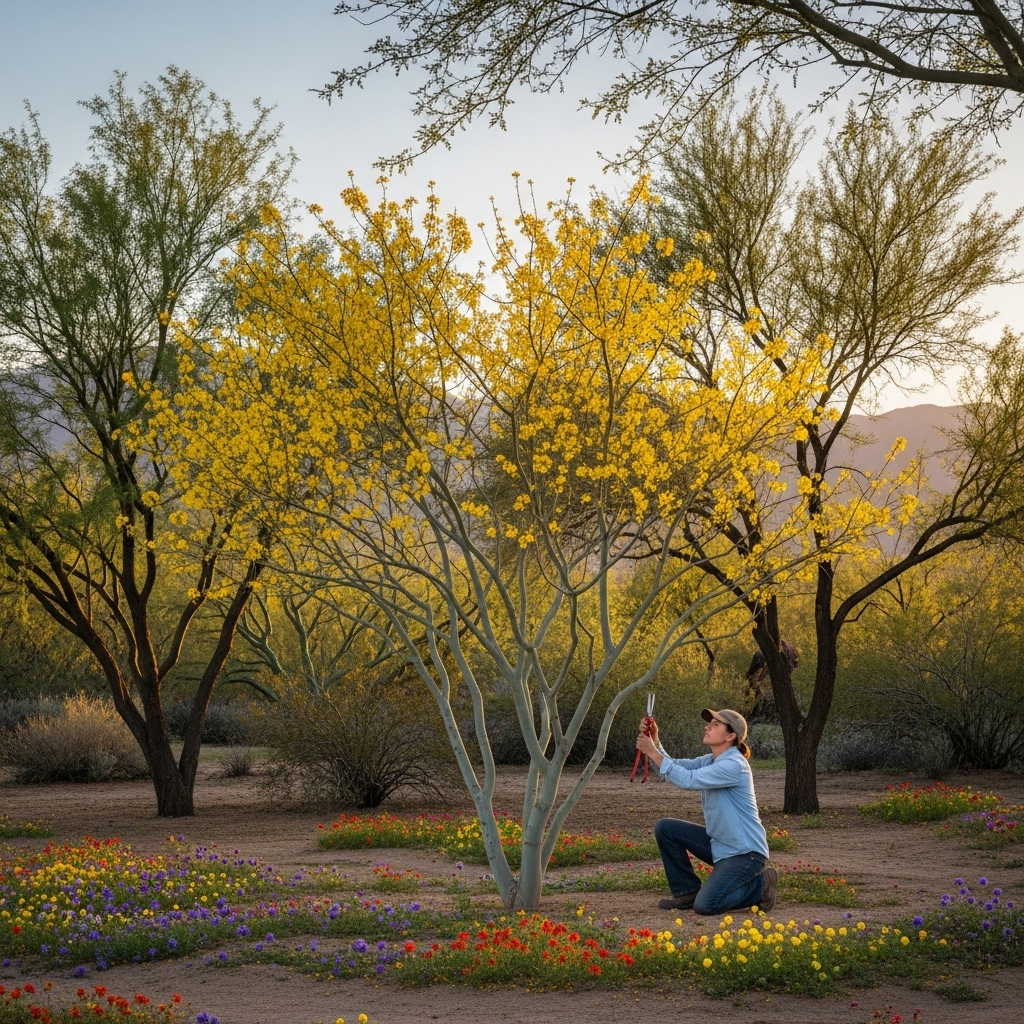
What I find most striking about the Blue Palo Verde is its physical appearance. These trees can grow anywhere from 15 to 30 feet tall, with a canopy that spreads generously. The leaves are small, bright green, and are often found in clusters, giving off an airy feel to the tree. The bark, which is green, serves a vital purpose: it photosynthesizes, allowing the tree to thrive even during drought conditions.
The flowers are another highlight. In late spring, I’ve seen these trees burst into a beautiful display of yellow blossoms that can transform any landscape into a vibrant spectacle. The flowers are not just pretty; they attract pollinators, including bees, which is important for our ecosystem. After flowering, the tree produces long seed pods that add to its visual interest and serve as food for wildlife.
Types of Palo Verde Trees
Blue Palo Verde (Parkinsonia florida)
As I mentioned, the Blue Palo Verde is a standout member of the Palo Verde family. It’s known for its striking color and adaptability to harsh environments. I’ve often recommended this tree to friends looking to add a touch of beauty to their gardens without needing constant care. For more information on the various types, check out the Palo Verde Tree Guide: Types, Problems, Images & Care.
Foothill Palo Verde (Parkinsonia microphylla)
Another type I’ve encountered is the Foothill Palo Verde. This tree is a bit smaller, reaching heights of around 15 to 25 feet. It’s especially common in the foothills of Arizona and California. I appreciate how it offers a slightly different shape and texture, making it a great option for those looking to diversify their landscape.
Mexican Palo Verde (Parkinsonia aculeata)
The Mexican Palo Verde is another variant that I’ve seen in various gardens. It typically grows taller than the other types, often reaching 30 feet or more. It features thorny branches, which can be quite striking. I remember seeing this tree in bloom, and it was simply breathtaking, with clusters of yellow flowers that draw in many pollinators.
Understanding these different types helps in choosing the right Palo Verde for your garden or landscape. Each offers unique benefits and aesthetics that can enhance any outdoor space. For more insights into the challenges you might face, visit Palo Verde Tree Problems, Types, Images & Disease Photos.
Care Requirements for Blue Palo Verde
Soil Requirements
When I decided to plant a Blue Palo Verde in my garden, I quickly learned that the right soil is crucial for its growth. These trees thrive in well-draining soil, and they don’t mind a little sand mixed in. I found that sandy loam or even rocky soils work well. It’s interesting because they can tolerate poor soil conditions, which is great if you’re like me and want something that doesn’t require a lot of fuss. Just make sure the soil isn’t too compacted, as this can lead to root rot, and we definitely want to avoid that!
Watering Needs
Watering was something I had to adjust my mindset about after I planted my Blue Palo Verde. Unlike many other trees that need regular watering, this beauty is quite drought-tolerant once established. I remember feeling nervous about this at first, but I learned that deep watering once in a while during the hot summer months is typically enough. In fact, too much water can harm the tree, so I recommend letting the soil dry out between watering sessions. This approach lets the tree build a stronger root system, making it even more resilient.
Sunlight and Temperature Preferences
Another aspect that I found fascinating is the Blue Palo Verde’s love for sunlight. These trees prefer full sun, and I can’t emphasize enough how much they thrive under those bright, warm rays. In my experience, they do best in temperatures ranging from 60°F to 100°F, making them perfect for the southwestern climate. I remember a particularly hot summer when my tree bloomed more vibrantly than ever, almost as if it was celebrating the heat. However, I learned that while they can handle high temperatures, they also need protection during extreme heat spikes, so I sometimes provided a little shade during those peak moments.
Fertilization Guidelines
When it comes to fertilizing my Blue Palo Verde, I typically take a less is more approach. I’ve learned that they don’t require a lot of extra nutrients. In fact, I usually apply a slow-release fertilizer once a year in the spring. This helps to promote healthy growth without overwhelming the tree. Organic fertilizers work wonders, too. I’ve even experimented with compost around the base, and it really seems to boost the tree’s vitality without any fuss. Just keep in mind that over-fertilizing can lead to excessive leaf growth at the expense of flowers, which is something I wanted to avoid!
Common Problems with Blue Palo Verde
Pests and Insect Issues
While caring for my Blue Palo Verde, I encountered a few pests, which was a bit of a surprise for me. Scale insects and aphids can sometimes make an appearance. I remember seeing sticky residue on the leaves and wondered what it was. After researching, I learned that these pests can sap the tree’s strength. In my case, I opted for a gentle insecticidal soap spray, and it worked wonders. Regularly checking the underside of the leaves helped me catch any infestations early, which is definitely something I recommend for all plant parents.
Diseases Affecting Growth
In my journey with the Blue Palo Verde, I also learned about some diseases that can affect these trees. One issue I encountered was root rot, especially during particularly wet seasons. I realized that proper drainage is vital to prevent this. I’ve also read about fungal infections that can affect the leaves, but I was fortunate enough to avoid those. If I ever noticed any discoloration or unusual spots, I’d promptly remove the affected leaves and ensure I had good air circulation around the tree.
Environmental Stress Factors
Environmental stress is something we all have to consider, especially in our ever-changing climate. I remember one particularly dry year when my tree showed signs of stress, like wilting and drooping leaves. It reminded me that even drought-tolerant trees need a bit of extra care during extreme conditions. I made sure to provide deep watering and mulched around the base to help retain moisture. I’ve learned that being attentive during these times can make a world of difference in keeping the tree healthy and thriving.
Growth and Maintenance Tips
Pruning Techniques
Pruning has become one of my favorite activities when it comes to maintaining my Blue Palo Verde. I’ve found that pruning in late winter or early spring helps promote a healthy structure and encourages new growth. I usually focus on removing dead or crossing branches to improve air circulation. Watching the tree respond positively to my pruning efforts is rewarding, and I love seeing how it shapes up into a beautiful canopy.
Propagation Methods
If you’re curious about propagation, I’ve dabbled a bit in this area as well. The Blue Palo Verde can be propagated through seeds, which is how I started my second tree. I soaked the seeds overnight to help with germination, and then I planted them in well-draining soil. It’s been exciting to see how quickly they sprouted and grew, giving me a sense of accomplishment. I’ve also heard that cuttings can be effective, but I haven’t tried that method yet.
Seasonal Care Practices
Throughout the seasons, I’ve learned that adjusting care practices is key. In spring, I focus on fertilizing and observing for any pests. Summer is all about ensuring adequate water and shade during heat waves. As fall approaches, I pay attention to any leaves that might need raking to keep the area tidy. Winter is a quieter time, but I make sure to inspect the tree for any damage from cold weather. Adapting my care based on the season has made a noticeable difference in the health of my Blue Palo Verde.
Landscaping Ideas with Blue Palo Verde
Companion Plants
When I was planning my garden, I realized how well the Blue Palo Verde pairs with certain companion plants. I’ve found that desert marigolds and red yucca complement its vibrant yellow flowers beautifully. They not only share similar sunlight and water needs but also create a stunning visual contrast. I’ve enjoyed watching my garden come to life with these combinations, making it an inviting space for both me and the local wildlife.
Designing Xeriscape Gardens
As someone who loves the idea of sustainable gardening, I’ve often incorporated Blue Palo Verde into xeriscape designs. Its low water needs make it a perfect candidate for drought-tolerant landscapes. I’ve learned to group it with other native plants that thrive in dry conditions, which helps create a cohesive and visually appealing garden. Plus, it’s a great way to conserve water and reduce maintenance, something I appreciate more each year.
Using Blue Palo Verde for Shade and Aesthetics
One of the most appealing aspects of the Blue Palo Verde is its ability to provide shade. I’ve planted mine in a spot where it casts a lovely shadow over my seating area, making it a delightful place to relax during the hot afternoons. Not only does it offer shade, but its striking appearance adds an artistic touch to my landscape. I believe that having such a tree not only enhances the aesthetics of my yard but also creates a welcoming atmosphere for gatherings with family and friends.
Benefits of Growing Blue Palo Verde
Environmental Impact
Growing a Blue Palo Verde has made me more aware of its positive environmental impact. This tree is excellent for improving air quality by absorbing carbon dioxide and releasing oxygen. I often think about how each tree contributes to a healthier planet, and knowing that my Blue Palo Verde is part of that effort brings me joy.
Cultural Significance
There’s also a rich cultural significance to the Blue Palo Verde. I’ve learned that many Native American tribes historically used its wood for various purposes, including tool-making. This connection to history adds a layer of depth to my appreciation for the tree, knowing that it has been a part of the landscape and culture long before I planted mine.
Wildlife Support and Habitat
Lastly, I can’t overlook the role of the Blue Palo Verde in supporting local wildlife. I’ve seen numerous birds and insects flock to my tree, drawn by its flowers and seeds. It’s heartwarming to know that by planting this tree, I’m creating a habitat for various creatures. I feel like I’m part of a larger ecosystem, contributing to the balance of nature right in my backyard.
Frequently Asked Questions About Blue Palo Verde
How fast does the Blue Palo Verde grow?
From my experience, the Blue Palo Verde is considered a moderately fast-growing tree. Under ideal conditions, I’ve seen it grow about 1 to 2 feet per year. When I planted mine, I was thrilled to watch it gain height and fullness relatively quickly, which made it feel like I was adding a new focal point to my garden before long. However, growth can vary based on factors like soil quality, sunlight, and water availability, so it’s good to keep those in mind if you’re thinking about planting one.
Can Blue Palo Verde be grown in containers?
I’ve often wondered whether I could keep a Blue Palo Verde in a container, especially since I love the idea of having a portable piece of nature. While it’s possible, I’ve learned it requires a bit more commitment. These trees have deep root systems, so if you choose this route, make sure to select a large pot with good drainage. I’ve seen others do this successfully, but they had to be diligent about watering and fertilizing. For me, I prefer the idea of letting it stretch its roots in the ground, but it’s a personal choice!
Is Blue Palo Verde resistant to pests?
While I wouldn’t say it’s completely pest-proof, the Blue Palo Verde does have some natural resilience. I’ve noticed that it can withstand light pest infestations, but like any plant, it’s best to keep an eye out for issues. As I mentioned earlier, I’ve dealt with scale insects and aphids, but regular monitoring helps catch them early. In my case, I found that healthy trees are less likely to suffer severe infestations, so keeping my tree well-cared for has really paid off.
What are the best uses for Blue Palo Verde in landscaping?
In my opinion, the Blue Palo Verde is incredibly versatile in landscaping. I’ve seen it used as a stunning focal point, a shade provider, and even as part of a natural privacy screen. Its beautiful blooms in the spring can brighten up any space, making it an excellent choice for gardens, parks, and residential yards alike. In my garden, it serves as both a visual centerpiece and a charming backdrop for other plants. I also love how well it fits into xeriscape designs, allowing me to create a sustainable and low-maintenance landscape.
How do I know if my Blue Palo Verde is healthy?
Determining the health of my Blue Palo Verde has become second nature over time. I typically look for bright green leaves, a healthy structure, and vibrant blooms during the flowering season. Any signs of wilting, discoloration, or unusual spots can indicate stress or disease. I also pay attention to the overall vigor of the tree; if it grows well and has a lush appearance, that’s usually a good sign. I’ve learned to be attentive to these details, as they help me catch any potential issues early.
Can Blue Palo Verde tolerate cold temperatures?
I’ve often wondered about the Blue Palo Verde’s tolerance to colder weather. It does have some limits, typically thriving in USDA zones 8 to 11. I remember a particularly chilly night that dropped close to freezing, and while my tree showed some signs of stress, it bounced back beautifully as soon as the temperatures warmed up. If you live in an area with occasional frosts, I suggest providing some protection during those cold snaps. They prefer warmer climates, so it’s best to plant them where they can receive the heat they love!
Are there any special considerations when planting Blue Palo Verde?
When I was initially planting my Blue Palo Verde, I learned there are a few key considerations. First, I made sure to give it plenty of room to grow, as these trees can spread quite wide. I also chose a spot that gets full sun throughout the day, which has helped it thrive. Additionally, I kept an eye on the surrounding plants to ensure they wouldn’t compete for nutrients. Overall, I found that careful planning made all the difference in how well my tree established itself.
Personal Reflections on Growing Blue Palo Verde
As I think about my journey with the Blue Palo Verde, I realize how much I’ve learned about caring for nature and watching it flourish. This tree symbolizes resilience and beauty in my garden, and I feel a sense of pride in nurturing it. I’ve enjoyed sharing this experience with friends and family, often encouraging them to consider planting their own. It’s more than just a tree; it’s a connection to the environment, a reminder of the importance of sustainability, and a source of joy in my everyday life. I truly believe that adding a Blue Palo Verde to any landscape can create a lasting impact, not just visually but also environmentally. As I continue to care for mine, I look forward to discovering even more about this remarkable tree and its role in our ecosystem.