
The blue spider lily symbolizes spiritual purity, mystery, transition, and serenity. Its meanings vary in cultural contexts, often representing hope, rebirth, or spiritual awakening.
This article explains the flower’s symbolic significance, cultural interpretations, and how its color influences its meanings, helping you understand its deeper spiritual and cultural connotations.
What Is the Blue Spider Lily? Appearance and Basic Facts
The blue spider lily, scientifically known as Lycoris radiata var. alba or similar varieties, is an eye-catching flower distinguished by its vivid coloration and distinctive shape. Unlike its more common counterparts, the blue spider lily exhibits a striking blue hue that enhances its exotic appearance. Its physical traits make it easy to identify, especially during its peak flowering season, which occurs in late summer to early fall. This flower not only captivates with its ornamental appeal but also carries significant symbolism across various cultures, often linked to themes of mystery, hope, and renewal.
Disclosure: As an Amazon Associate I earn from qualifying purchases.
If you’re interested in cultivating blue spider lilies, the right gardening tools can assist in their care. Shop suitable gardening tools for flowering plants on Amazon (affiliate link).
Table of Contents
1. Physical appearance and blooming season
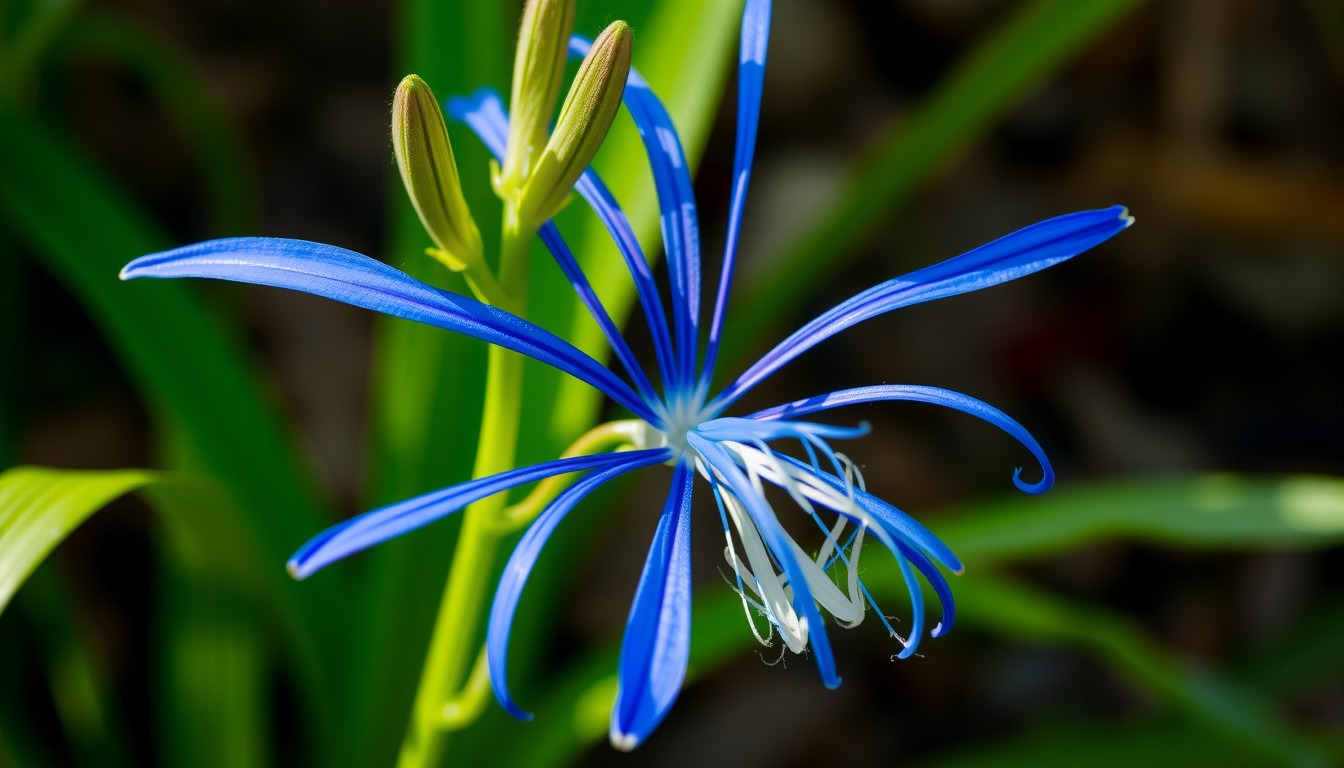
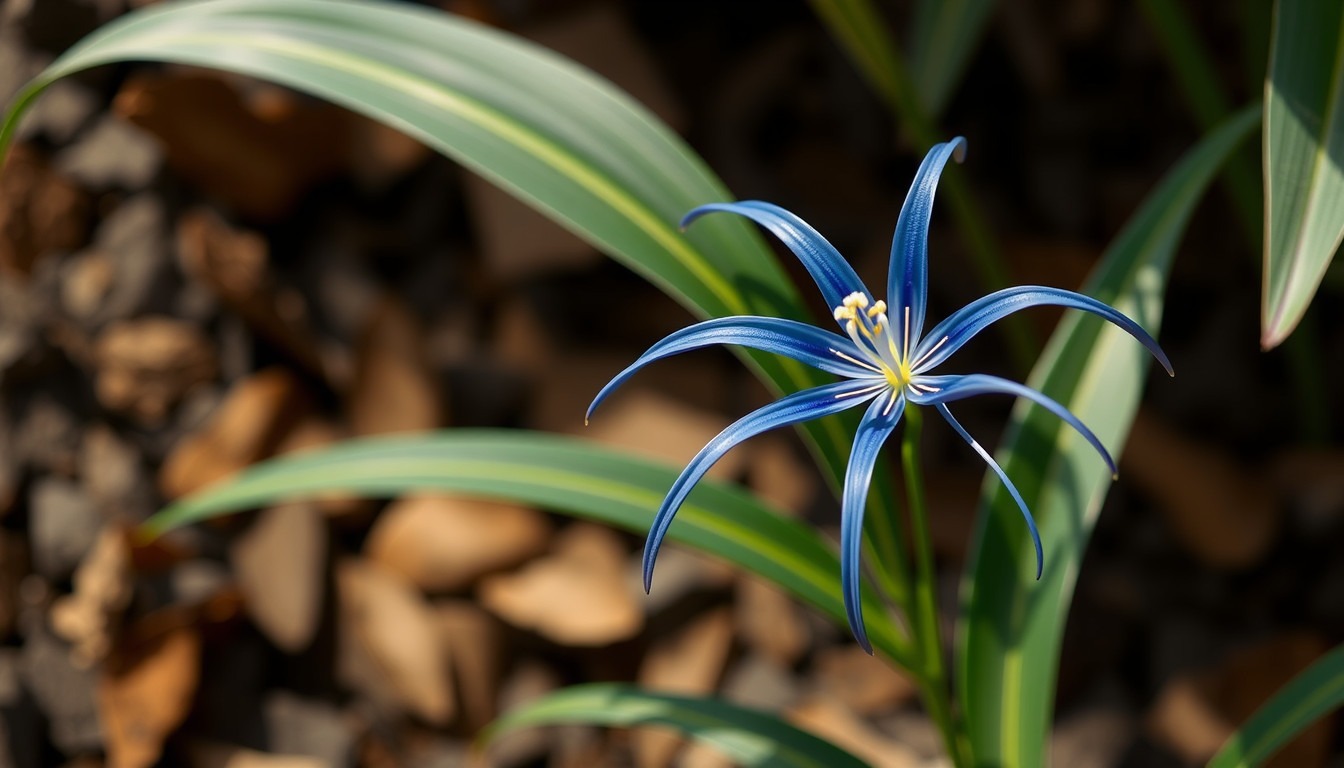
- Appearance: The blue spider lily features long, slender petals that arch outward, resembling spider legs. Its petals are a deep, vibrant blue, creating a stark, beautiful contrast against the flower’s dark stamens. The central part of the flower forms a star-shaped, almost ethereal structure that stands out in garden settings or floral arrangements.
- Physical characteristics: Each bloom typically measures about 3 to 4 inches in diameter and begins as a cluster of tightly packed buds. As it blooms, the flower’s petals extend gracefully, giving it an airy, delicate appearance. The flowering stem is tall and slender, often reaching heights of 18 to 24 inches, which helps showcase the bloom’s dramatic form.
- Blooming season: The blue spider lily blooms predominantly in late summer through early fall, generally from August to October, depending on the local climate. Its late-season flowering makes it a popular choice for botanical gardens and seasonal displays, where it signals the transition from summer to fall. The bloom period can last several weeks, providing a prolonged display of its unique beauty.
Its distinctive blue coloration, combined with its spider-like shape and seasonal timing, makes the blue spider lily a compelling plant both visually and symbolically. Gardeners often select it for its ornamental charm and the sense of mystery it adds to plant collections during autumn.
Historical and Cultural Origins of the Blue Spider Lily
The blue spider lily, known scientifically as Hymenocallis species, holds a rich history rooted primarily in East Asian traditions, particularly in Japan and China. Its distinctive appearance and mysterious allure have tied it closely to spiritual symbolism and cultural rituals for centuries. Originally native to China and Japan, the flower has been cultivated and admired for its beauty and symbolic significance within these regions. In traditional Chinese culture, the blue spider lily is often associated with the afterlife and remembrance, frequently planted in memorials and cemeteries to honor deceased loved ones. Similarly, in Japan, the flower’s presence in folklore and myth underscores themes of transition, longing, and spiritual connection.
To explore the deep cultural roots of the blue spider lily, a detailed book on Asian floral symbolism might be helpful. Shop suitable book on Asian floral symbolism on Amazon (affiliate link).
1. Asian origins, folklore, and mythology
The origins of the blue spider lily are traced back to ancient China, where it was regarded as a flower of the dead. Its association with death and the spiritual realm is reflected in the Chinese name tiān yú huā, which can be translated as “flower of the heavenly fish,” symbolizing its ethereal, otherworldly nature. The flower also features prominently in Chinese folklore, often linked to stories of spirits and ancestors, symbolizing farewell and the transient nature of human life. In Japanese mythology, the flower is connected with the concept of mono no aware—the poignant awareness of life’s impermanence. It is frequently mentioned in traditional stories and poetic literature, underscoring its role as a symbol of remembrance, longing, and the crossing from life to death. Its dark blue hue and delicate, spider-like petals evoke a sense of mystery and spiritual transition, reinforcing its significance in memorial practices. Despite its beauty, the blue spider lily’s cultural connotations are complex, often embodying both longing and somber respect for those who have passed away.
Symbolic and Spiritual Meanings of the Blue Spider Lily
The blue spider lily embodies complex symbolism that intertwines themes of death, rebirth, love, and mystery. Its striking appearance, with long, spidery petals and deep blue hue, often draws associations beyond its physical beauty, embodying cyclical processes and spiritual transitions. This flower’s symbolism varies across cultures but commonly revolves around the themes of mourning and renewal, making it both a poignant emblem of remembrance and a symbol of hope for renewal.
1. Death and Memorial Symbolism
The blue spider lily is frequently connected with mourning and remembrance, particularly in East Asian traditions. Its appearance in funerary contexts highlights its role as a spiritual bridge, guiding souls through the transition from life to death. The flower’s association with spiritual transition signifies not just an end, but also the promise of rebirth and the continuity of the soul’s journey. In Chinese and Japanese cultures, it often adorns memorial ceremonies, symbolizing both the sorrow of loss and the hope for future renewal.
For those observing memorial rituals, traditional candles can be a meaningful addition. Shop suitable memorial candle sets on Amazon (affiliate link).
2. Love and Passion
In some contexts, the blue spider lily also signifies love and passion, contrasting with its more somber associations. The flower’s vibrant blue color and delicate, intricate form evoke feelings of deep emotional connection. This duality reflects the complex nature of love—its ability to bring both joy and sorrow, closeness and separation. Consequently, the blue spider lily can represent enduring love that persists beyond physical existence or emotional pain, emphasizing spiritual bonds that transcend life.
Overall, the blue spider lily’s symbolism is rooted in its cyclical nature—mirroring eternal themes of death and rebirth—and its spiritual significance as a conduit between worlds. Whether seen as a symbol of mourning, spiritual transition, renewal, or passionate love, it invites contemplation of life’s deeper mysteries and the enduring power of emotional and spiritual connection.
The Role of the Blue Spider Lily in Different Cultures and Traditions
The blue spider lily holds distinct meanings across various cultures, particularly in Japan, China, and Korea, where its symbolism reflects local spiritual beliefs, historical context, and artistic expression. In Japan, the flower is associated with funeral rites and spiritual purity, often seen as a symbol of the boundary between life and death. It is believed to guide souls to the afterlife, which contributes to its somber yet respectful connotation. Conversely, in Chinese culture, the blue spider lily is linked with longing and unfulfilled love, often representing separation and the bittersweet nature of parting. Its striking blue color also evokes feelings of mystery and the unknown, making it a popular motif in Chinese poetry and art. In Korea, the flower is less prominent in traditional symbolism but is appreciated for its unique beauty and is occasionally associated with resilience and remembrance.
1. Japanese traditions and anime references
| Entity | Attribute | Value |
|---|---|---|
| Japanese cultural significance | Religious and spiritual | Linked to funeral rites, spiritual purity, and transition between life and death |
| Anime references | Popular culture | Featured in series like “Demon Slayer,” where the blue spider lily symbolizes mystery and the supernatural |
| Symbolic implications | Emotional and mystical | Represents the unknown, mystery, and sometimes the ephemeral nature of existence |
In Japanese anime and manga, the blue spider lily frequently appears as a visual motif to evoke a sense of mystery, spirituality, and otherworldliness. Series like “Demon Slayer” utilize the flower to symbolize characters’ connection to the supernatural realm, emphasizing themes of transience, spiritual purity, and the thin veil between worlds. This cultural layering enriches the flower’s meaning, blending traditional symbolism with contemporary artistic expression, making it a compelling symbol both in spiritual contexts and popular culture.
If you’re interested in Japanese cultural expressions, collectible art prints or posters can enhance your space. Shop suitable Japanese art prints or posters on Amazon (affiliate link).
Practical Uses and Modern Interpretations of the Blue Spider Lily
The blue spider lily continues to serve as a potent symbol in contemporary culture, finding its way into memorial practices, art, and personal expressions. Its unique appearance and deep symbolism make it a meaningful choice for various symbolic uses that evoke themes of mystery, transition, and remembrance. Whether used in memorials or tattoo art, the flower’s symbolism helps individuals express complex emotions, commemorate loved ones, or signify personal transformation.
1. Memorials, tattoos, and art
In memorial contexts, the blue spider lily is often chosen to honor the memory of loved ones who have passed away. Its association with the fleeting nature of life and crossing into the afterlife lends it a gentle, respectful tone in these settings. Funeral arrangements or memorial tattoos featuring this flower symbolize a soul’s transition or a spiritual journey, serving as a reminder of the soul’s journey beyond physical existence.
In tattoo art, the blue spider lily is frequently used to evoke mystery, resilience, and the transient beauty of life. The intricate, spider-like petals and vibrant blue hue allow for detailed designs that can carry personal significance—such as overcoming hardship or embracing change. The flower’s symbolism of transition and faith makes it a popular choice for those who wish to mark a pivotal life event or spiritual awakening.
Contemporary artists also incorporate the blue spider lily into artwork to explore themes of mystery, mortality, and the ephemeral nature of existence. Its striking color and distinctive form encourage interpretations about life’s fleeting moments and the unseen pathways of the soul or consciousness.
Overall, the modern uses of the blue spider lily underscore its enduring symbolism related to mystery, transition, and remembrance. Its unique aesthetics merge with its profound meanings, making it a versatile motif that continues to inspire personal, artistic, and cultural expressions today.
Frequently Asked Questions
1. What spiritual meaning is most associated with the blue spider lily?
The blue spider lily is most closely associated with spiritual purity, mystery, transition, and serenity, often symbolizing hope, rebirth, and spiritual awakening.
2. How did the blue spider lily become linked to death and memorials?
Its associations with death and memorials stem from its historical use in East Asian cultures, where it symbolizes the afterlife, remembrance, and the transition between life and death.
3. Are there specific myths connected to the blue spider lily in Asian cultures?
Yes, in Chinese and Japanese folklore, it is linked with spirits, ancestors, and the impermanence of life, often representing farewell and the crossing to the spiritual realm.
4. What variations exist in the symbolism of blue versus other colored spider lilies?
While blue symbolizes serenity, mystery, and spiritual purity, other colors like red or white may emphasize love, mourning, or purity, respectively, adding nuanced meanings to the flower’s symbolism.
5. Can the blue spider lily be used in modern spiritual practices?
Yes, its symbolism of transition and renewal makes it fitting for practices focused on spiritual awakening, meditation, and remembrance, often as a symbol of hope beyond loss.
6. What cultures recognize the blue spider lily as a symbol of rebirth?
East Asian cultures, particularly Japan and China, recognize it as a symbol of rebirth, renewal, and the ongoing cycle of life and death in various spiritual and cultural contexts.
7. How can understanding the symbolism influence personal or artistic decisions involving the flower?
Knowing its meanings can guide choices in art, memorials, or personal rituals by emphasizing themes of hope, transition, and serenity, and aligning arrangements or designs with intended emotional or spiritual messages.