
The Eastern Redbud is a stunning tree that lights up the landscape with its cheerful pink blossoms. If you’re looking to identify this beauty, you’re in the right place. Let’s explore its characteristics, growth, and habitat in detail.
Overview of Eastern Redbud
Scientific Classification
The Eastern Redbud, scientifically known as Cercis canadensis, belongs to the Fabaceae family, which is commonly referred to as the legume, pea, or bean family. This classification is fascinating to me, as it links the Eastern Redbud to other important plants that enrich our ecosystem. Understanding its scientific roots helps us appreciate the relationships within our natural world. For more details on its growth and identification, you can read our Eastern Redbud Tree: Growth Rate, Identification & Buying Guide.
Common Names and Synonyms
We often hear the Eastern Redbud referred to by several names. Besides “Eastern Redbud,” it’s also known as the “Judas Tree” and “Redbud.” I find it interesting how common names can reflect local cultures and stories associated with the tree. For example, the name “Judas Tree” comes from a legend suggesting that Judas Iscariot hanged himself from one of these trees. Such stories add a layer of depth to our understanding of this beautiful species.
Geographic Distribution
The Eastern Redbud is native to the eastern United States and parts of Canada. I remember visiting parks and gardens in the Midwest, where I was greeted by rows of these stunning trees. They thrive in a variety of habitats, from woodlands to urban areas. I often think about how their adaptability contributes to their wide distribution, making them a common sight in many landscapes.
Identifying the Eastern Redbud
Leaf Characteristics
When it comes to identifying the Eastern Redbud, the leaves are one of the most distinctive features. They are heart-shaped, which is quite charming if you ask me. The leaves typically measure around 3 to 5 inches long, providing a lush, green canopy that can be quite striking in the spring and summer.
Shape and Size
The heart-shaped leaves are what initially caught my attention. They have a unique, rounded tip that makes them easily recognizable. It’s interesting to note how their shape can vary slightly based on the tree’s growing conditions. Younger trees often have smaller leaves, while mature specimens boast larger, more vibrant foliage that adds to their visual appeal.
Color and Texture
In terms of color, Eastern Redbud leaves start as a soft, bright green in the spring, transitioning to a deeper green as the season progresses. Their texture is smooth and glossy, which I’ve always found gives the tree an elegant look. When the leaves flutter in the breeze, it creates a captivating display that reminds me of nature’s artistry.
Flower Features
The flowers of the Eastern Redbud are truly a showstopper. Blooming in early spring before the leaves fully develop, these flowers are a vivid pink to purple, creating a stunning contrast against the fresh green foliage.
Color and Blooming Season
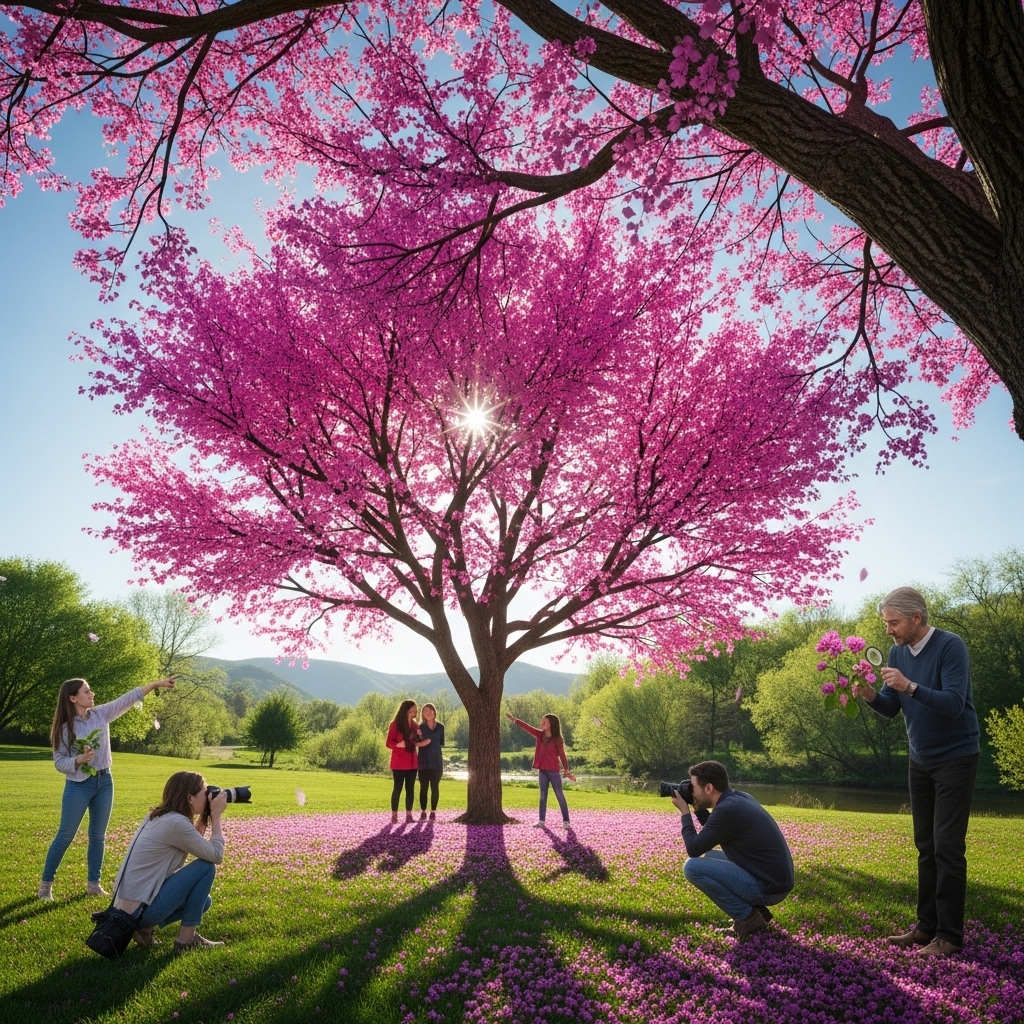
These blossoms typically appear in March to April, depending on the climate. I remember the joy of spotting the first blooms each year; it felt like a celebration of spring. The flowers are small, about an inch long, but they grow in clusters, turning the tree into a beautiful spectacle. Walking under a flowering Eastern Redbud is like strolling through a pink cloud.
Arrangement on Branches
One of the most remarkable aspects of their flowers is how they bloom directly on the branches and even on the trunk. This unique arrangement makes the Eastern Redbud stand out among other flowering trees. It’s not just the flowers; their placement gives the tree an almost whimsical appearance, and I often find myself marveling at nature’s creativity.
Tree Form and Size
The Eastern Redbud typically grows as a small to medium-sized tree, making it a perfect candidate for residential yards and parks. I’ve seen them used beautifully in landscaping, providing shade and color without overwhelming the surrounding space.
Height and Width
These trees usually reach heights of 20 to 30 feet, with a spread of 25 to 35 feet. I appreciate how they don’t dominate the landscape but rather complement it. Their size makes them ideal for planting in smaller areas, where they can still thrive and provide beauty.
Growth Habit
In terms of growth habit, the Eastern Redbud has a somewhat irregular branching pattern, which adds to its charm. The branches often grow outward in a picturesque manner, creating a lovely silhouette against the sky. I’ve always found myself drawn to trees with character, and the Redbud certainly fits that bill.
Fruit Description
After the flowering season, the Eastern Redbud produces small, flat seed pods that are quite distinctive.
Seed Pod Characteristics
These pods are usually around 2 to 4 inches long and turn a brownish color as they mature. They hang delicately from the branches, providing visual interest even after the flowers have faded. I often enjoy spotting these pods while hiking or walking through parks; they are a subtle reminder of the tree’s life cycle.
Dispersion Mechanism
The seeds within the pods are dispersed through natural processes, often aided by wind and water. This method of dispersion allows the Eastern Redbud to spread its beauty across various landscapes, ensuring its presence in different habitats. I find it fascinating how nature has its way of ensuring that these stunning trees continue to thrive.
Images of Eastern Redbud
Leaf Images
Seeing images of the Eastern Redbud’s leaves can truly enhance our understanding of this beautiful tree. I’ve often found myself captivated by photographs that showcase the heart-shaped leaves against a serene backdrop. Many online resources offer stunning visuals that highlight not just the shape but also the rich green color and glossy texture. I recommend searching for images that show the leaves in various stages of growth to appreciate their beauty fully. Some photographers even capture the way sunlight filters through the leaves, creating a magical effect that makes me want to spend more time under their shade.
Flower Images
When it comes to the Eastern Redbud, the flowers are undoubtedly one of its most striking features. I love browsing through galleries that display the vibrant pink and purple blooms. These images can truly capture the essence of spring when the trees burst into color. I’ve noticed that some photographers excel at capturing the moment when the flowers open, revealing their delicate structure. There’s a sense of joy that these images bring, reminding me of those early spring walks when everything feels alive. Whether it’s a close-up of a single blossom or a wide shot of a flowering tree in full bloom, these visuals can brighten anyone’s day.
Tree Images in Different Seasons
Another aspect that fascinates me about the Eastern Redbud is how it changes with the seasons. I find it intriguing to see images showcasing the tree throughout the year. In spring, they are draped in vibrant flowers; during summer, the lush green canopy provides a refreshing shade. Come autumn, the leaves take on a delightful golden hue, which can be stunning against the backdrop of a clear blue sky. Winter presents a different beauty altogether, with the bare branches revealing the unique structure of the tree. Watching these transformations through photographs reminds me of the cyclical nature of life and the beauty that each season brings.
Close-up of Fruits
Close-up images of the Eastern Redbud’s seed pods are equally fascinating. These pods, with their distinctive shape and texture, offer a unique perspective on the tree’s life cycle. I remember my delight in spotting these pods during my walks; their subtle brown color provides a beautiful contrast to the vibrant landscape. Photos that focus on the details of the pods can help us appreciate their role in the tree’s reproduction. I often find myself admiring how the pods cling to the branches and how they can look so delicate yet sturdy at the same time. Capturing these moments in images can deepen our appreciation for the intricate details of nature.
Growth Conditions and Habitat
Preferred Soil Type
When it comes to growing Eastern Redbuds, I’ve learned that they prefer well-drained soil. I remember planting one in my yard and taking special care to ensure the soil was just right. They thrive in loamy or sandy soil, which provides good drainage while still retaining some moisture. I’ve also noticed that they can tolerate a variety of soil pH levels, though they seem to do best in slightly acidic to neutral soils. It’s always a good idea to test your soil to see if any amendments are needed before planting. I found that when I provided the right conditions, my Eastern Redbud flourished beautifully.
Sunlight Requirements
Eastern Redbuds love sunlight, and in my experience, they do best when planted in full sun to partial shade. I’ve seen them grow tall and vibrant in areas where they receive at least six hours of sunlight a day. However, they can also adapt to shadier spots, particularly in hotter climates. I remember one summer, I planted one near a larger tree, and while it grew a bit more slowly, it still managed to thrive. It’s fascinating how adaptable these trees can be, making them suitable for a variety of garden settings.
Watering Needs
In terms of watering, I’ve learned that Eastern Redbuds prefer moderate moisture. They appreciate consistent watering, especially during dry spells, but they don’t like to sit in waterlogged soil. I typically water my tree deeply once a week during the summer months to ensure the roots stay hydrated. It’s essential to strike a balance, as too much water can lead to root rot. I always check the soil a few inches down before watering, to make sure it’s just the right amount moist.
Hardiness Zones
The Eastern Redbud is hardy in USDA zones 4 through 9. I’ve seen them thrive in various climates, from the colder northern regions to the warmer southern states. I remember visiting a friend’s garden in zone 7, where the Redbuds were in full bloom, creating a stunning display. If you’re considering planting one, it’s important to check your local hardiness zone to ensure it will thrive in your area. Knowing where it can grow best adds to my excitement about planting one in my own yard!
Common Companion Plants
Choosing the right companion plants can enhance the beauty of the Eastern Redbud and create a vibrant garden. I’ve found that they pair beautifully with flowering perennials like daylilies and coneflowers. Their pink blossoms look stunning against the yellows and oranges of other blooming plants. I also enjoy seeing them alongside shrubs like azaleas or hydrangeas, which can provide a nice contrast. Additionally, ground covers like creeping phlox can create a lovely carpet beneath their branches. It’s amazing how the right combinations can transform a garden space into a picturesque retreat. For more information on varieties and care, check out Eastern Redbud Trees for Sale: Varieties, Care & Growth.
Ecological Importance
Wildlife Interactions
The Eastern Redbud plays a significant role in local ecosystems. I’ve always been fascinated by how these trees provide habitats for various wildlife. Birds, in particular, are drawn to the tree, using it for nesting and shelter. I remember watching sparrows flit in and out of the branches during spring, creating a lively scene that reminded me of nature’s harmony. The tree also attracts squirrels, which love to scamper up and down its trunk, foraging for seeds and buds. Observing these interactions has deepened my appreciation for how the Eastern Redbud supports biodiversity.
Pollinator Attraction
One of the most rewarding aspects of having an Eastern Redbud in my garden has been witnessing the sheer number of pollinators it attracts. The vibrant pink blooms are not just beautiful; they serve as a valuable food source for bees, butterflies, and even hummingbirds. I’ve spent many afternoons sitting under the tree, captivated by the flurry of activity around its flowers. It’s a reminder of how interconnected our ecosystems are, and I believe that planting these trees can help support declining pollinator populations. I feel that by planting an Eastern Redbud, we are playing a small part in nurturing our environment.
Role in Ecosystems
The Eastern Redbud contributes to the overall health of the ecosystems it inhabits. Its ability to fix nitrogen in the soil improves soil fertility, which benefits other plants in the area. I’ve learned that this characteristic is particularly important in forests and gardens where soil quality can vary widely. By planting Eastern Redbuds, we can help enrich the soil, making it more conducive for other flora to thrive. I often find it fascinating how one tree can have such a ripple effect on its surroundings, enhancing the ecosystem as a whole.
Common Uses of Eastern Redbud
Ornamental Landscaping
For those of us who love gardening and landscaping, the Eastern Redbud is a go-to choice for adding beauty to any outdoor space. I’ve seen them used beautifully in parks and residential gardens, where their unique shape and colorful blooms stand out. They make excellent focal points, especially when planted alongside other flowering plants. I often suggest to friends considering landscaping options to include an Eastern Redbud, as it brings a splash of color in the spring and adds charm year-round. Plus, their relatively small size makes them suitable for various garden styles, from cottage gardens to urban landscapes. For a comprehensive guide on Eastern Redbud care, visit Eastern Redbud Tree Guide: Growth, Leaves, Images & Care.
Traditional Uses in Native Cultures
The Eastern Redbud holds a special place in the traditions of many Native American cultures. I’ve come across stories about how various tribes utilized the tree for different purposes. The flowers, for instance, were used in cooking, while the bark was sometimes employed in making baskets and other crafts. I find it intriguing how the tree not only provided beauty but also served practical needs for those who lived in harmony with the land. This connection to the past adds another layer of appreciation for the Eastern Redbud and highlights its importance in cultural heritage.
Medicinal Benefits
Another interesting aspect of the Eastern Redbud is its potential medicinal benefits. I’ve read about how various parts of the tree were traditionally used for different ailments. For example, the flowers can be made into a tea that is said to have calming effects. I remember experimenting with herbal teas and discovering how some local plants had such rich histories in traditional medicine. While I always recommend consulting a knowledgeable herbalist before using any plant for medicinal purposes, it’s reassuring to know that nature has provided us with resources that can benefit our health.
Challenges and Diseases
Common Pests
While the Eastern Redbud is a resilient tree, it does face challenges from pests. I’ve encountered issues with aphids and spider mites on my own Redbud. These tiny invaders can sometimes take over, sucking the sap from the leaves and causing them to curl. I remember feeling concerned when I first noticed the leaves looking less vibrant. I learned that keeping a close eye on the tree can help catch these pests early, and natural remedies like insecticidal soap can be effective in managing them. It’s a reminder that, while these trees are beautiful, they require some care to keep them healthy.
Diseases Affecting Eastern Redbud
Like many trees, Eastern Redbuds can be susceptible to certain diseases. I’ve heard of leaf spot and canker diseases that can affect their health if not addressed promptly. I remember feeling overwhelmed when I first saw spots on the leaves, but through research, I discovered that ensuring good air circulation and proper watering can help prevent these issues. I also learned that maintaining a healthy tree through regular pruning can improve its resilience against diseases, which is something I now prioritize in my gardening routine.
Prevention and Treatment
Preventing pests and diseases on Eastern Redbuds often comes down to proactive care. I’ve found that keeping the area around the tree clean, removing fallen leaves, and avoiding overcrowding can significantly reduce the risk of problems. Regular inspections for signs of damage or distress also help catch any issues early. If I notice any pest activity, I usually turn to organic treatments, which I feel are safer for the environment. It’s rewarding to see my efforts pay off when my Redbud thrives beautifully, standing tall as a testament to the care I’ve given it.
Frequently Asked Questions
What is the scientific classification of the Eastern Redbud?
The Eastern Redbud is scientifically known as Cercis canadensis and belongs to the Fabaceae family, which is commonly referred to as the legume, pea, or bean family.
What are the common names for the Eastern Redbud?
Besides “Eastern Redbud,” it is also known as the “Judas Tree” and “Redbud.”
Where is the Eastern Redbud native to?
The Eastern Redbud is native to the eastern United States and parts of Canada.
What are the leaf characteristics of the Eastern Redbud?
The leaves of the Eastern Redbud are heart-shaped, typically measuring around 3 to 5 inches long, and they provide a lush green canopy.
When do Eastern Redbud flowers typically bloom?
Eastern Redbud flowers bloom in early spring, typically appearing in March to April, before the leaves fully develop.
What is the typical height and width of an Eastern Redbud tree?
The Eastern Redbud usually grows to heights of 20 to 30 feet, with a spread of 25 to 35 feet.
What type of soil does the Eastern Redbud prefer?
The Eastern Redbud prefers well-drained soil, thriving in loamy or sandy soil, and can tolerate a variety of soil pH levels, doing best in slightly acidic to neutral soils.
What is the hardiness range for the Eastern Redbud?
The Eastern Redbud is hardy in USDA zones 4 through 9.
How does the Eastern Redbud contribute to local ecosystems?
The Eastern Redbud provides habitats for various wildlife, attracts pollinators like bees and butterflies, and improves soil fertility by fixing nitrogen in the soil.
What common pests affect the Eastern Redbud?
Common pests that affect the Eastern Redbud include aphids and spider mites, which can suck the sap from the leaves and cause damage.