
Hackberry trees are fascinating and resilient plants that bring unique beauty to landscapes. Whether you’re a nature enthusiast or just curious about the outdoors, understanding how to identify these trees can deepen your appreciation for them.
Table of Contents
Overview of Hackberry Trees
Hackberry trees, scientifically known as *Celtis occidentalis*, are deciduous trees belonging to the elm family. I’ve always found it intriguing how much there is to learn about these trees just by looking closely at their various characteristics. Their presence is felt across many landscapes, and knowing how to identify them can enhance any outdoor experience.
Scientific Classification
When diving into the scientific classification of the hackberry tree, it’s interesting to note that it falls under the family Ulmaceae. This places it alongside elms, which I’ve often mistaken them for, especially from a distance. The genus name *Celtis* comes from the Greek word “kelte,” meaning “to nourish,” which I think is fitting, considering how these trees support various wildlife.
Geographic Distribution
Hackberry trees are primarily found in North America, stretching from Canada down to Mexico. I’ve spotted them in various regions, but they seem to thrive best in the central and eastern parts of the United States. It’s fascinating to see how they adapt to different climates and soils. I remember hiking in a state park and coming across a grove of hackberries; they were thriving in the moist, rich soil along the riverbank.
Common Habitats
These trees are quite versatile and can be found in diverse habitats. I often see them in open fields, along roadsides, and near water sources. They seem to prefer well-drained soils, but I’ve noticed them in more challenging environments too. Whether in urban settings or wild landscapes, hackberry trees are resilient survivors, making them a common sight wherever I wander.
Physical Characteristics of Hackberry Trees
Identifying a hackberry tree can be a rewarding experience. The more I learn about their physical characteristics, the easier it becomes to recognize them in the wild. Let’s break down what makes these trees unique.
Height and Size
Hackberry trees can grow to be quite tall, typically reaching heights of 30 to 50 feet. I’ve seen some specimens that were even taller! Their wide, spreading canopy gives them a majestic appearance. The size can vary based on the growing conditions, but I often find that the trees in open areas tend to be more robust. I love standing under their branches, feeling the dappled sunlight filtering through the leaves.
Leaf Structure and Shape
The leaves of hackberry trees are one of their most distinctive features. They are generally ovate, or egg-shaped, with serrated edges. The leaves can be as long as 3 to 5 inches, and they have a unique asymmetrical base, which I find quite interesting. When I first started identifying them, I found it helpful to look for the subtle variations in leaf shape. They can also be quite glossy, giving them a vibrant look, especially in the spring and summer months.
Bark Texture and Color
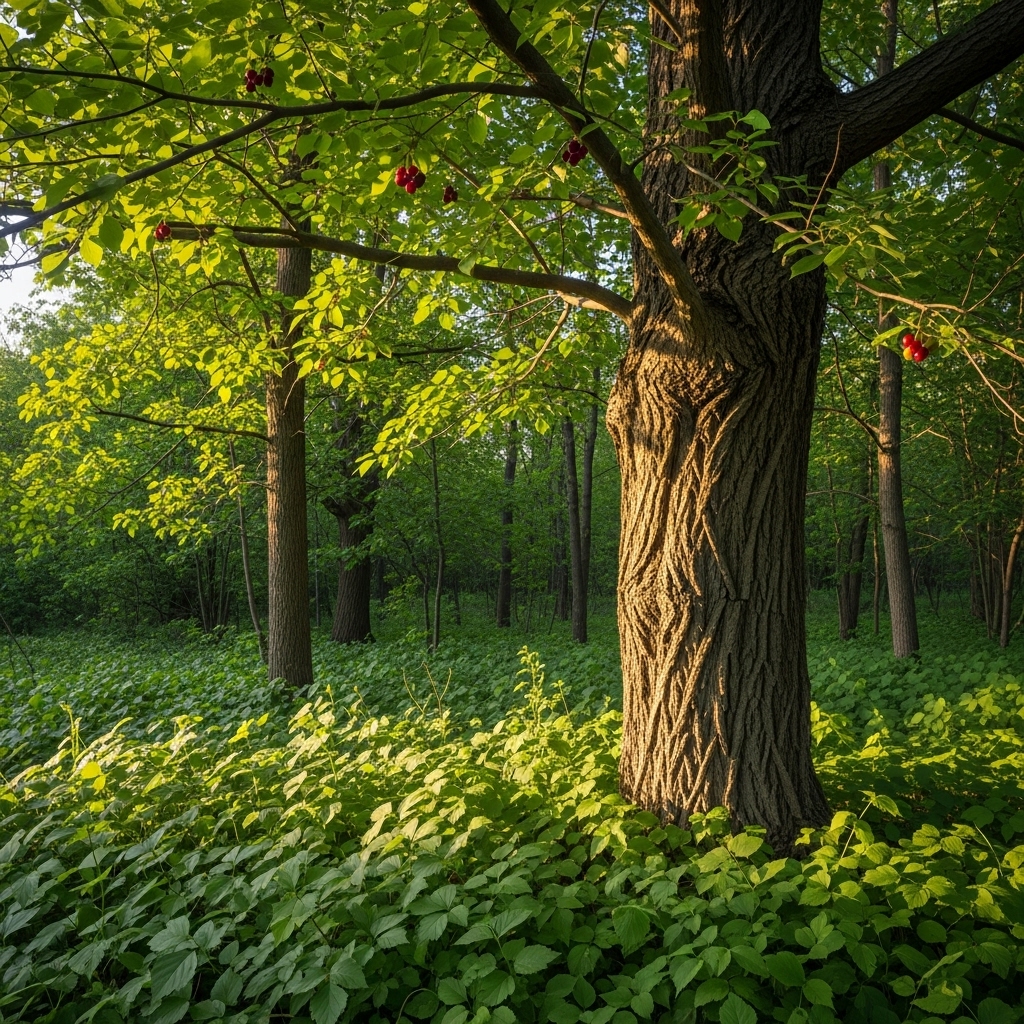
The bark of a hackberry tree is another identifying characteristic. It tends to be grayish-brown and has a rough, warty texture that can almost look like it’s been covered in small bumps. I remember the first time I touched the bark; it felt almost elastic. As the tree ages, the bark becomes thicker and develops deeper fissures, which can make older trees stand out even more. I often run my hands along the bark when I encounter one, appreciating its unique texture.
Fruit Description
Hackberries produce small, round fruits that resemble berries. They are typically purple or dark orange when ripe and grow in clusters. I’ve seen birds flocking to these fruits, which is a testament to their attractiveness as a food source. The fruits are about a quarter of an inch in diameter and are edible, although I’ve learned they are not the most flavorful. Still, it’s fascinating to see how these trees contribute to the ecosystem through their fruits.
As I continue to explore and learn about hackberry trees, I find my appreciation for them deepening. Their distinctive characteristics and adaptability make them a remarkable part of our natural landscape. Whether you’re looking to identify them on a hike or simply want to understand them better, these trees are worth knowing about. Keep an eye out for their unique leaves, bark, and fruit as you embark on your own exploration of the great outdoors!
Identifying Hackberry Leaves
Leaf Shape and Size
When I’m out exploring, one of the first things I look for are the hackberry leaves. They have a very distinct shape that helps in identification. The leaves are ovate, or egg-shaped, typically measuring 3 to 5 inches long. What I find particularly fascinating is how they can sometimes appear to have a slight twist or curve. This can be especially noticeable when the leaves are swaying gently in the breeze. I remember the first time I spotted a hackberry tree; I was captivated by its leaves, which had that unique asymmetrical base that sets them apart from many other trees. This feature makes it easier to distinguish them from nearby species.
Leaf Color and Texture
The color and texture of hackberry leaves further aid in identification. During spring and summer, the leaves are a vibrant green, often glossy, which makes them stand out in the foliage. I’ve noticed that when the sunlight hits them just right, they seem to shimmer. As autumn approaches, the leaves transition to a lovely yellowish hue before they fall. This seasonal change is something I always look forward to. The texture is another aspect that I find intriguing; hackberry leaves have a somewhat rough surface with noticeable veins, giving them a rugged yet beautiful appearance. Running my fingers over them during my hikes feels like connecting with nature in a deeper way.
Seasonal Changes in Leaves
One of the joys of observing hackberry trees is witnessing their seasonal changes. In spring, the fresh, green leaves emerge, bringing life after a long winter. I often feel a sense of renewal as I see them unfurling. By summer, the leaves reach their full size and vibrancy, providing shade that I appreciate on hot days. When fall arrives, the transformation is almost magical; the leaves turn shades of yellow, and if I’m lucky, I catch them swirling down in a gentle breeze. It’s moments like these that remind me of the beauty of nature’s cycles. Winter presents a different scene altogether, as the trees become bare, showcasing their intricate branch structures against the stark sky, a reminder of the life that will return in time.
Identifying Hackberry Bark
Bark Color Variations
The bark of hackberry trees is another key identifying feature, and it can be quite striking. Generally, it’s a grayish-brown color, but I’ve noticed that it can vary depending on the tree’s age and the environment it’s growing in. Younger trees tend to have smoother bark, which can be more silvery-gray, while older trees exhibit that classic rough, warty texture I mentioned earlier. I remember exploring an old hackberry tree, and the contrast between its deeply furrowed bark and the smooth, younger specimens nearby really caught my attention. It’s like a living history book, telling a story of time and growth.
Bark Texture and Patterns
What I find particularly memorable about hackberry bark is its unique texture. The warty bumps and rough surface give it character. When I touch the bark, it feels almost elastic, and I can’t help but appreciate the resilience it represents. The patterns can be quite variable. Some trees have pronounced warts while others have a more subdued texture. I like to observe how these variations can help in identifying individual hackberry trees. It reminds me that no two trees are exactly alike, much like people.
Age-related Bark Changes
As hackberry trees mature, their bark undergoes notable changes that can be fascinating to observe. I’ve seen young trees with smoother bark transition over time into older specimens that showcase thicker, more textured bark with deep fissures. This aging process offers a glimpse into the life of the tree, and I find it rewarding to document these differences. Each tree tells its own story through its bark, and I often enjoy sharing these observations with fellow nature lovers during my hikes. It’s a joy to connect with others who appreciate the beauty of these trees and their unique characteristics.
Identifying Hackberry Fruit
Fruit Size and Shape
As I continue my exploration of hackberry trees, the fruit they produce is another aspect I love examining. The small, round fruits are typically about a quarter of an inch in diameter, resembling tiny berries. I’ve noticed that they tend to grow in clusters, which can make a tree look particularly vibrant when they’re ripe. I can recall a time when I stumbled upon a hackberry tree heavy with fruit, and it was a delightful sight. The clusters hanging from the branches seemed to beckon wildlife to come and enjoy.
Fruit Color and Ripening Stages
The color of hackberry fruits is intriguing, as they transition from green to a deep purple or dark orange when ripe. I’ve often found myself watching birds as they feast on these fruits during late summer and early fall. It’s a wonderful reminder of how interconnected nature is; the ripening fruits provide sustenance for various wildlife. I also enjoy observing the differences in color as the fruits mature, as it’s a beautiful sight against the backdrop of green leaves.
Seed Structure and Dispersal
Inside the fruit, each hackberry contains a single seed, which is somewhat flattened and oval-shaped. I remember peeling a few fruits open out of curiosity and discovering the seeds nestled inside. This structure is essential for the tree’s reproduction. Birds and other animals play a crucial role in dispersing these seeds, which is another fascinating aspect of their life cycle. I feel a sense of wonder every time I witness this process in action, knowing that these small fruits contribute to the growth of new trees in the future.
Look-Alike Trees: How to Differentiate
Common Look-Alikes
When I’m out in nature, I sometimes stumble upon trees that look strikingly similar to hackberries. It’s fascinating how easily one can confuse them with other species. One common look-alike is the sugarberry (*Celtis laevigata*), which has a similar leaf shape and size. Another tree that can resemble the hackberry is the elm, particularly in youth. Both trees share that characteristic rough bark and can thrive in similar environments. I’ve had to remind myself to take a closer look when I encounter these trees to ensure I’m identifying them correctly.
Key Differences in Leaves
One of the easiest ways to distinguish hackberry leaves from their look-alikes is by observing their shape and base asymmetry. While both hackberry and sugarberry leaves are ovate, the hackberry’s leaves tend to have a more pronounced asymmetrical base. I’ve noticed that when I closely examine the leaf edges, hackberry leaves have a slightly serrated appearance, whereas sugarberry leaves are smoother. Additionally, hackberry leaves often have a glossy texture that catches the sunlight, making them stand out even more. This detail is a quick way for me to spot a hackberry amidst other trees.
Key Differences in Bark
The bark of hackberry trees is quite distinctive with its warty texture. In contrast, the bark of the sugarberry is generally smoother and lacks those characteristic bumps. When I encounter a tree I suspect might be a hackberry, I run my fingers along the bark. If it feels more elastic and less rugged, I know I’m dealing with a sugarberry instead. Elm trees, on the other hand, have a more furrowed bark without the warty appearance, which makes it easier to tell them apart once I’ve had the chance to observe them closely.
Key Differences in Fruit
When it comes to fruit, hackberry trees produce small, round berries that cluster together, which is a delightful sight. In contrast, sugarberry fruits are generally more elongated and may appear less clustered. I remember once spotting a sugarberry tree laden with elongated fruits, making it easy to recognize. The color of the fruits can also be a giveaway; hackberry fruits transition from green to purple or dark orange, while sugarberry fruits often remain green or yellowish. Observing these differences helps me become more confident in identifying hackberry trees during my outdoor adventures.
Environmental Importance of Hackberry Trees
Role in Ecosystems
As I’ve learned more about hackberry trees, I’ve come to appreciate their crucial role in various ecosystems. They are often referred to as “keystone species” because they support a diverse array of wildlife. Hackberries provide not just food in the form of their fruits, but also shelter for birds and small mammals. I’ve often seen squirrels darting around the branches, and birds nesting among the leaves. Observing this interaction reminds me how interconnected our natural world is, and how each species plays a part in maintaining the ecosystem’s balance.
Wildlife Habitat and Food Source
Hackberry trees serve as a vital food source for many species. I’ve witnessed flocks of birds feasting on their fruits during late summer and early fall. These trees are particularly beneficial for migratory birds, who rely on the rich nutrition provided by hackberries during their journeys. Additionally, the leaves serve as a food source for various insects, which in turn support a variety of birds and other wildlife. Every time I see a hackberry tree bustling with activity, I feel a sense of joy knowing that it’s playing a pivotal role in the habitat around it.
Impact on Soil and Water Conservation
Beyond providing food and shelter, hackberry trees contribute significantly to soil and water conservation. Their extensive root systems help stabilize the soil, preventing erosion, especially in areas near water sources. I’ve often hiked along riverbanks where hackberries thrive, and it’s clear how they hold the soil together, keeping the banks intact. Moreover, their presence can help improve water quality by filtering runoff and minimizing sedimentation. Knowing this makes me appreciate these trees even more; they’re not just beautiful additions to our landscapes, but also vital players in maintaining a healthy environment.
Cultural Significance of Hackberry Trees
Traditional Uses in Indigenous Cultures
Exploring the cultural significance of hackberry trees has been enlightening for me. Indigenous cultures across North America have long recognized the value of these trees. The fruits were often harvested for their nutritional benefits, and various parts of the tree were used for making tools, baskets, and even medicinal preparations. I remember reading about how hackberry wood was historically used for making bows and other implements. This connection to the past enriches my understanding of the tree and its role in human history.
Modern Uses in Landscaping
In modern landscaping, hackberry trees are gaining popularity due to their resilience and adaptability. I’ve seen them used in parks and urban settings, where their shade is much appreciated during hot summer days. They’re also valued for their ability to thrive in various soil types and conditions, making them a go-to choice for landscaping professionals. I find it heartening to see hackberries being embraced in our communities, as they not only enhance the beauty of our urban spaces but also support local wildlife.
Medicinal Properties and Uses
Beyond their ecological and cultural importance, hackberries have also been recognized for their medicinal properties. In traditional herbal medicine, the fruits were sometimes used to treat ailments like digestive issues and respiratory problems. I’ve learned that some herbalists still promote the use of hackberry extracts for their potential health benefits. Discovering these medicinal uses adds another layer to my appreciation for hackberry trees, as it highlights how deeply intertwined our lives are with the natural world.
Tips for Observing and Identifying Hackberry Trees
Best Seasons for Identification
When I set out to observe hackberry trees, I’ve found that certain seasons offer the best opportunities for identification. Spring is a particularly exciting time, as the fresh leaves emerge and the trees come alive with new growth. Summer is another great season, especially when the fruits begin to ripen. I love visiting hackberry trees during late summer or early fall, when the branches are heavy with berries, attracting various wildlife. In winter, while the trees are bare, their unique bark and structure become more visible, making it easier to appreciate their form.
Tools for Identification
For anyone interested in identifying hackberry trees, a few tools can enhance the experience. A field guide on trees can be incredibly helpful; I always carry one with me on my hikes. A camera or smartphone is also useful for taking pictures of leaves, bark, and fruit for later reference. I’ve started using a simple notebook to jot down observations about each tree I encounter. This way, I can keep track of what I’ve learned and noticed about these fascinating trees.
Resources for Further Learning
If you’re keen to learn more about hackberry trees and their ecological roles, I recommend checking out local nature centers or botanical gardens. Many of them offer workshops or guided walks focused on tree identification. Online resources, such as tree identification apps, can also be quite handy. I’ve enjoyed using these tools to deepen my understanding of not just hackberry trees but also the broader ecosystem they inhabit. Engaging with local communities of nature enthusiasts can also provide valuable insights, as sharing experiences often leads to new discoveries.
Frequently Asked Questions
“`html
What is the scientific name of the hackberry tree?
The scientific name of the hackberry tree is Celtis occidentalis.
Where are hackberry trees primarily found?
Hackberry trees are primarily found in North America, stretching from Canada down to Mexico, with a preference for the central and eastern parts of the United States.
What are the key physical characteristics of hackberry trees?
Hackberry trees can grow to be 30 to 50 feet tall with a wide, spreading canopy. Their leaves are ovate with serrated edges and a unique asymmetrical base, while their bark is grayish-brown with a rough, warty texture.
What do the fruits of hackberry trees look like?
Hackberries produce small, round fruits that resemble berries, typically purple or dark orange when ripe, growing in clusters about a quarter of an inch in diameter.
How can you differentiate hackberry leaves from similar species?
Hackberry leaves have a pronounced asymmetrical base, serrated edges, and a glossy texture. This distinguishes them from look-alikes like the sugarberry, which has smoother leaves.
What role do hackberry trees play in their ecosystem?
Hackberry trees are considered keystone species that provide food and shelter for various wildlife, including birds and small mammals, and support a diverse array of ecosystems.
What are some traditional uses of hackberry trees in indigenous cultures?
Indigenous cultures have harvested hackberry fruits for their nutritional benefits and used various parts of the tree to make tools, baskets, and medicinal preparations.
What are the best seasons for identifying hackberry trees?
Spring is ideal for observing fresh leaves, while summer is great for noticing ripening fruits. Late summer and early fall are particularly vibrant as the trees are heavy with berries.
What tools can help with identifying hackberry trees?
A field guide on trees, a camera or smartphone for taking pictures, and a notebook for jotting down observations can enhance the experience of identifying hackberry trees.
How do hackberry trees contribute to soil and water conservation?
Hackberry trees contribute to soil and water conservation through their extensive root systems, which help stabilize the soil, preventing erosion and improving water quality by filtering runoff.
“`