
Smoking prime rib on the Big Green Egg yields a deliciously tender and flavorful result. This guide will take you through all the steps necessary to achieve perfectly smoked prime rib, from preparation to serving.
Table of Contents
Understanding Prime Rib and Its Significance
Prime rib is a standout choice for any grilling enthusiast. Its rich flavor and tender texture make it a favorite for special occasions. Let’s dive into what sets this cut apart.
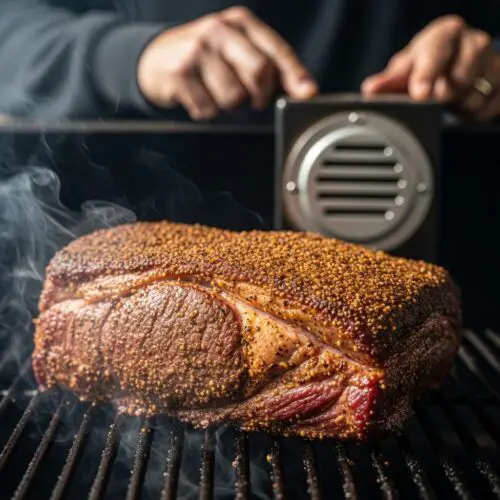
Prime Rib: Definition and Characteristics
Prime rib, also known as standing rib roast, comes from the rib section of the cow. It’s well-marbled, meaning it has streaks of fat running through the meat. This marbling is crucial. It contributes to the juiciness and flavor when cooked.
Here are some key characteristics of prime rib:
- Marbling: More fat means better flavor and tenderness.
- Size: Typically comes in large cuts, perfect for gatherings.
- Tenderness: It’s one of the most tender cuts available.
Why Prime Rib is Perfect for Smoking
Smoking prime rib enhances its natural flavors. The low and slow cooking method allows the fat to render, making the meat incredibly juicy. Here’s why smoking is ideal:
- Flavor Profile: The smoke infuses rich, deep flavors into the meat.
- Temperature Control: The Big Green Egg provides excellent heat control, ensuring even cooking.
- Presentation: A beautifully smoked prime rib is a showstopper on any table.
Decision Framework for Wood Types
Choosing the right wood can elevate your smoking game. Different types of wood impart different flavors. Here’s a quick guide:
- Hickory: Strong, robust flavor. Great for beef.
- Cherry: Sweet and mild. Adds a nice color.
- Oak: Versatile and balanced. Works well with any meat.
With the right preparation and smoking technique, you’ll have a prime rib that’s not just a meal, but a memorable experience. Plus, using a Big Green Egg Grill can make this process even easier and more fun!
Preparing the Prime Rib for Smoking
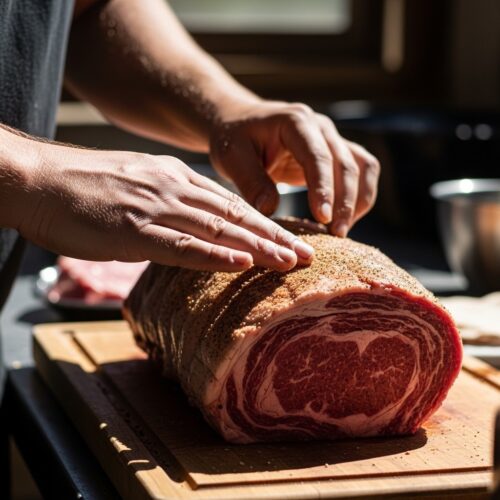
Getting your prime rib ready for the Big Green Egg is essential for a mouthwatering result. Here’s how to make it delicious with the right preparation and seasoning.
Selecting the Right Cut of Prime Rib
Choosing the right cut can make all the difference. Look for a prime rib with good marbling. The fat will keep the meat juicy and add flavor. Here are some tips when selecting your cut:
- Grade: Choose USDA Prime or Choice for the best quality.
- Weight: A 4 to 6-pound roast is perfect for smoking.
- Bone-in vs. Boneless: Bone-in provides more flavor, while boneless is easier to slice.
Creating an Effective Dry Rub
A good dry rub can elevate your prime rib. Here’s a simple recipe to try:
- Ingredients:
- 2 tablespoons kosher salt
- 1 tablespoon black pepper
- 1 tablespoon garlic powder
- 1 tablespoon onion powder
- 1 tablespoon smoked paprika
- 1 teaspoon cayenne pepper (optional for heat)
- Instructions:
1. Mix all ingredients in a bowl.
2. Rub the mixture generously over the entire prime rib.
3. Let it sit for at least 1 hour, or ideally overnight in the fridge. This allows the flavors to penetrate the meat.
Marinating and Resting the Meat
Resting your meat is crucial. Pull your prime rib from the fridge about 1-2 hours before smoking. This helps it cook evenly.
- Marinating Tips:
- If you prefer, you can marinate it in your favorite marinade for up to 24 hours. A simple mix of olive oil, Worcestershire sauce, and herbs works wonders.
- Always dry the meat before applying your dry rub. This helps the rub stick better.
- Resting Period:
- After seasoning, let it sit at room temperature for the best results. This promotes even cooking.
By following these steps, you’ll have a perfectly seasoned prime rib ready for the Big Green Egg. Happy grilling!
Setting Up the Big Green Egg for Smoking
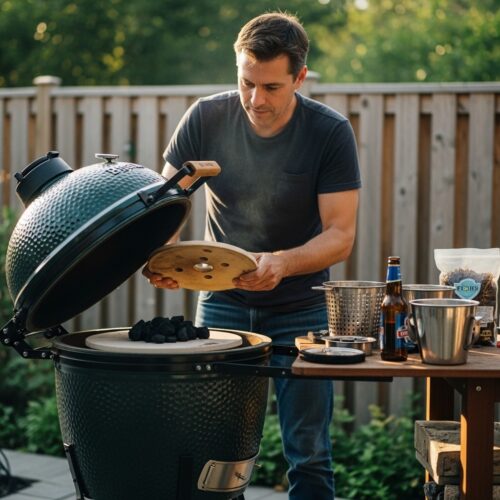
Getting your Big Green Egg ready for smoking is crucial for that perfect prime rib. Here’s a simple guide to set it up for indirect cooking, ensuring your meat turns out juicy and flavorful.
Configuring for Indirect Cooking
To smoke prime rib, you need to set your Big Green Egg for indirect cooking. Here’s how:
1. Use a Plate Setter: Place a plate setter (also known as a convEGGtor) in the egg. This creates a barrier between the heat source and the meat, allowing for even cooking.
2. Add a Drip Pan: Place a drip pan on top of the plate setter. This catches juices and prevents flare-ups.
3. Adjust the Vents: Open the bottom vent wide and slightly open the top vent. This helps maintain a steady temperature, usually around 225°F to 250°F.
Selecting the Right Wood for Smoking
The type of wood you choose can significantly impact the flavor of your prime rib. Here’s a quick comparison of popular wood types:
| Wood Type | Flavor Profile | Best For |
|---|---|---|
| Hickory | Strong, smoky flavor | Beef, pork |
| Mesquite | Bold, earthy taste | Beef, brisket |
| Cherry | Sweet, mild flavor | All meats |
| Apple | Fruity, slightly sweet | Poultry, pork |
| Oak | Medium smoky flavor | All meats |
Tip: Soak your wood chips for at least 30 minutes before using them. This helps them smolder, giving you that rich, smoky flavor without burning up too quickly.
Achieving Optimal Temperature
Maintaining the right temperature is key to smoking prime rib perfectly. Here are some tips:
- Use a Meat Thermometer: Invest in a good meat thermometer. This ensures your prime rib reaches the desired internal temperature—about 130°F for medium-rare.
- Monitor the Egg Temperature: Keep an eye on your Big Green Egg’s temperature. Adjust the vents as needed to stabilize the heat.
- Plan for Cooking Time: As a rule of thumb, allow about 30 minutes per pound. For a 5-pound prime rib, you’re looking at around 2.5 hours.
By following these steps, you’ll set up your Big Green Egg perfectly for smoking. For the best results, make sure you have a reliable grill like the Big Green Egg Grill ready to go. Happy smoking!
Smoking the Prime Rib: Cooking Process
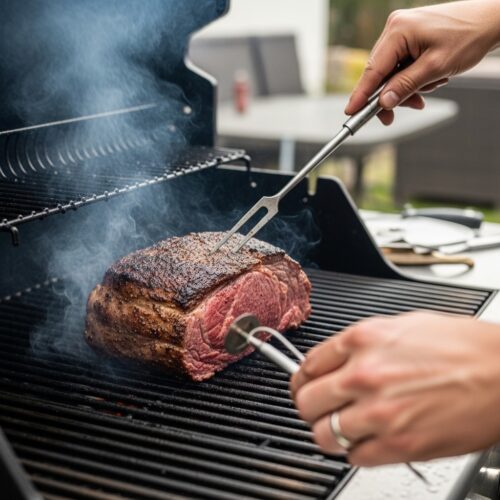
Now that your Big Green Egg is set up, let’s dive into the smoking process. This is where the magic happens! Follow these steps to smoke your prime rib to juicy perfection.
Ideal Cooking Times and Temperatures
Getting the cooking time and temperature right is crucial. Here’s a handy guide based on the weight of your prime rib:
| Weight of Prime Rib | Cooking Time (Approx.) | Target Internal Temp |
|---|---|---|
| 3 lbs | 1.5 hours | 125°F (rare) |
| 5 lbs | 2.5 hours | 130°F (medium-rare) |
| 7 lbs | 3.5 hours | 135°F (medium) |
| 10 lbs | 4.5 hours | 140°F (medium-well) |
Remember, these are estimates. Always use a meat thermometer for accuracy!
Monitoring Internal Temperature
A quality thermometer is your best friend here. Insert it into the thickest part of the meat. Here’s the temperature breakdown for doneness:
- Rare: 120-125°F
- Medium Rare: 130-135°F
- Medium: 140-145°F
- Medium Well: 150-155°F
- Well Done: 160°F and above
Keep an eye on your Big Green Egg’s temperature too. Adjust the vents to maintain a steady heat.
Troubleshooting Common Issues
Even the best grillers face hiccups. Here are some common problems and how to tackle them:
- Temperature Fluctuations: Make small adjustments to the vents. Dramatic changes can lead to wild temperature swings.
- Uneven Cooking: Rotate your prime rib halfway through cooking. This ensures even heat distribution.
- Dry Meat: If you’re worried about dryness, consider injecting with a beef broth mixture before smoking.
Cooking Scenarios
Imagine you’re hosting a dinner. You have a 5-pound prime rib. Based on the guide above, you should plan for about 2.5 hours of smoking. But if you’re cooking in cooler weather, add an extra 30 minutes to your total time. This way, you’ll avoid undercooking and impress your guests with a perfectly smoked prime rib!
With these steps, you’re well on your way to smoking a mouthwatering prime rib on your Big Green Egg. Happy grilling!
Finishing Touches: Resting and Serving the Prime Rib
Resting your prime rib is crucial for juicy, flavorful meat. After smoking, it’s time to give it a little TLC before serving. Here’s how to do it right.
The Importance of Resting
Resting allows the juices to redistribute throughout the meat. If you slice too soon, those precious juices will run out, leaving you with dry slices. Aim for a resting period of at least 20-30 minutes. Cover it loosely with foil to keep it warm.
How to Slice and Serve Prime Rib
When it’s time to slice, use a sharp carving knife. This will ensure clean cuts and a beautiful presentation. Here’s a quick checklist for slicing:
- Angle the Knife: Slice against the grain for tenderness.
- Uniform Thickness: Aim for about ½ inch thick slices.
- Serve Warm: Place slices on a warm platter to keep them toasty.
Pairing Suggestions for a Complete Meal
Now that your prime rib is ready, let’s think about sides and wine pairings. Here are some delightful options:
- Sides:
- Roasted Vegetables: Carrots, Brussels sprouts, or asparagus.
- Garlic Mashed Potatoes: Creamy and comforting.
- Yorkshire Pudding: A classic pairing with prime rib.
- Wines:
- Cabernet Sauvignon: Its bold flavors complement the richness of the meat.
- Malbec: Offers a nice balance of fruitiness and acidity.
- Syrah/Shiraz: Adds a peppery note that enhances the smoky flavor.
Feel free to mix and match based on your taste preferences. Enjoy your meal and the company around the table!
Frequently Asked Questions
These quick answers cover the most common questions about this topic, including key details, practical tips, and common concerns.
How to cook a prime rib in the Big Green Egg?
To cook a prime rib on the Big Green Egg, set it up for indirect heat using a plate setter and a drip pan. Preheat the Egg to around 225°F to 250°F. Season the meat with a dry rub, then place it on the grill. Smoke until the internal temperature reaches your desired doneness—about 130°F for medium-rare. Rest the meat for at least 20 minutes before slicing.
How long does it take to smoke a prime rib on a green EGG?
The smoking time depends on the weight and temperature. Generally, at 225°F, estimate about 30 minutes per pound. For example, a 5-pound prime rib will take approximately 2.5 hours. Always rely on a meat thermometer to check for the target internal temperature instead of time alone.
How long will it take to smoke a 20 lb prime rib at 225 degrees?
A 20-pound prime rib at 225°F will typically require around 10 hours of smoking. This is based on the rule of roughly 30 minutes per pound. However, actual time can vary due to factors like meat shape and grill consistency. Use a thermometer to ensure it reaches your preferred doneness.
How long to smoke a 7lb prime rib at 250?
At 250°F, a 7-pound prime rib usually takes about 3.5 hours to reach medium-rare (130°F). Check the internal temperature periodically, as cooking times can vary. Rest the meat for at least 20 minutes before slicing to allow juices to redistribute.
What is the ideal resting time for prime rib?
Rest the prime rib for 20 to 30 minutes after smoking. Resting allows the juices to settle within the meat, resulting in a moist and tender slice. Cover loosely with foil during this period to keep it warm without steaming the crust.
What is the best way to season prime rib?
Apply a dry rub made of salt, black pepper, garlic powder, onion powder, and smoked paprika. Rub it generously over the entire surface of the meat. For enhanced flavor, let the seasoned prime rib sit at room temperature for 1-2 hours before smoking or refrigerate overnight.
How do I know when my prime rib is done?
Use a reliable meat thermometer inserted into the thickest part of the roast. For medium-rare, aim for 130°F. Remove the meat from the grill once it reaches the target temperature. Remember, the temperature will rise slightly during resting, so take it off a few degrees early.
What are the best sides to serve with prime rib?
Popular sides include garlic mashed potatoes, roasted vegetables, Yorkshire pudding, and creamy horseradish sauce. These complement the rich, smoky flavors of the prime rib and create a well-rounded meal.
Can I smoke a frozen prime rib?
It is not recommended to smoke a frozen prime rib. Thaw the meat completely in the refrigerator for 24-48 hours before smoking. Starting with frozen meat can lead to uneven cooking and may compromise the final texture and safety.