
The twinberry honeysuckle (Lonicera involucrata) is generally considered inedible for humans, as its berries can be toxic [1]. However, they have been used in various cultural practices, showcasing their significance in ethnobotany. This guide explores the characteristics, uses, and safety of twinberry honeysuckle.
What is Twinberry Honeysuckle?
Twinberry honeysuckle, scientifically known as Lonicera involucrata, is a fascinating shrub native to northern and western North America. It grows in moist, wooded areas, particularly along streams and in clearings, thriving in habitats that provide ample water and sunlight [3]. This plant can reach heights of 1.5 to 5 meters (approximately 5 to 16 feet) and has a distinctive appearance characterized by its unique cross-section and flowering pattern.
The leaves of twinberry honeysuckle are opposite, elliptical to oval in shape, measuring between 3 to 14 centimeters (1 to 5.5 inches) long [2]. They feature a slightly hairy texture along the margins and underside, culminating in a pointed tip. These leaves are not just beautiful; they play a crucial role in the plant’s overall health and growth, contributing to its ability to photosynthesize effectively in its natural habitat.
One of the most striking features of twinberry honeysuckle is its flowers. The plant produces yellow, tubular flowers that are about 1 to 2 centimeters long. These flowers typically grow in pairs from the leaf axils and are surrounded by large, reddish bracts that can measure 2 to 4 centimeters across. The flowers are not only visually appealing but also serve as a vital nectar source for various pollinators, including hummingbirds and butterflies [1].
However, when it comes to the berries, caution is essential. Twinberry honeysuckle produces small, black berries that measure approximately 6 to 12 millimeters (1/4 to 1/2 inch) wide. Although these berries may seem tempting, they are generally considered inedible for humans due to their bitter taste and potential toxicity [2]. Reports vary among different indigenous tribes and regions, with some using the berries for medicinal purposes, but they are widely regarded as being unpalatable and possibly harmful [1].
In terms of its ecological role, twinberry honeysuckle serves as an important food source for wildlife. Bears, birds, and small mammals consume the berries, while the flowers attract pollinators crucial for maintaining biodiversity in their habitats [3]. This native plant not only contributes to the ecosystem but also highlights the complex relationship between edibility and toxicity in the plant kingdom, particularly concerning Lonicera involucrata.
Are Twinberry Honeysuckle Berries Edible?
When it comes to the edibility of twinberry honeysuckle, or Lonicera involucrata, the consensus is generally negative. While some reports exist suggesting that the berries could be consumed, they are primarily deemed inedible for humans due to potential toxicity. This is a significant concern, as many wild berries can cause adverse effects if ingested [1].
The taste of twinberry honeysuckle berries is another factor contributing to their unpopularity as a food source. Described as bitter and unpleasant, these berries are not considered palatable [3]. Even if foragers were to overlook the toxicity, the flavor alone is likely to deter anyone from enjoying them as a snack.
Cultural perspectives on twinberry honeysuckle highlight the complex relationship between edibility and toxicity. Indigenous groups have utilized various parts of the plant for medicinal purposes, but they also caution against eating the berries. Terms like “monster food” and “crow berry” reflect a historical understanding of the plant’s potential dangers [1]. This shows that while some may have found uses for the plant, the berries are widely regarded as harmful to human health.
In the wild, twinberry honeysuckle berries serve as a food source for various wildlife, including bears and birds, which can consume them without any ill effects. This highlights an essential aspect of native plants: while they may be toxic to humans, they often play vital roles in their ecosystems [1]. Therefore, while twinberry honeysuckle is an integral part of its habitat, its berries are best left untouched by human hands.
Cultural Uses and Ethnobotany of Twinberry Honeysuckle
Twinberry honeysuckle, or Lonicera involucrata, holds a significant place in the cultural heritage of various Native American tribes. Despite its berries being deemed toxic to humans, these plants have been utilized in diverse and meaningful ways.
Many tribes have historically used the twinberry honeysuckle for medicinal purposes. For instance, the leaves and bark were crafted into poultices to treat ailments such as coughs and skin irritations [3]. This showcases the plant’s role beyond mere edibility; it served as a resource for healing, even while acknowledging the potential dangers of its berries.
The berries, often referred to as “monster food” among Pacific Northwest tribes, symbolize the complexity of nature’s offerings. While not safe for human consumption, they are a staple for wildlife, particularly bears and birds, which consume them without harm. This relationship highlights the dual nature of twinberry honeysuckle: toxic to some, yet nourishing for others [3].
Furthermore, the indigenous peoples utilized the berries for dyeing and crafting. The dark pigments from the berries could be used for hair dye, showcasing the plant’s versatility in cultural practices. This use underscores an understanding of the plant’s properties, where toxicity did not overshadow its value in artistic expression [3].
In their ecosystems, twinberry honeysuckle plays a vital role. It is a source of nectar for pollinators like hummingbirds, which connects it to broader ecological functions. Such interactions emphasize the importance of native plants in sustaining local wildlife, even if their berries are not edible for humans [3].
The historical applications of twinberry honeysuckle reflect a deep knowledge of local flora, illustrating how Native American tribes have navigated the complexities of nature. While the berries are best left untouched by people, the plant itself remains a valuable source of traditional knowledge and cultural significance.
Wildlife Interactions with Twinberry Honeysuckle
Twinberry honeysuckle, or Lonicera involucrata, plays a vital role in its ecosystem, particularly as a food source for various wildlife. Its berries, although considered inedible and potentially toxic for humans, provide nourishment for many animals.
- Birds: Numerous bird species feast on the dark berries of twinberry honeysuckle. These berries are a significant food source during late summer, when other food options may be scarce. Birds like thrushes, waxwings, and even bears commonly consume these fruits, showcasing the plant’s importance to local wildlife diets [3].
- Pollinators: The flowers of twinberry honeysuckle are rich in nectar, attracting pollinators such as hummingbirds, bees, and butterflies. This connection highlights the plant’s role in supporting not just birds, but also the broader ecosystem of pollinators that are crucial for many plant species, even beyond the honeysuckle itself [3].
- Small Mammals: In addition to birds, small mammals also partake in the berries of twinberry honeysuckle. These animals help disperse the seeds, which is vital for the plant’s propagation and the health of its native habitat. This interaction further emphasizes how the plant fits into the food web, despite its berries being unsuitable for human consumption.
Despite its toxic reputation for people, twinberry honeysuckle’s berries are an essential food source for many animals. The plant thrives in moist, wooded areas, establishing itself in habitats that are beneficial for both the flora and fauna of the ecosystem. This makes Lonicera involucrata a key player in maintaining the balance of its environment, showcasing how even plants that are not edible for humans can significantly impact local wildlife.
Safety Guidelines for Foraging Twinberry Honeysuckle
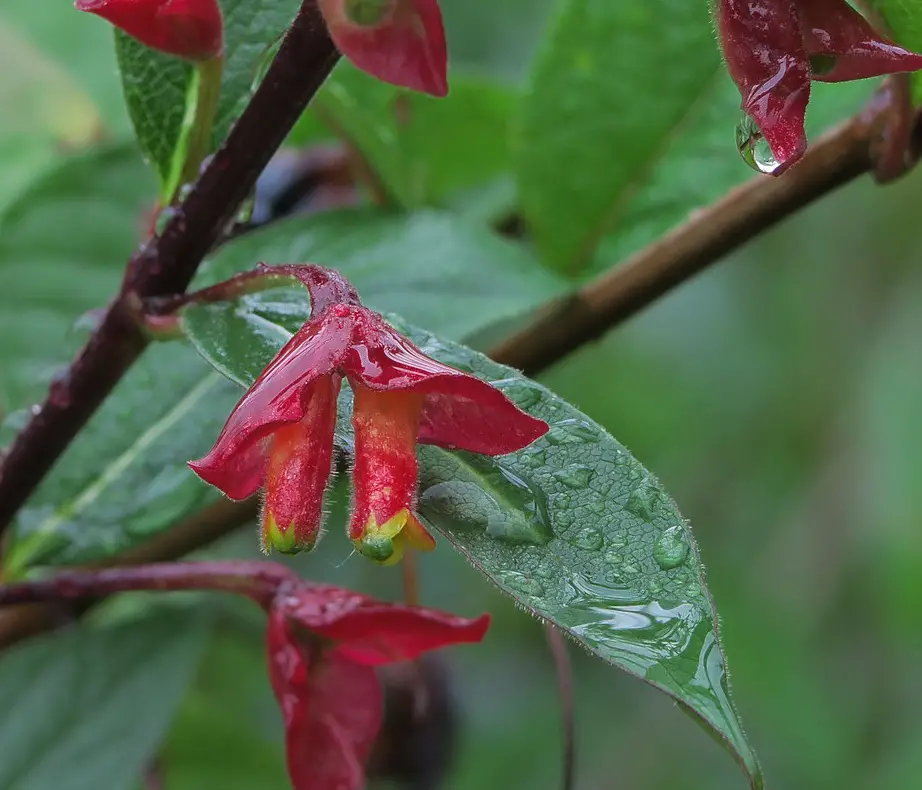
When foraging for twinberry honeysuckle (Lonicera involucrata), it’s crucial to prioritize safety due to the potential toxicity of its berries. Here are some essential guidelines to help you identify the plant and avoid any risks associated with consuming its fruit.
Identifying Twinberry Honeysuckle
- Physical Appearance: Twinberry honeysuckle is a large shrub that can grow between 1.5 to 5 meters tall. Look for its opposite, oval-shaped leaves, which typically range from 3 to 14 centimeters long. The distinctive yellow, tubular flowers appear in pairs from the leaf axils, surrounded by reddish bracts [6].
- Berry Characteristics: The berries of twinberry honeysuckle are black and shiny, measuring about 6 to 12 millimeters wide. They typically ripen in mid to late summer [2]. However, be cautious; these berries are often described as unpalatable and potentially poisonous to humans [1].
Foraging Tips
- Do Not Consume the Berries: Despite some folklore suggesting the berries may be edible, numerous sources indicate that twinberry honeysuckle berries are likely toxic. They are known to be bitter and sour, making them unsuitable for human consumption [7]. Always err on the side of caution and avoid eating them.
- Use a Reliable Guide: If you’re new to foraging, consider using a reputable plant identification guide or app. This can help confirm that you’re correctly identifying twinberry honeysuckle and distinguishing it from other honeysuckle species, many of which can be toxic [3].
- Consult Local Experts: Join local foraging groups or workshops to learn from experienced foragers. Engaging with knowledgeable individuals can significantly enhance your ability to identify edible plants safely and avoid toxic varieties.
Habitat Awareness
- Understand Its Habitat: Twinberry honeysuckle often grows in moist, wooded areas, particularly near wetlands [6]. Familiarizing yourself with its natural habitat can help you locate the plant more easily and understand the ecosystem it thrives in.
- Observe Wildlife Interactions: While the berries are not safe for humans, they serve as a food source for various wildlife, including bears, birds, and small mammals [2]. Observing which animals frequent these areas can also provide clues about local plant life and safety.
Safety Precautions
- Avoid Harvesting Near Polluted Areas: When foraging, always be aware of your surroundings. Avoid areas near roads or industrial sites where plants may absorb pollutants. This is particularly important for any plant you might consider foraging, including twinberry honeysuckle.
- Stay Informed on Conservation Status: Twinberry honeysuckle is generally considered secure in most areas, but it’s essential to be aware of local conservation efforts. In certain regions, the plant may be vulnerable, making it crucial to respect its habitat and avoid overharvesting [4].
By following these guidelines, you can safely navigate the world of foraging while appreciating the unique characteristics of twinberry honeysuckle and its role in the ecosystem.
Comparative Analysis: Twinberry Honeysuckle vs Other Honeysuckle Species
When exploring the edibility of various honeysuckle species, twinberry honeysuckle (Lonicera involucrata) stands out due to its unique characteristics. While some honeysuckle plants bear edible fruits, twinberry’s berries are generally considered inedible and potentially toxic. This contrasts sharply with other honeysuckle varieties like the haskap berry (Lonicera caerulea), which produces sweet, edible blue berries that are safe to eat.
- Edibility: Twinberry honeysuckle’s berries are often described as bitter and sour, making them unappealing for human consumption [1]. In contrast, the berries from the haskap honeysuckle are not only edible but also praised for their sweet flavor and nutritional benefits, making them a popular choice among foragers and gardeners alike.
- Toxicity: The toxicity of twinberry honeysuckle is noteworthy. Reports indicate that while some indigenous groups utilized the plant, the berries were often regarded as poisonous—referred to as “monster food” in certain cultures [1]. This is a significant distinction compared to other honeysuckle species, where some, like the Japanese honeysuckle (Lonicera japonica), have edible flowers and berries, albeit with caution regarding overconsumption.
- Uses: Twinberry honeysuckle has been traditionally used for various non-culinary purposes. Indigenous peoples have used its bark, leaves, and twigs for medicinal applications, including poultices and teas [1]. Meanwhile, other honeysuckle types, such as the Lonicera caerulea, are often cultivated specifically for their edible berries, which can be used in jams, jellies, and desserts, showcasing a more direct human utility compared to the more limited uses of twinberry.
- Wildlife Interaction: Twinberry honeysuckle plays a vital role in the ecosystem as well. Its berries serve as food for wildlife, including bears, birds, and small mammals, despite being unsuitable for human consumption [1]. Other honeysuckle species like the Amur honeysuckle (Lonicera maackii) also attract wildlife but are often invasive, leading to ecological concerns.
In summary, twinberry honeysuckle’s edibility is overshadowed by its toxicity and limited culinary applications, setting it apart from other honeysuckle varieties that offer safe and tasty berries.
Conservation Status and Gardening Potential of Twinberry Honeysuckle
Twinberry honeysuckle, or Lonicera involucrata, is considered a native plant that contributes to ecological diversity [4]. However, its conservation status has raised concerns. Habitat loss, primarily due to urban development and land conversion, threatens its populations, particularly in areas like Alaska, Manitoba, and Colorado, where it is classified as vulnerable [4]. Conservation efforts are essential to ensure the survival of this species, which plays a significant role in its native ecosystems.
In terms of gardening potential, twinberry honeysuckle can serve as an attractive ornamental plant. Its unique features include paired yellow flowers and glossy black berries, which, while not edible for humans, attract various wildlife [3]. This characteristic makes it a great choice for gardeners looking to support local ecosystems. Planting twinberry honeysuckle can promote biodiversity by providing food sources for birds and small mammals, which rely on its berries [4].
Moreover, twinberry honeysuckle is well-suited for moist environments, often found in wooded areas and along stream banks [4]. Its ability to thrive in these conditions makes it a valuable addition to gardens focused on restoration or those seeking to create a more natural landscape. The plant’s resistance to air pollution also adds to its appeal for urban gardens [3].
While the berries are not edible for humans due to their bitterness and potential toxicity, their ecological contributions cannot be overlooked. When choosing plants for a garden, considering native species like twinberry honeysuckle not only enhances aesthetic appeal but also supports local wildlife and promotes conservation efforts [4].
References
2. Lonicera involucrata (Richardson) Banks ex Spreng.
4. Plant Fact Sheet for twinberry honeysuckle (Lonicera …
6. https://www.fs.usda.gov/wildflowers/plant-of-the-week/lonicera_involucrate.shtml
7. https://web.pdx.edu/~maserj/ESR410/lonicerainvolucrata.html