
Seasoning your brand new Blackstone griddle is essential for creating a non-stick surface and protecting it from rust. This guide provides a detailed step-by-step process to ensure your griddle is ready to deliver exceptional cooking performance right from the first use.
Gather Your Supplies for Seasoning
Before you dive into seasoning your Blackstone griddle, you’ll need to gather a few essential tools and ingredients. Having the right supplies on hand makes the process smoother and ensures great results.

Essential Tools for the Seasoning Process
Here’s what you’ll need:
- Scraper or Spatula: For cleaning the surface before seasoning.
- Paper Towels: To wipe down the griddle and apply the oil.
- Heat-Resistant Gloves: Safety first! Protect your hands from heat.
- Mild Dish Soap: Just for the initial cleaning before seasoning.
- Spray Bottle: If you prefer an even oil distribution.
Recommended Oils for the Best Results
The choice of oil is crucial for effective seasoning. Here’s a quick comparison of some popular options:
| Oil Type | Smoke Point (°F) | Benefits |
|---|---|---|
| Vegetable Oil | 400 | Affordable and easy to find. |
| Canola Oil | 400 | Neutral flavor, great for high heat. |
| Solid Vegetable Shortening | 360 | Inexpensive and has a high smoke point. |
| Blackstone Griddle Seasoning | 450 | Specifically designed for griddles. |
While you can use other oils, the Blackstone Griddle Seasoning & Cast Iron Conditioner is highly recommended for optimal results. It provides a strong protective layer and enhances the non-stick surface. Check Price on Amazon.
Table of Contents
Safety Equipment to Consider
Safety is key when seasoning a griddle. Here are some items to think about:
- Ventilation: Make sure you’re in a well-ventilated area. Fumes can build up.
- Fire Extinguisher: Always a good idea to have nearby when cooking with high heat.
By preparing these supplies, you’ll set yourself up for a successful seasoning experience. Happy griddling!
Clean Your Blackstone Griddle Before Seasoning
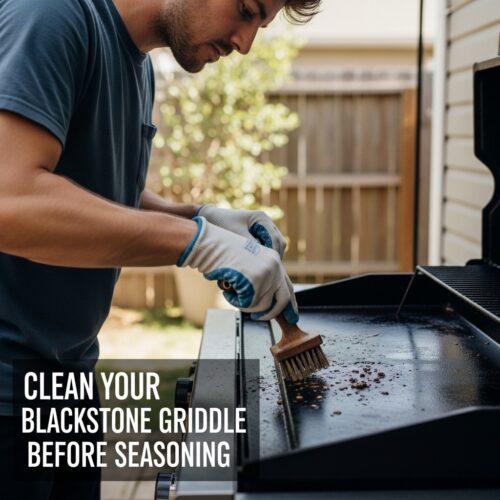
Cleaning your Blackstone griddle before seasoning is crucial. It removes any manufacturing residue, dirt, or stickers. A clean surface helps the seasoning process, ensuring a smooth, non-stick finish.
Why Cleaning is Essential for Effective Seasoning
Cleaning sets the stage for proper seasoning. If your griddle is dirty, the seasoning won’t adhere well. This can lead to uneven cooking and a sticky surface. A good cleaning ensures that the seasoning layers bond effectively, giving you that perfect cooking surface.
Step-by-Step Cleaning Instructions
1. Start with Soap and Water: Use hot, soapy water and a soft sponge. Scrub the griddle surface to remove any debris.
2. Rinse Thoroughly: Use a squirt bottle with clean water to rinse off the soap. This is important to avoid any soap residue.
3. Dry Completely: Use paper towels to wipe down the surface. Make sure it’s completely dry before moving to seasoning.
What to Avoid During Cleaning
- Don’t Use Abrasive Cleaners: These can scratch your griddle surface.
- Avoid Steel Wool: It can damage the finish.
- Skip the Chemicals: Harsh chemicals can leave residues that affect seasoning.
Common Mistakes to Avoid
- Not Rinsing Well: Soap residue can interfere with seasoning.
- Using Cold Water: Always use hot water to help loosen grime.
- Skipping Drying: Water left on the griddle can lead to rust.
Cleaning Checklist
- [ ] Hot, soapy water
- [ ] Soft sponge or cloth
- [ ] Squirt bottle with clean water
- [ ] Paper towels for drying
By following these steps, you’ll ensure your Blackstone griddle is perfectly clean and ready for seasoning. Happy griddling!
Apply Oil to Season the Griddle
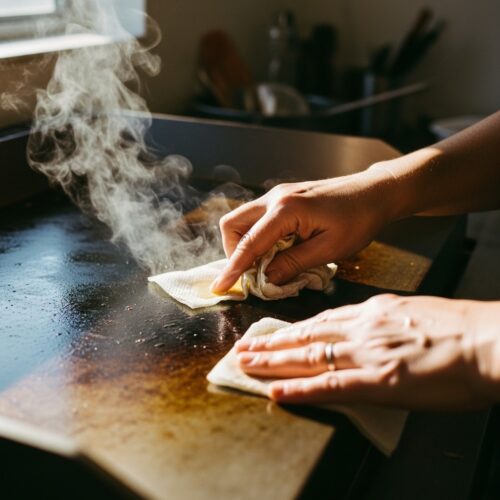
Now that your Blackstone griddle is clean and ready, it’s time to apply the oil for seasoning. This step is crucial for creating that non-stick surface you want. Let’s dive into the process!
How to apply the first layer of oil
1. Choose Your Oil: Pick an oil with a high smoke point. Options include vegetable oil, canola oil, or even the Blackstone Griddle Seasoning & Cast Iron Conditioner for optimal results. Check Price on Amazon.
2. Pour It On: Pour about 2-3 tablespoons of oil onto the griddle surface.
3. Spread Evenly: Use a paper towel or a clean cloth to spread the oil. Make sure it covers the entire cooking area.
The importance of thin layers
When it comes to seasoning, less is more. A thin layer of oil is key.
- Avoid Buildup: Thick layers can lead to sticky residue. You want a smooth surface.
- Promote Polymerization: A thin coat helps the oil bond effectively to the griddle, creating a durable surface. This process is what turns the oil into that hard, non-stick layer.
How to achieve even coverage
Getting that oil spread just right can make all the difference.
- Use a Clean Cloth: Dampen a cloth with oil. This helps in spreading it evenly without excess.
- Wipe in a Circular Motion: This technique helps to distribute the oil uniformly across the surface.
- Check for Gaps: After applying, take a quick look to see if there are any dry spots. If so, add a tiny bit more oil and spread it again.
Following these steps will set up your griddle for success. Keep in mind that seasoning is an ongoing process. The more you use and season your griddle, the better it will perform!
Heat the Griddle for Seasoning
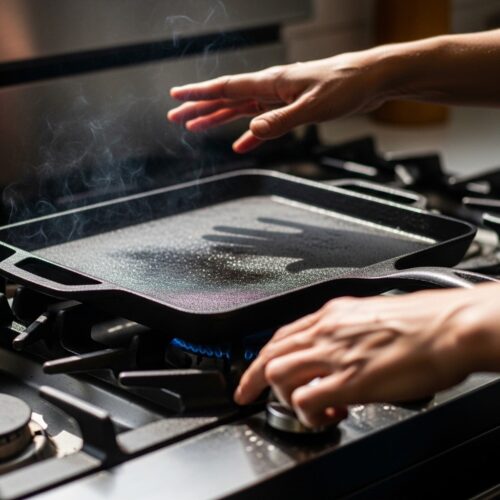
Now that your griddle is all oiled up, it’s time to heat things up! This step is crucial for creating that non-stick surface we all love. Let’s dive into the heating process.
Recommended Heating Settings
To properly season your Blackstone griddle, you need the right temperature. Here’s what to do:
- Turn Up the Heat: Set your griddle to the maximum temperature.
- Heat Duration: Let it heat for about 15-20 minutes. This will prepare the surface for the oil.
Signs That Your Griddle is Properly Heated
How do you know when your griddle is ready? Look for these signs:
- Visible Smoke: Once the oil starts to smoke, you’re in business! This indicates that the oil is reaching its smoke point, which is essential for seasoning.
- Even Color Change: The surface should start changing color, typically to a golden or brown hue.
What to Do If You Encounter Smoke
A little smoke is normal, but if it gets excessive, here are a few troubleshooting tips:
- Reduce the Temperature: Lower the heat slightly if the smoke is overwhelming.
- Use Lesser Oil: If you added too much oil, it can cause excessive smoking. A thin layer is all you need.
- Ensure Good Ventilation: Smoke can accumulate indoors. Open windows or use a fan to clear the air.
Remember, the goal is to create a durable layer of seasoning through a process called polymerization. This is when the oil bonds to the griddle, forming that coveted non-stick surface. Keep an eye on your griddle as it heats, and you’ll be well on your way to griddling perfection!
Repeat the Seasoning Process for Optimal Results
Seasoning your Blackstone griddle is all about creating that perfect non-stick surface. To get it just right, you’ll want to repeat the oil application and heating process several times. Here’s how to nail it!
Ideal Number of Layers for Seasoning
For the best results, aim for 3 to 5 layers of seasoning. Each layer builds on the last, enhancing the non-stick quality and durability of your griddle. Here’s a quick breakdown:
- 3 layers: Good for occasional use.
- 5 layers: Ideal for frequent griddlers or when cooking for a crowd.
Signs Your Griddle Needs More Layers
Keep an eye on your griddle. Here are some signs that it might need additional seasoning:
- Food starts to stick: If your pancakes or burgers are clinging to the surface, it’s time for more oil.
- Discoloration: A shiny or grayish surface is a signal that seasoning has worn off.
- Rust spots: If you see any rust, it’s definitely time to re-season.
Maintenance Seasoning Tips
To keep your griddle in top shape, follow these maintenance tips:
- After each use: Wipe down the surface with a thin layer of oil. This helps maintain the seasoning.
- Regular checks: Inspect your griddle for signs of wear every few uses.
- Re-season as needed: If you notice any sticking or rust, don’t hesitate to add a few more layers.
By following these guidelines, you’ll ensure your Blackstone griddle stays seasoned and ready for delicious meals!
Troubleshooting Common Seasoning Issues
Sometimes, seasoning your Blackstone griddle can come with a few hiccups. But don’t worry! Here are some common issues you might face and how to fix them.
What to do if your griddle is sticky after seasoning
If your griddle feels sticky, it’s likely due to applying too much oil. Here’s how to fix it:
- Scrape off excess oil: Use a flat spatula to gently scrape off the sticky layer.
- Reheat: Heat the griddle until it’s hot. This can help burn off the excess oil.
- Season again: Apply a very thin layer of oil and repeat the seasoning process. Remember, thin is key!
How to fix uneven seasoning
Uneven seasoning can lead to hot spots and sticking. To address this:
- Identify the spots: Look for areas where the seasoning is patchy.
- Sand lightly: Use fine-grit sandpaper to smooth out rough patches.
- Reapply oil: Coat the surface with a thin layer of oil, focusing on the uneven areas.
- Reheat: Heat the griddle to the proper temperature and allow it to smoke until the oil is polymerized.
Dealing with peeling or flaking seasoning
Peeling or flaking means it’s time for some serious TLC. Here’s what to do:
- Remove the flaking parts: Use a scraper to gently remove the peeling sections.
- Clean thoroughly: Wash the griddle with warm soapy water. Rinse and dry completely.
- Re-season: Apply a thin layer of oil and go through the full seasoning process again.
Quick Troubleshooting Checklist
- Sticky: Scrape, reheat, and season again with thin oil.
- Uneven: Identify, sand, apply oil, and reheat.
- Peeling: Remove flakes, clean, and re-season fully.
With these tips, you’ll tackle any seasoning issues like a pro! Happy griddling!
Best Practices for Maintaining Your Seasoned Griddle
Keeping your Blackstone griddle in top shape is key to enjoying delicious meals. Proper maintenance helps preserve the seasoning and ensures a non-stick cooking surface. Here’s how to do it right.
Daily Maintenance After Cooking
After each use, give your griddle a little TLC. Here’s a simple routine to follow:
- Clean the surface: Use a spatula to scrape off any food residue while the griddle is still warm.
- Wipe down: Use a damp cloth or paper towel to wipe the surface.
- Apply oil: Once cool, apply a thin layer of oil to protect the seasoning. This helps lock in moisture and keep your griddle ready for the next cook.
When to Re-Season Your Griddle
Re-seasoning is vital to keep that non-stick surface intact. Here’s when you should consider doing it:
- Every few months: If you notice a dull or gray surface, it’s time to re-season.
- After heavy use: If you’ve cooked sticky foods or if the griddle has been exposed to moisture, a re-season is a good idea.
- Flaking or rust: If you see any signs of flaking or rust, it’s time for a complete clean and re-season.
Avoiding Common Mistakes in Maintenance
Avoiding pitfalls can keep your griddle in great shape. Here’s what to watch out for:
- Don’t soak: Avoid soaking your griddle in water. This can damage the seasoning.
- Skip the soap: When cleaning, skip the soap unless you’re re-seasoning. It can strip away the seasoning layers.
- Use the right oils: Stick with oils that have high smoke points, like vegetable oil or grapeseed oil. Avoid olive oil, as it can become sticky.
Maintenance Schedule
Here’s a quick checklist to keep your griddle in prime condition:
| Frequency | Task |
|---|---|
| Daily | Clean surface, wipe down, apply oil |
| Weekly | Inspect for damage, touch up oil layer |
| Monthly | Deep clean and re-season if necessary |
By following these simple practices, you’ll ensure your Blackstone griddle stays seasoned and ready for your next culinary adventure!
Frequently Asked Questions
These quick answers cover the most common questions about this topic, including key details, practical tips, and common concerns.
What’s the best way to season a brand new Blackstone griddle?
The best way is to start with a clean surface by thoroughly cleaning with hot, soapy water and drying completely. Then, apply a thin layer of high smoke point oil, such as vegetable or canola oil, evenly across the surface. Heat the griddle to its maximum temperature and let it smoke for about 15-20 minutes. Repeat this process 3-5 times to build a durable, non-stick coating.
Does a Blackstone griddle need to be seasoned before first use?
Yes, seasoning a new Blackstone griddle before its first use is highly recommended. It creates a non-stick surface, protects against rust, and enhances cooking performance. Skipping this step can lead to sticking and quicker wear of the surface.
When you first start a Blackstone griddle, what should you do?
Begin by cleaning the surface thoroughly to remove manufacturing residues. Then, apply a thin layer of oil across the entire surface. Heat the griddle until it smokes, usually 15-20 minutes, to polymerize the oil. Repeat this process multiple times for optimal seasoning. Afterward, your griddle will be ready for cooking.
How many layers of oil do I need to season a Blackstone griddle?
Typically, 3 to 5 thin layers of oil are ideal for initial seasoning. Each layer should be applied evenly and heated until it smokes. Multiple layers build a strong, non-stick surface and improve durability. Additional seasoning layers can be added over time for maintenance.
What should I do if my griddle is sticky after seasoning?
A sticky surface usually indicates excess oil. To fix this, heat the griddle until it smokes to burn off the excess. You can also scrape off the sticky buildup with a spatula. Reapply a very thin layer of oil and reheat to polymerize. Using less oil in the next round helps prevent stickiness.
How often should I re-season my griddle?
Re-season your Blackstone griddle whenever you notice food sticking, the surface dulls, or rust appears. Regularly applying a thin layer of oil after cooking and periodically re-seasoning every few months will maintain a non-stick surface and protect your investment.
What is the best oil for seasoning a Blackstone griddle?
High smoke point oils are best, such as vegetable oil, canola oil, or Blackstone’s own seasoning oil. These oils polymerize well, forming a durable non-stick layer. Avoid oils with low smoke points like olive oil, which can become sticky or burn easily.
Can I use soap to clean my griddle before seasoning?
Yes, for initial cleaning, using mild dish soap is fine to remove manufacturing residues and dirt. After cleaning, rinse thoroughly and dry completely. Once seasoned, it’s best to avoid soap, as it can strip the seasoning. Instead, wipe the surface with a paper towel and oil after each use.