
Corn snakes are non-venomous and pose minimal danger to humans. Understanding their behavior and bite potential can help alleviate fears and misconceptions about these popular reptiles.
Understanding the Nature of Corn Snakes
Corn snakes are fascinating creatures. As non-venomous constrictors, they play a vital role in their ecosystems and are generally safe around humans.
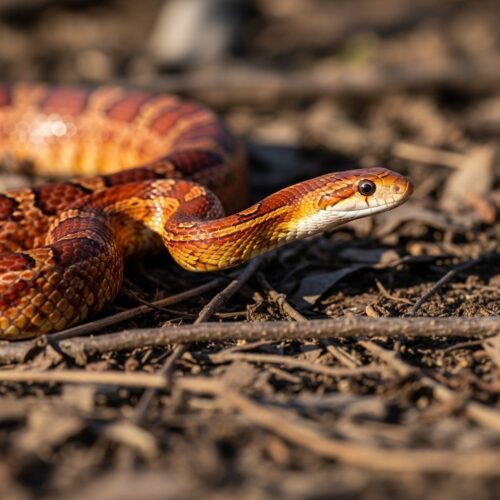
What Makes Corn Snakes Non-Venomous?
Corn snakes belong to a group of snakes that don’t produce venom. This means they lack venom glands entirely. When they bite, it’s usually a defensive reaction rather than an attack. Their bites cause minor puncture wounds, which are not dangerous. In fact, you might find a corn snake bite less painful than a dog bite!
Here are some quick facts about corn snake bites:
- Non-venomous: They cannot inject toxins.
- Minor pain: Bites can feel similar to a scratch.
- No long-term effects: They don’t cause serious health issues.
Natural Behavior and Temperament
Corn snakes are known for their docile nature. They are shy and prefer to avoid confrontation. In the wild, they typically escape from threats rather than biting. If they do bite, it’s often because they feel threatened.
Table of Contents
- Ecological Role: Corn snakes help control rodent populations, benefiting farmers and the environment.
- Pet-Friendly: They are excellent pets for beginners. Their calm demeanor makes handling easy.
To illustrate, imagine a scenario where a corn snake is startled. Instead of striking, it will likely try to slither away. This behavior highlights their non-aggressive nature.
In summary, corn snakes are not dangerous. By understanding their behavior and bite potential, you can appreciate these reptiles without fear.
Corn Snakes vs. Venomous Look-Alikes
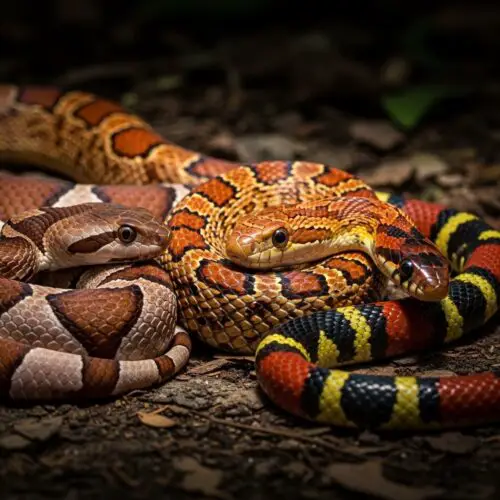
Corn snakes often find themselves mistaken for more dangerous snakes, like the venomous copperhead. Let’s break down how to identify these snakes and clear up any confusion.
Identifying Corn Snakes
Corn snakes are generally easy to recognize. Here are some key features:
- Coloration: Reddish-orange with black or brown blotches.
- Pupils: Round pupils, unlike the vertical slits of venomous snakes.
- Head Shape: Slim, oval head that’s not triangular.
- Body Size: Can grow up to 6 feet long, usually slender and smooth.
Key Differences from Copperheads
Copperheads can be misleading due to their similar colors. Here’s how to tell them apart:
| Feature | Corn Snake | Copperhead |
|---|---|---|
| Pupil Shape | Round | Vertical slit |
| Head Shape | Narrow, oval | Broad, triangular |
| Color Patterns | Blotches widest at the center | Hourglass-shaped bands |
| Behavior | Non-aggressive, prefers to flee | Can be defensive if threatened |
Corn snakes do not pose a threat to humans. If you’re unsure about a snake, remember that corn snakes are much more likely to escape than attack. The only time they might bite is if they feel cornered or scared.
Preventing Bites
To minimize the chance of a bite:
- Always give snakes space.
- Don’t attempt to handle wild snakes.
- If you have a pet corn snake, handle it gently and calmly.
Understanding these differences can help ease fears about corn snakes and highlight their role as harmless, beneficial creatures in their ecosystems.
Do Corn Snakes Bite? Understanding the Risks
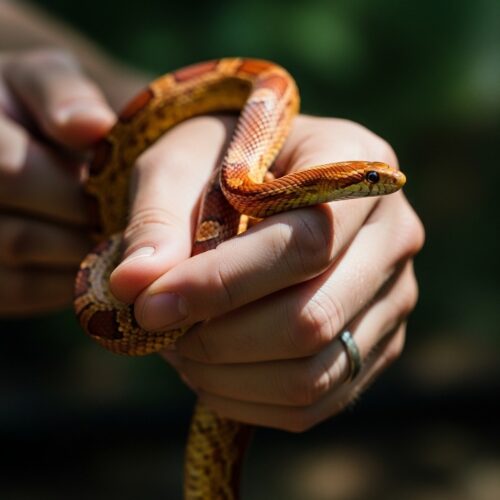
Corn snakes are generally gentle creatures. They do bite, but it’s usually not a big deal. Let’s break down when these bites might happen and what to expect.
Circumstances Leading to Bites
Corn snakes bite mainly when they feel threatened. Here are some scenarios when a bite might occur:
- Handling Stress: If a corn snake is grabbed too tightly or handled roughly, it may bite.
- Feeling Cornered: If it can’t escape, a corn snake might lash out in defense.
- Mistaken Identity: Sometimes they confuse fingers for food, especially if they’re hungry!
Remember, these snakes would rather avoid confrontation. Most bites happen when they feel scared or provoked.
Pain and Care After a Bite
Corn snake bites aren’t as scary as they sound. Here’s what you need to know about the pain level and care:
- Pain Level: A bite feels more like a pinch or a small needle prick. It’s usually mild and often doesn’t draw blood.
- Aftercare: If bitten, clean the wound with soap and water to prevent infection. It’s a good idea to apply an antiseptic too.
Personal Anecdote: Many corn snake owners report their experiences with bites. One owner mentioned, “I was surprised by how gentle my corn snake was. When it bit me, it felt like a little pinch. I just cleaned it up, and that was it!”
In summary, corn snake bites are minor incidents. They can happen, but understanding their behavior can help you avoid them. Just remember to be gentle and calm when handling these beautiful snakes!
Preventing Corn Snake Bites: Tips for Safe Handling
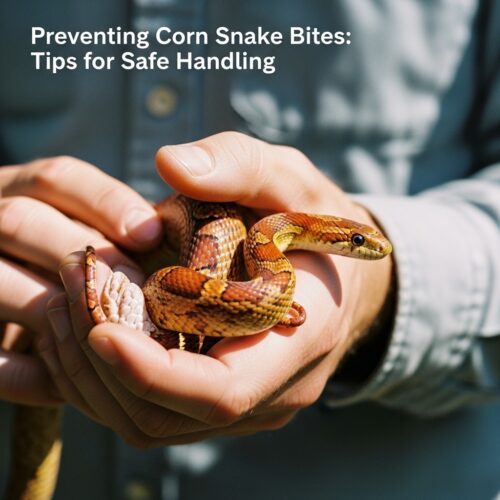
Handling corn snakes can be a joyful experience, but it’s important to do it safely to avoid bites. Here are some tips to keep both you and your corn snake happy.
Proper Handling Techniques
1. Stay Calm: Your energy affects your snake. If you’re anxious, your corn snake might sense it and become stressed.
2. Support Their Body: Always support your corn snake’s body fully. Use both hands to hold them gently. This makes them feel secure.
3. Avoid Quick Movements: Sudden movements can startle them. Move slowly and speak softly while handling.
4. Time It Right: Don’t handle your corn snake right after feeding or during shedding. They may be more irritable during these times.
5. Learn Their Behavior: Get to know your snake’s personality. Some corn snakes may be more skittish than others.
Signs of Stress in Corn Snakes
Understanding when your corn snake is stressed can help prevent bites. Look for these signs:
- Hissing: A clear indication they feel threatened.
- Flattening Body: They may flatten themselves out to appear larger.
- Trying to Escape: If they’re continuously trying to get away, it’s best to put them back.
- Tail Quivering: This can signal agitation or discomfort.
Scenario Framework for Assessing Handling Situations
Feeding Time: Wait at least 24 hours after feeding before handling. This allows your snake to digest properly.
Shedding: During shedding, your corn snake may be more defensive. Handle them only if necessary, and be gentle.
Daily Handling: Aim for short, gentle sessions. This will help your snake get used to you and reduce the chance of bites.
By following these tips and understanding your corn snake, you can minimize the risk of bites and enjoy a safe and fulfilling relationship with your pet.
The Ecological Benefits of Corn Snakes
Corn snakes play a vital role in maintaining a balanced ecosystem. They are natural pest controllers, helping farmers manage rodent populations. This not only protects crops but also promotes a healthier environment.
Natural Rodent Control
Corn snakes primarily feast on rodents, which can be a significant nuisance for farmers. By keeping these populations in check, they help reduce crop damage and the need for chemical pest control methods. Here’s how they help:
- Prey Preferences: Corn snakes enjoy eating mice, rats, and other small rodents. This makes them effective in controlling these pests.
- Population Management: A single corn snake can consume several rodents in a week, significantly lowering their numbers in a given area.
- Minimal Impact on Humans: Unlike some other pest control methods, corn snakes pose no harm to humans. They are non-venomous and generally avoid contact with people.
Importance in Ecosystem Balance
Corn snakes are more than just pest controllers; they are essential for the health of their ecosystems. Here are some key points:
- Biodiversity: By controlling rodent populations, corn snakes help maintain the balance of various species in their habitat. This can prevent overpopulation of certain animals and promote biodiversity.
- Food Chain Role: Corn snakes serve as prey for larger predators. This keeps the food chain intact, supporting a wide range of wildlife.
- Educational Value: Farmers and communities can learn about the benefits of having corn snakes around, leading to more eco-friendly pest management practices.
Corn snakes are not just harmless; they are beneficial allies for farmers and the environment. Their presence helps sustain agricultural practices and promotes a healthier ecosystem for all.
Common Myths About Corn Snakes Debunked
Corn snakes often get a bad rap. Many people think they’re dangerous or venomous, but that’s simply not true. Let’s clear up some common misconceptions.
Misconceptions About Venom
One of the biggest myths is that corn snakes can be venomous. Here’s the deal:
- Corn snakes are non-venomous. They don’t possess venom glands.
- When they bite, it’s primarily for defense, not to inject venom.
- Their bites can cause minor puncture wounds, but they won’t poison you.
Corn snakes are often confused with venomous snakes like copperheads. Unlike those snakes, corn snakes do not have fangs. Their bite can be uncomfortable, but it’s nothing to worry about.
Fear of Corn Snakes Explained
Many people fear corn snakes for no good reason. Here are a few points to consider:
- Docile Nature: Corn snakes are known for being friendly and calm. They don’t see humans as prey.
- Bite Pain Level: Getting bitten by a corn snake is usually less painful than a dog bite. Most bites feel like a pinch.
- Bacteria Risk: While corn snakes can carry bacteria in their mouths, a bite will generally only cause mild irritation. Always clean the wound to avoid infections.
If you’re thinking about having a corn snake as a pet, remember they’re more likely to slither away than to bite. If they do bite, it’s often a sign they feel threatened. Handling them gently and respectfully can prevent this.
Quick Myth vs. Fact Checklist
| Myth | Fact |
|---|---|
| Corn snakes are venomous. | Corn snakes are non-venomous. |
| Their bites are dangerous. | Bites cause minor pain, not toxic effects. |
| Corn snakes are aggressive. | They are generally calm and docile. |
| All snakes bite when scared. | Corn snakes prefer to flee than fight. |
Understanding these points can help alleviate fears and promote a better relationship with these fascinating creatures.
Frequently Asked Questions
These quick answers cover the most common questions about this topic, including key details, practical tips, and common concerns.
Will it hurt if a corn snake bites you?
Most bites from a corn snake are minor and feel like a quick pinch or scratch. They are non-venomous, so they don’t inject toxins or cause serious health issues. Cleaning the wound with soap and water is usually enough to prevent infection.
What is the no. 1 deadliest snake in the world?
The saw-scaled viper (Echis carinatus) is considered one of the deadliest snakes due to its potent venom and aggressive behavior. It causes thousands of bites annually, often resulting in fatalities if untreated. Corn snakes are harmless compared to such venomous species.
Do corn snakes like being petted?
Many corn snakes enjoy gentle handling and can become accustomed to human interaction. They are generally calm and may seek out contact, but always handle them calmly and support their body to reduce stress.
How dangerous is a corn snake?
Corn snakes are not dangerous to humans. They are non-venomous constrictors that pose minimal risk. Bites are rare and usually occur only if the snake feels threatened. Their calm nature makes them safe pets when handled properly.
What should you do if a corn snake bites you?
Stay calm and wash the bite area with soap and water. Apply an antiseptic and keep an eye on the wound for signs of infection. If bleeding persists or you experience swelling, pain, or signs of infection, seek medical attention.
Can a corn snake kill you?
No, a corn snake cannot kill you. They are non-venomous and typically pose no serious threat. Their bites are minor, and they prefer to avoid confrontation altogether.
What is the lifespan of a corn snake?
Corn snakes typically live between 6 to 8 years in captivity. With proper care, some can reach up to 10-15 years. Providing suitable habitat, diet, and health care helps ensure a long, healthy life.
How to handle a corn snake safely?
Support their body fully with gentle hands, move slowly, and avoid sudden movements. Handle them when they are calm, such as after feeding or during shedding, and always respect their stress signals to prevent bites.