
Emerald Green Arborvitae are moderate-growing evergreen trees, adding 6 to 12 inches in height annually under ideal conditions [1]. Understanding their growth rate is crucial for effective landscaping and privacy screening. This guide covers everything you need to know about their growth patterns, care requirements, and environmental influences.
Understanding the Emerald Green Arborvitae Growth Rate
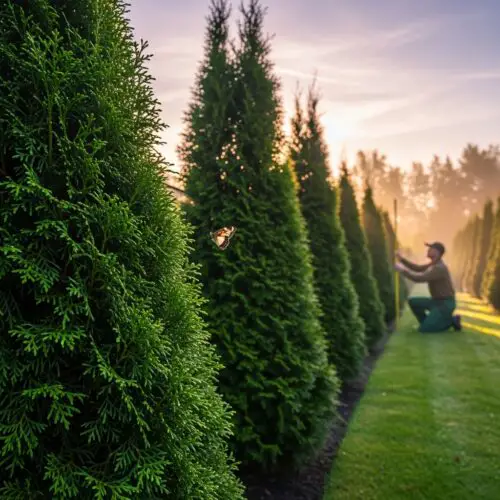
Emerald Green Arborvitae grows at a moderate pace, making it a popular choice for privacy screens and landscaping. This section explores their growth patterns, size expectations, and key milestones.
Annual Growth Patterns
Emerald Green Arborvitae typically grows between 6 to 12 inches each year under optimal conditions. In the first few years, they may reach a height of 1 to 2 feet as they establish their root systems. After this initial period, their growth rate stabilizes to about 6 to 9 inches annually.
Expected Size Over Time
Understanding what to expect at various life stages helps with planning. Here’s a breakdown of height and width expectations:
Table of Contents
| Age (Years) | Height (Feet) | Width (Feet) |
|---|---|---|
| 1 | 1 – 2 | 1 – 2 |
| 3 | 3 – 4 | 2 – 3 |
| 5 | 5 – 6 | 3 – 4 |
| 10 | 10 | 4 |
| 15 | 12 – 15 | 3 – 4 |
These values can vary based on factors like soil quality and sunlight exposure. Under ideal conditions, you can expect your Arborvitae to reach its mature height of 10 to 15 feet within 10 to 15 years [1][2].
Growth Milestones
Key milestones mark the growth journey of Emerald Green Arborvitae:
- Establishment (0-3 years): Focus on root development and initial height gain.
- Mid-growth (4-10 years): Noticeable height increase; maintain proper watering and fertilization for optimal growth.
- Mature stage (10-15 years): Reaches full height; requires minimal pruning and maintenance.
By understanding these milestones, you can better care for your Emerald Green Arborvitae and ensure they reach their full potential.
Factors Influencing Emerald Green Arborvitae Growth
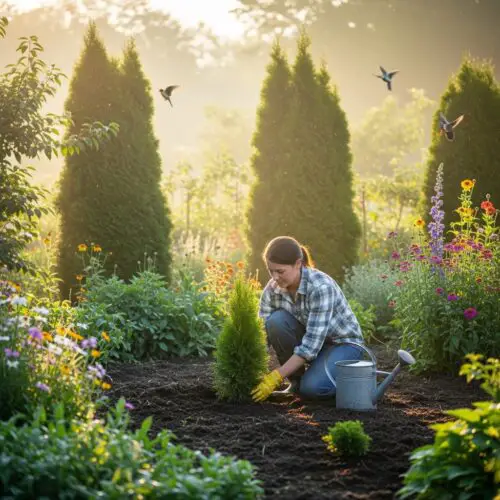
Emerald Green Arborvitae thrives under specific environmental conditions. Understanding these factors helps optimize their growth and health. Key elements include sunlight, soil quality, and climate.
Sunlight and Its Role in Growth
Sunlight is essential for the growth of Emerald Green Arborvitae. They require full sun to partial shade, ideally receiving at least six hours of direct sunlight daily. Insufficient sunlight can lead to sparse foliage and stunted growth.
Checklist for Sunlight Requirements:
- Ensure at least 6 hours of direct sunlight.
- Monitor for any shading from nearby structures or trees.
- Adjust planting location if necessary.
Soil Quality and Drainage
Soil conditions significantly affect growth rates. Emerald Green Arborvitae prefers well-draining soil with a slightly acidic to neutral pH. Poorly drained or dense soil can limit root growth, stunting the plant’s height [3].
Checklist for Soil Conditions:
- Test soil pH; aim for 6.0 to 7.0.
- Ensure good drainage to prevent root rot.
- Consider amending soil with organic matter for better structure.
Climate Considerations
Climate impacts overall health and growth rates. These arborvitaes thrive in USDA zones 3-7. Extreme heat or cold can stress the plants, affecting their growth. Proper spacing and care can mitigate these effects.
Example of Climate Impact:
- In warmer climates, ensure consistent watering to avoid drought stress.
- In colder regions, provide winter protection to maintain health.
Checklist for Climate Adaptation:
- Understand your local climate zone.
- Adjust watering and care based on seasonal changes.
- Monitor for pests that may thrive in specific climates.
By managing these environmental factors, you can enhance the growth rate of your Emerald Green Arborvitae and ensure they reach their full potential.
Essential Care and Maintenance for Optimal Growth
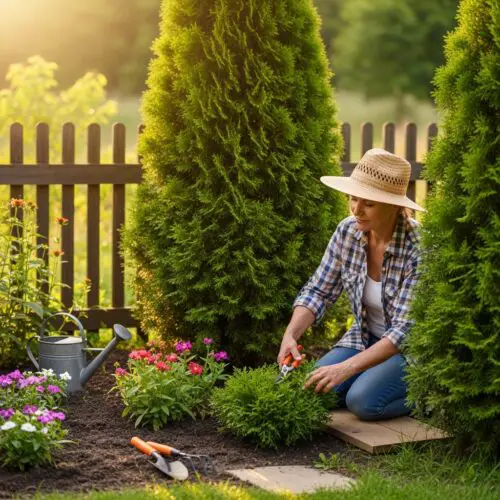
Proper care and maintenance significantly enhance the growth rate of Emerald Green Arborvitae. By focusing on watering, fertilization, and pruning, you can create an environment that promotes healthy growth.
Watering and Irrigation Techniques
Emerald Green Arborvitae requires consistent watering, especially after planting. Here are key watering tips:
- Initial Watering: Water twice a week for the first few months to establish roots.
- Ongoing Care: Switch to weekly watering after establishment, adjusting frequency based on rainfall.
- Drought Conditions: Increase watering during dry spells to prevent stress and potential damage.
- Soil Moisture: Check soil moisture regularly. Avoid overly saturated soil to prevent root rot [5].
Fertilizing for Growth Enhancement
Fertilization supports the growth rate and overall health of your Arborvitae. Consider these guidelines:
- Timing: Fertilize in early spring to jumpstart growth and again in late summer if necessary.
- Type of Fertilizer: Use a slow-release, balanced fertilizer. Look for a formula with a nitrogen-phosphorus-potassium (NPK) ratio of about 10-10-10.
- Application Rate: Follow package instructions for application rates based on tree size and age. This ensures optimal nutrient uptake [6].
Pruning Best Practices
Pruning helps maintain the shape and density of Emerald Green Arborvitae, contributing to its health and growth. Follow these best practices:
- When to Prune: Conduct light pruning in early spring to encourage denser growth.
- Technique: Remove any dead or damaged branches to improve air circulation and light penetration.
- Avoid Late Pruning: Refrain from heavy pruning in late summer or fall, as it can weaken the tree before winter [7].
Seasonal Care Checklist
To optimize growth throughout the year, follow this seasonal care checklist:
- Spring: Water deeply, fertilize, and prune lightly.
- Summer: Maintain consistent watering, especially during heatwaves.
- Fall: Continue watering, but reduce frequency as temperatures drop.
- Winter: Protect from harsh winds and heavy snow accumulation.
By implementing these care strategies, you can ensure that your Emerald Green Arborvitae thrives and reaches its full growth potential.
Common Issues Affecting Emerald Green Arborvitae Growth
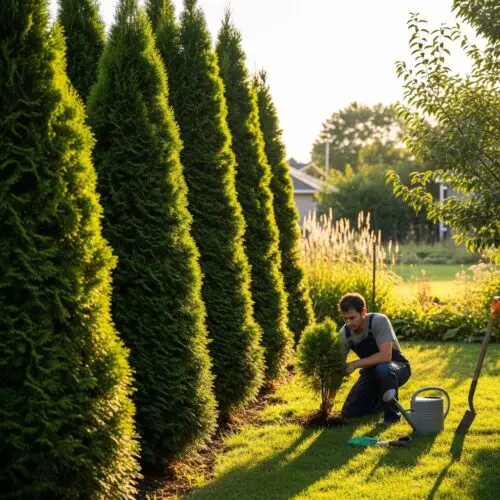
Emerald Green Arborvitae can encounter several challenges that hinder their growth. Understanding these issues helps in maintaining their health and vitality.
Identifying Growth Stagnation
Slow growth can indicate underlying problems. If your Emerald Green Arborvitae grows less than expected, consider these factors:
- Soil Quality: Poor soil can limit nutrients.
- Sunlight: Insufficient light affects growth.
- Watering: Both overwatering and underwatering can cause stress.
To assess growth, monitor height annually. A healthy tree should grow 6-12 inches per year. If growth drops below this range, investigate further.
Pest and Disease Management
Pests and diseases pose significant threats to Emerald Green Arborvitae. Common pests include:
- Spider Mites: These tiny pests cause discoloration and webbing.
- Bagworms: They create bags on branches, reducing foliage.
Diseases affecting Arborvitae are also notable:
- Canker Diseases: They lead to dieback of branches.
- Root Rot: Excess moisture can cause this fatal condition.
Here’s a comparison of symptoms and treatments:
| Pest/Disease | Symptoms | Treatment |
|---|---|---|
| Spider Mites | Yellowing leaves, webbing | Insecticidal soap or neem oil |
| Bagworms | Bags on branches, defoliation | Hand removal or insecticide |
| Canker Diseases | Branch dieback | Prune infected areas |
| Root Rot | Wilting, yellowing leaves | Improve drainage, fungicide |
Implementing integrated pest management (IPM) strategies can effectively control these issues. Regular inspections and timely action are crucial for maintaining healthy Arborvitae.
Solutions for Common Problems
To promote optimal growth, consider these solutions:
- Fertilization: Use a balanced fertilizer to enhance soil nutrients.
- Pruning: Remove dead or diseased branches to improve air circulation.
- Water Management: Ensure consistent watering, especially in dry periods.
By addressing these common issues, you can support the growth rate of your Emerald Green Arborvitae effectively. Regular monitoring and proactive care are essential for long-term health.
Comparing Emerald Green Arborvitae with Other Arborvitae Varieties
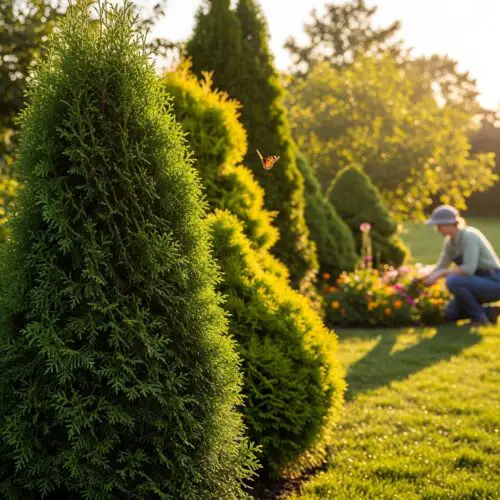
Emerald Green Arborvitae stands out among various arborvitae varieties due to its unique growth characteristics and care requirements. Understanding how it compares to other options, like Green Giant Arborvitae, helps gardeners make informed choices.
Growth Rate Comparison
Emerald Green Arborvitae typically grows at a rate of 6-12 inches per year under optimal conditions. In contrast, Green Giant Arborvitae can reach heights of 3 feet in a single year during its early stages. This significant difference in growth rates affects how quickly each variety can provide privacy or act as a barrier.
| Arborvitae Variety | Average Growth Rate | Mature Height |
|---|---|---|
| Emerald Green Arborvitae | 6-12 inches per year | 10-15 feet |
| Green Giant Arborvitae | Up to 3 feet in early years | 50-60 feet |
Size and Shape Differences
Emerald Green Arborvitae maintains a compact, conical shape. It generally reaches a mature height of 10-15 feet. This makes it ideal for smaller spaces and hedges. On the other hand, Green Giant Arborvitae can grow much taller, reaching up to 60 feet, making it suitable for larger areas where height is desired.
Ideal Uses in Landscaping
Emerald Green Arborvitae is perfect for formal hedges and foundation plantings due to its dense foliage and manageable size. It requires less frequent pruning, which appeals to low-maintenance gardeners. Conversely, the Green Giant Arborvitae serves well as a tall privacy screen or windbreak, given its rapid growth and height potential.
In summary, when choosing between these two varieties, consider your space and maintenance preferences. Emerald Green Arborvitae thrives in smaller gardens, while Green Giant Arborvitae suits expansive landscapes needing quick coverage.
Alternatives to Emerald Green Arborvitae for Landscaping
When considering privacy trees, several alternatives to Emerald Green Arborvitae offer unique characteristics. These options vary in growth rates, care requirements, and overall aesthetics. Here are some popular alternatives:
Popular Alternatives
-
Leyland Cypress
- Growth Rate: Grows 3-4 feet per year, making it a fast option for privacy screens.
- Care: Requires well-drained soil and moderate watering.
-
Boxwood
- Growth Rate: Typically grows 6-12 inches per year.
- Care: Needs regular pruning to maintain shape and health [11].
-
Thuja Green Giant
- Growth Rate: Reaches 3-5 feet per year and is drought-tolerant [12].
- Care: Thrives in various soil types with minimal maintenance.
Comparing Growth Rates of Alternatives
| Plant Type | Average Growth Rate | Care Requirements |
|---|---|---|
| Emerald Green Arborvitae | 6-12 inches per year | Low maintenance, regular watering |
| Leyland Cypress | 3-4 feet per year | Moderate watering, well-drained soil |
| Boxwood | 6-12 inches per year | Regular pruning, well-drained soil |
| Thuja Green Giant | 3-5 feet per year | Low maintenance, drought-tolerant |
Choosing the Right Plant for Your Landscape
When selecting a privacy tree, consider the following:
- Space Availability: Fast-growing trees like Leyland Cypress cover more area quickly.
- Maintenance Level: Emerald Green Arborvitae and Boxwood require less frequent care.
- Aesthetic Preferences: Consider the shape and foliage color. Boxwoods offer a classic look, while Thuja Green Giant provides height.
By assessing your specific needs, you can make informed choices that enhance your landscape while providing the desired privacy.
Frequently Asked Questions
These quick answers cover the homeowner questions that come up most often about hackberry trees, including growth, care, and common problems.
How long does Emerald Green Arborvitae take to grow?
Emerald Green Arborvitae typically grows at a moderate rate of 6 to 12 inches per year under optimal conditions. In the first few years, you can expect them to reach heights of 1 to 2 feet as they establish their root systems. After about 10 to 15 years, they can reach their mature height of 10 to 15 feet, depending on care and environmental factors [1][2].
What are the disadvantages of arborvitae?
While Emerald Green Arborvitae is popular for privacy screens, there are some disadvantages. They may be susceptible to pests like spider mites and bagworms, which can damage foliage. Additionally, they require specific soil conditions and adequate sunlight to thrive; poor drainage or insufficient light can stunt growth. Lastly, they may not be suitable for very hot or cold climates outside USDA zones 3-7 [4][5].
How to make Emerald Green Arborvitae grow fast?
To promote faster growth of Emerald Green Arborvitae, ensure they receive ample sunlight—ideally at least six hours of direct sunlight daily. Proper watering is crucial; water deeply and consistently, especially in the first few months after planting. Fertilizing in early spring with a balanced, slow-release fertilizer can also enhance growth [6]. Lastly, maintaining good soil quality and drainage will support healthy root development.
Is October too late to plant arborvitae?
October can be a suitable time to plant Emerald Green Arborvitae, especially in milder climates. However, it’s essential to ensure that the ground is not frozen and that the plants are adequately watered to establish roots before winter. In colder regions, consider planting earlier in the fall to allow for better establishment before the onset of cold temperatures [2][3].
Emerald Green Arborvitae Growth Rate: How Long Until Full Height?
Emerald Green Arborvitae can take approximately 10 to 15 years to reach their full height of 10 to 15 feet. Initial growth is rapid, but as the tree matures, the growth rate stabilizes to about 6 to 12 inches per year. Factors such as soil quality, sunlight, and care practices play a significant role in achieving this growth rate [1][2].
How Fast do Emerald Green Arborvitae Grow?
Emerald Green Arborvitae grows at a rate of 6 to 12 inches per year under optimal conditions. This moderate growth makes them a popular choice for privacy hedges and landscaping. Consistent care, including proper watering and fertilization, can help maximize their growth potential [1][6].
What soil conditions are best for Emerald Green Arborvitae?
Emerald Green Arborvitae thrives in well-draining soil with a slightly acidic to neutral pH, ideally between 6.0 and 7.0. Poorly drained or compacted soil can limit root growth and lead to health issues like root rot. Amending the soil with organic matter can improve its structure and nutrient availability, supporting better growth [3][4].
How do I care for my Emerald Green Arborvitae in winter?
To care for Emerald Green Arborvitae in winter, ensure they are adequately watered before the ground freezes. Mulching around the base can help retain moisture and regulate soil temperature. Protect them from harsh winds and heavy snow accumulation, which can damage branches. Additionally, avoid heavy pruning in late fall, as this can weaken the trees before winter [7].
References
4. Climate Impacts on Plants and Animals
5. Arborvitaes | Forestry – USU Extension – Utah State University
6. Arborvitae | Home and Garden Education Center
9. Arborvitae Needle Blight : Landscape
10. Leyland cypress trees often planted incorrectly
11. Boxwood | Home & Garden Information Center