
Keeping mulch from blowing away is crucial for maintaining a healthy garden. This guide outlines five effective methods to ensure your mulch stays in place, protecting your soil and plants from the elements.
Understand the Importance of Mulch Retention
Mulch is more than just a pretty layer on top of your garden soil. It plays a vital role in promoting healthy plants and soil. Understanding why keeping mulch in place is essential can help you create a thriving garden.
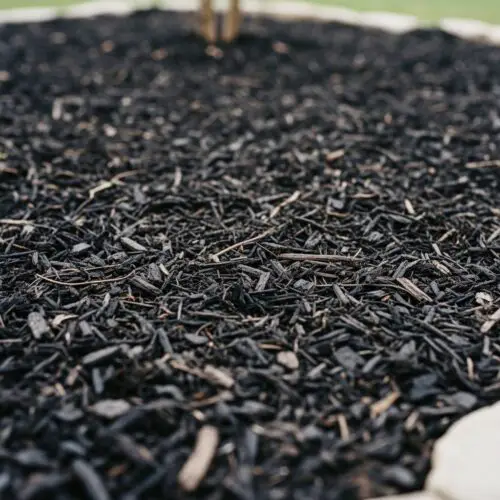
The Benefits of Mulch for Soil and Plants
Mulch offers several advantages:
- Moisture Retention: Mulch helps keep soil moist by reducing evaporation. This can be a game-changer, especially in dry climates.
- Weed Suppression: A good layer of mulch blocks sunlight, preventing pesky weeds from sprouting. Less weeding means more time enjoying your garden!
- Temperature Regulation: Mulch acts as an insulating layer. It keeps the soil cooler in the summer and warmer in the winter, protecting plant roots from extreme temperatures.
Statistics show that gardens with mulch retain up to 50% more moisture compared to bare soil. That’s significant!
Common Factors That Cause Mulch to Blow Away
Several factors can contribute to mulch displacement:
Table of Contents
- Wind: Strong gusts can easily displace lightweight mulch like straw or wood chips.
- Heavy Rain: Heavy showers can wash mulch away, especially if it’s not applied thickly enough.
- Improper Application: If you lay mulch too thinly or don’t use the right type, it can be more susceptible to being blown away.
Choosing the right type of mulch can make a difference. For instance, heavier materials like bark nuggets are less likely to blow away compared to lighter options.
Consequences of Mulch Displacement
When mulch blows away, your garden suffers in several ways:
- Nutrient Loss: Without mulch, soil nutrients can be washed away by rain.
- Erosion: Exposed soil is more vulnerable to erosion, especially on slopes.
- Increased Weeds: With less mulch, weeds can take over, competing with your plants for water and nutrients.
To combat these issues, consider using a Mulch Tackifier Spray. It helps keep mulch in place, even during windy days. Check Price on Amazon.
Understanding these factors can help you take proactive steps to ensure your mulch stays where it belongs.
Choose the Right Type of Mulch for Windy Conditions
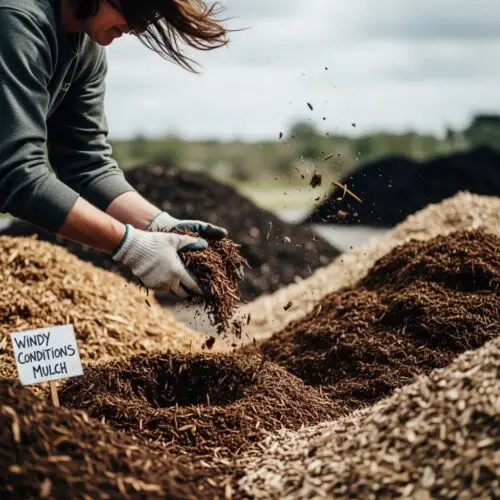
Selecting the right mulch is crucial for keeping it in place, especially in windy areas. Different types of mulch have varying levels of wind resistance. Let’s explore some effective options to ensure your mulch stays where it belongs.
Characteristics of Effective Mulch for Windy Areas
When choosing mulch, consider these characteristics:
- Weight: Heavier mulches are less likely to blow away.
- Material: Organic mulches like wood chips and bark nuggets are denser.
- Size: Larger particles stay put better than fine materials.
Examples of Heavy Versus Light Mulch
Here’s a quick comparison of mulch types based on weight and effectiveness against wind:
| Mulch Type | Weight (per cubic yard) | Wind Resistance | Best Use Cases |
|---|---|---|---|
| Wood Chips | 700-900 lbs | High | General landscaping |
| Bark Nuggets | 800-1200 lbs | Very High | Decorative gardens |
| Straw | 150-200 lbs | Low | Garden beds (but tends to blow) |
| Shredded Leaves | 500-600 lbs | Moderate | Vegetable gardens |
| Rubber Mulch | 800-1000 lbs | High | Play areas and paths |
Best Mulch Options for Specific Climates
Your climate plays a big role in mulch choice. Here are some recommendations:
- Windy Coastal Areas: Choose heavier options like bark nuggets or rubber mulch.
- Dry Climates: Wood chips work well as they retain moisture and resist wind displacement.
- Humid Regions: Consider using straw with a ground cover to anchor it down, though be mindful of its wind resistance.
Using a Mulch Tackifier Spray can also help retain your mulch even on blustery days. Give it a try to keep your garden looking neat!
Apply Mulch Correctly to Prevent Displacement
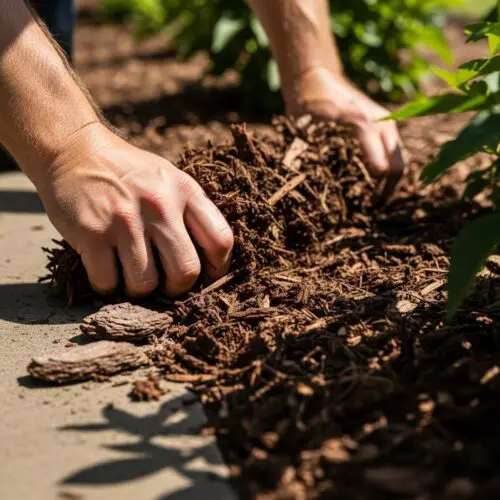
Applying mulch the right way is crucial for keeping it in place. Follow these steps to minimize the risk of your mulch blowing away.
Optimal Mulch Depth for Stability
The depth of your mulch matters. Too thin, and it won’t hold up against the wind. Too thick, and it can suffocate plants. Here’s a quick guide:
- Shredded bark or wood chips: 2-3 inches
- Straw or grass clippings: 1-2 inches
- Rock or gravel: 1-2 inches (great for windy areas)
Aim for a consistent depth across your garden beds. This helps the mulch stay put and effectively suppress weeds.
Layering Techniques to Enhance Retention
Layering your mulch can make a big difference. Consider these techniques:
- Use a base layer: Start with a layer of landscape fabric to create a barrier.
- Mix mulch types: Combine heavier materials like wood chips with lighter ones like straw. This helps them cling together better.
- Add a top coat: Finish with a protective layer of fine gravel or wood chips. This extra weight can help prevent displacement.
These strategies increase the mulch’s ability to resist wind and erosion.
Spacing Guidelines Around Plants
Proper spacing is key for both plant health and mulch stability. Follow these guidelines:
- Leave space around stems: Avoid piling mulch directly against plant stems to prevent rot.
- Maintain airflow: Ensure 1-2 inches of space between mulch and plant bases.
- Strategic placement: Place mulch around the perimeter of plants for better wind resistance.
By spacing correctly, you not only support plant growth but also enhance mulch retention.
For an extra layer of protection, consider using a Mulch Tackifier Spray. It helps bind mulch together, keeping it in place even on breezy days. Check Price on Amazon.
Implement Physical Barriers to Secure Mulch

Using physical barriers is a smart way to keep your mulch where it belongs. Netting, edging, and windbreaks can provide solid support against wind and rain.
Using Netting to Anchor Mulch
Netting is a fantastic option for holding mulch in place. It works like a charm, especially on slopes. Here’s how to use it:
- Choose the Right Netting: Natural jute netting or polypropylene netting are top choices. They are durable and effective.
- Installation Steps:
1. Lay the netting over your freshly spread mulch.
2. Cut it around your plants, leaving enough space for growth.
3. Secure it with landscaping fabric staples or small rocks.
This method creates a physical barrier that prevents wind from blowing mulch away.
Choosing the Right Edging Materials
Proper edging can also help keep your mulch intact. It not only looks nice but acts as a barrier against displacements. Here are some effective options:
- Wooden Edging: Provides a natural look and keeps mulch contained.
- Metal Edging: Durable and offers a clean line.
- Bricks or Stones: Create a sturdy border that prevents mulch from spilling out.
When installing, ensure the edging is at least 3-4 inches above the soil level. This height helps trap mulch effectively.
Creating Windbreaks with Plants or Structures
Windbreaks are another excellent strategy. They reduce wind speed and protect your mulch from being blown away. You can create these with:
- Plants: Use fast-growing conifers or shrubs as natural barriers. They not only act as windbreaks but also add beauty to your garden.
- Structures: Fences or trellises can also help shield your garden from strong winds.
Quick Tips for Effective Windbreaks:
- Position them where the wind hits hardest.
- Plant them at least 3-4 feet tall for maximum effectiveness.
Using these physical barriers, you can keep your mulch safe and sound, ensuring your garden remains beautiful and well-kept.
Wet Your Mulch for Added Weight and Stability
Moistening your mulch can make a big difference in keeping it grounded. Wet mulch is heavier and less likely to be displaced by wind. Here are some strategies to effectively add moisture to your mulch.
The Science Behind Wetting Mulch
When you wet mulch, it binds together. This moisture helps create a cohesive layer that resists the force of the wind. Think of it as giving your mulch a little extra weight to hold it down.
How to Successfully Wet Mulch Without Oversaturating
It’s important to find the right balance. Overwatering can lead to soggy mulch and promote mold growth. Here’s how to do it right:
- Use a Hose with a Spray Nozzle: This allows for gentle watering.
- Water in Layers: Start with a light mist, then gradually increase the amount.
- Check for Saturation: The mulch should feel moist but not waterlogged.
Timing Your Watering for Windy Weather
Timing is key, especially before a windy day. Water your mulch in the early morning. This gives it time to absorb moisture before strong winds arrive. Here’s a quick checklist:
- Water early: Best before noon.
- Check the forecast: Water when wind is expected later.
- Adjust for different mulch types: Heavier mulches like wood chips may need less frequent watering than lighter options.
By following these steps, you can enhance the stability of your mulch and keep your garden looking neat and tidy.
Consider Using Tackifiers for Extra Adhesion
Tackifiers are a fantastic way to keep your mulch in place. They help bind the mulch together, making it less likely to blow away in the wind. Let’s dive into what tackifiers are and how to use them effectively.
What is a mulch tackifier?
A mulch tackifier is a substance that helps increase the adhesion of mulch particles. Think of it as a glue for your garden. When applied, tackifiers create a sticky layer that holds mulch together, even in breezy conditions.
How to apply tackifiers effectively
Applying tackifiers is straightforward. Here’s a quick guide:
1. Choose the right product: Look for a tackifier designed for mulch use. There are many options, including natural and synthetic varieties.
2. Prepare the area: Make sure the mulch is dry and evenly spread. This ensures the tackifier adheres correctly.
3. Mix and apply: Follow the manufacturer’s instructions for mixing. Use a sprayer for even application. Cover the mulch thoroughly, paying extra attention to edges.
4. Let it set: Allow the tackifier to dry completely. This usually takes a few hours. Avoid watering the mulch until it’s fully set.
Considerations when using tackifiers
- Type of mulch: Some tackifiers work better with certain mulch types. For example, they may be more effective with organic mulches than with heavier inorganic options.
- Weather conditions: Apply tackifiers on calm days. Wind can disrupt the application process and reduce effectiveness.
- Reapplication: Depending on the weather and the type of mulch, you may need to reapply tackifiers periodically, especially after heavy rain.
Using a mulch tackifier can significantly improve your mulch’s resilience against wind. It’s a simple yet effective tool in your gardening arsenal.
Regularly Maintain and Replenish Your Mulch
Keeping mulch in place is all about regular maintenance. By checking on your mulch frequently, you ensure it stays put and works its magic in your garden.
When to Inspect and Replenish Mulch
Inspect your mulch every few months, especially after heavy rain or strong winds. Seasonal changes can affect how well your mulch holds up. Here’s a quick timeline:
- Spring: Check for any displacement after winter storms.
- Summer: Look for signs of breakdown or thinning.
- Fall: Prepare for winter by adding fresh mulch.
- Winter: Inspect for erosion caused by snow or ice.
Signs Your Mulch Needs Attention
Look out for these indicators that your mulch may need some love:
- Thin spots: If you can see soil peeking through, it’s time to add more.
- Displacement: If the mulch has shifted from its original spot, it’s not doing its job.
- Weed growth: If weeds are popping up, your mulch may be too thin or broken down.
Best Practices for Keeping Mulch Fresh
Keep your mulch effective with these best practices:
- Replenish annually: Aim to refresh your mulch at least once a year.
- Use the right type: Organic mulches like bark or wood chips are great for moisture retention and less likely to blow away.
- Apply at the right depth: A depth of 2-4 inches is ideal. Too much can lead to issues, while too little won’t be effective.
Quick Checklist for Mulch Maintenance
- [ ] Inspect every few months.
- [ ] Replenish thin areas immediately.
- [ ] Ensure a depth of 2-4 inches.
- [ ] Choose organic mulch for better stability.
By staying proactive with your mulch maintenance, you can effectively keep it in place and enjoy a thriving garden.
Conclusion and Final Thoughts
Keeping your mulch in place is essential for a healthy garden. With the right techniques, you can prevent it from blowing away and ensure your plants thrive. Let’s recap the effective methods we discussed.
Key Techniques to Keep Mulch in Place
1. Choose the Right Type of Mulch: Opt for heavier organic mulches, like wood chips or bark, which resist wind better than lighter options.
2. Apply at the Right Depth: Aim for a depth of 2-4 inches. This helps anchor the mulch while still allowing water and nutrients to reach the soil.
3. Use Edging: Installing physical barriers around your garden beds can help keep mulch from spilling over into pathways.
4. Consider Ground Covers: Planting low-growing ground cover can help hold the mulch in place while adding beauty to your landscape.
5. Try Tackifiers: These can be mixed with your mulch to help it stick together. It’s especially useful in windy areas.
Maintenance Matters
- Inspect Regularly: Check your mulch every few months. Replenish thin areas immediately to maintain effective coverage.
- Seasonal Adjustments: Different seasons may require adjustments in your mulch strategy. For example, adding a thicker layer before winter can help insulate plants.
By implementing these strategies, you’ll not only keep your mulch where it belongs but also enhance the overall health of your garden. Enjoy the beauty and benefits that well-placed mulch brings!
Frequently Asked Questions
These quick answers cover the most common questions about this topic, including key details, practical tips, and common concerns.
What is the 3-3-3 rule for mulch?
The 3-3-3 rule is a guideline for applying mulch effectively. It suggests spreading mulch in a layer about 3 inches deep, covering a 3-foot radius around plants, and maintaining this depth consistently across your garden beds. This ensures adequate coverage for weed suppression, moisture retention, and temperature regulation while preventing mulch from suffocating plants.
How do I keep my mulch from blowing away?
To prevent mulch from blowing away, choose heavier mulch types like bark nuggets or wood chips. Apply a layer 2-4 inches deep and use physical barriers such as edging or landscaping fabric. You can also spray a tackifier to help mulch particles stick together and consider using netting or ground covers to anchor loose mulch in windy areas.
What is the best mulch for azaleas?
The best mulch for azaleas is organic mulch such as pine bark or pine needles. These mulches are lightweight, acidifying, and help retain moisture, which suits azaleas’ preference for acidic soil. Apply a 2-3 inch layer, keeping it a few inches away from the plant stems to prevent rot.
Is October too late to mulch?
October is not too late to mulch, especially in preparation for winter. Applying mulch in fall helps insulate plant roots, retain soil moisture, and suppress weeds. However, avoid applying excessively thick layers late in the season to prevent suffocation or mold growth; 2-4 inches is ideal.
What is the best mulch for windy areas?
In windy areas, opt for heavier mulches like bark nuggets, rubber mulch, or large wood chips. These materials are less likely to be displaced by wind. Additionally, installing edging, using ground covers, or applying tackifiers can further secure mulch in place.
How deep should I apply mulch?
Most garden beds benefit from a mulch depth of 2-4 inches. This depth provides effective weed suppression, moisture retention, and temperature regulation. Avoid piling mulch directly against plant stems or tree trunks to prevent rot and pest issues.
Can I use rocks as mulch?
Yes, rocks or gravel are inorganic mulch options that are highly resistant to wind and weather. They are durable, require minimal maintenance, and provide excellent weed control. However, rocks can increase soil temperature and may not improve soil fertility, so consider your plant needs before choosing this option.
What are the benefits of using mulch?
Mulch offers multiple benefits: it conserves soil moisture, suppresses weeds, regulates soil temperature, prevents erosion, and adds aesthetic appeal. Organic mulches also decompose over time, enriching the soil with nutrients and supporting healthy plant growth.