
Resting a brisket is crucial for achieving juicy, flavorful meat. This guide explains the importance of resting, the best techniques to use, and common mistakes to avoid to ensure your brisket turns out perfectly every time.
Understanding the Importance of Resting a Brisket
Resting a brisket is more than just a waiting game. It’s a vital step that enhances moisture retention and boosts flavor. Let’s dig into why this process is essential.
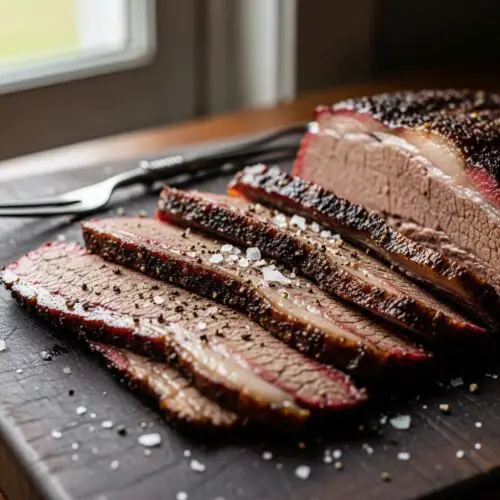
Why Resting is Essential for Juicy Brisket
When you cook a brisket, the heat forces moisture toward the center of the meat. If you slice into it right away, all that delicious juiciness runs out. By letting it rest, you give the juices time to redistribute. This means your brisket stays moist and flavorful.
Expert pitmasters emphasize this point. For example, renowned barbecue chef “Big Bob” explains, “Resting is not just a suggestion; it’s a necessity. It’s what keeps your brisket from being a dry disappointment.”
The Science of Juices Redistribution
So, what happens during the resting period? Here’s a breakdown:
Table of Contents
- Collagen Breakdown: Brisket is rich in collagen. During cooking, this collagen melts and helps keep the meat tender. Resting allows the melted collagen to thicken again, resulting in a richer texture.
- Moisture Redistribution: As the brisket cools, the juices that were pushed to the surface during cooking move back into the meat. This process locks in flavor and moisture.
- Temperature Balance: Resting helps balance the internal temperature. The meat continues to cook slightly, known as carry-over cooking, which can elevate the overall quality.
Consequences of Skipping the Resting Period
Skipping the resting phase? You’ll likely regret it. Here’s what you can expect:
- Dry Meat: Without resting, you’ll have a dry brisket. The juices will run out as soon as you cut it, leading to a sad, flavorless meal.
- Tough Texture: The brisket may become chewy. Resting allows the fibers to relax, making each bite tender and enjoyable.
- Lost Flavor: All those rich, smoky flavors you worked hard to develop? They’ll escape along with the juices if you don’t let it rest.
In short, giving your brisket some time to rest is non-negotiable for the best results. Follow these principles, and you’ll be well on your way to barbecue perfection.
How to Rest a Brisket: Best Practices
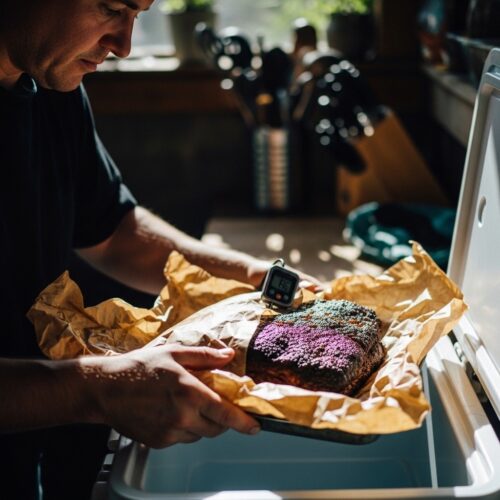
Resting a brisket is crucial for achieving that perfect bite. Let’s explore the best methods for resting your brisket while keeping it hot, juicy, and flavorful.
The Cooler Method: Keeping It Hot
Using a cooler is a fantastic way to rest your brisket. It holds the heat and moisture without cooking it further. Here’s how to do it:
1. Wrap the Brisket: Use foil or butcher paper to wrap your brisket tightly. This keeps the juices in.
2. Place in Cooler: Put the wrapped brisket into a pre-warmed cooler. You can preheat the cooler by filling it with hot water for a few minutes.
3. Seal It Up: Close the cooler and let it rest for 4 to 8 hours. This method keeps your brisket above 140°F, ensuring it remains safe to eat.
Pros:
- Retains heat and moisture.
- Ideal for longer resting periods.
Cons:
- Requires a cooler and some prep time.
Room Temperature Resting: Simple and Effective
This method is straightforward and works well for short rests. Here’s what to do:
1. Remove from Heat: Once your brisket is done cooking, take it off the heat.
2. Wrap or Tent: Wrap it in foil or loosely tent it with foil. This helps to keep the moisture in.
3. Let It Rest: Allow the brisket to rest on the counter for about 1 hour. Avoid letting it sit too long to prevent it from dropping into the danger zone below 140°F.
Pros:
- Quick and easy.
- No special equipment needed.
Cons:
- Limited to about 1 hour for safety.
Wrapped vs. Unwrapped: Which is Better?
Deciding whether to wrap your brisket during resting can affect texture and moisture. Here’s a quick comparison:
| Method | Pros | Cons |
|---|---|---|
| Wrapped | Retains moisture; prevents drying | Can soften the crust slightly |
| Unwrapped | Maintains crust; enhances bark | Risk of drying out if left too long |
Quick Checklist for Resting Your Brisket
- Choose Your Method: Cooler or room temperature?
- Wrap It Up: Use foil or butcher paper.
- Monitor Temperature: Ensure it stays above 140°F.
- Timing: Aim for at least 1 hour, but longer is better in a cooler.
By using these methods, you’ll ensure your brisket is tender, juicy, and packed with flavor. Happy cooking!
Timing Matters: How Long to Rest Your Brisket
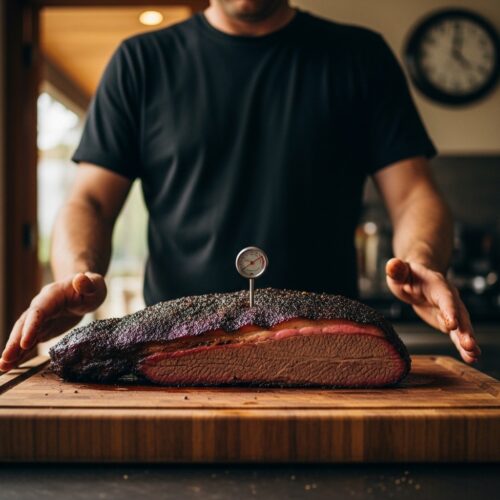
Resting your brisket is crucial for juicy, flavorful meat. But how long should you let it rest? It depends on the size of your brisket and cooking method. Let’s break it down!
Minimum and Ideal Resting Times
Here’s a quick guide to resting times based on brisket size:
| Brisket Size | Minimum Resting Time | Ideal Resting Time |
|---|---|---|
| 3-5 pounds | 1 hour | 2-3 hours |
| 5-8 pounds | 1.5 hours | 3-4 hours |
| 8-12 pounds | 2 hours | 4-6 hours |
| 12-16 pounds | 2-3 hours | 6-8 hours |
The longer you rest, the more juices redistribute throughout the meat. This makes every slice tender and moist.
Carry-Over Cooking: What You Need to Know
Carry-over cooking is a phenomenon where the brisket continues to cook as it rests. This can raise the internal temperature by 5 to 10 degrees. So, if you pull it off the heat at 190°F, it might reach 200°F while resting. Keep this in mind when deciding when to take your brisket off the grill!
The 4-2-10 Rule Explained
An easy way to remember resting times is the 4-2-10 rule:
- 4: Hours for larger briskets (over 10 pounds) in a cooler.
- 2: Hours for medium-sized briskets (5-10 pounds) on the counter.
- 10: Minutes for small briskets (under 5 pounds) to rest.
This rule gives you a quick reference based on size and ensures you’re not cutting into hot meat too early.
Remember, resting is just as important as cooking. It makes a big difference in flavor and texture, so don’t skip it!
Common Mistakes When Resting Brisket
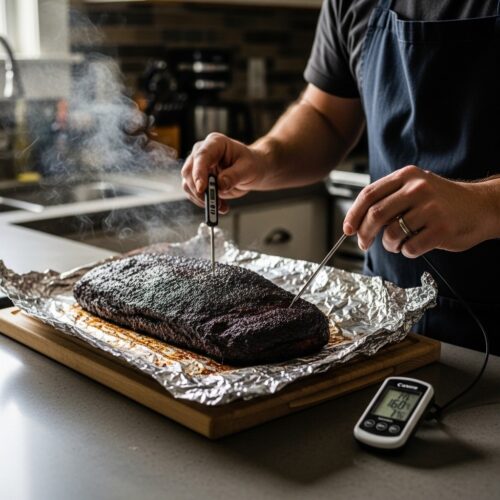
Resting a brisket is crucial, but many home cooks make mistakes that can ruin their hard work. Let’s dive into some common pitfalls and how to avoid them.
Mistake #1: Cutting Too Soon
This is the most common mistake. If you slice into your brisket right after pulling it off the grill, you’ll lose valuable juices. Here’s why: when you cut too soon, the juices haven’t had time to redistribute. Instead of a juicy bite, you get a dry piece of meat.
Tip: Wait at least 30 minutes for smaller briskets and up to 2 hours for larger ones before slicing. This allows the juices to settle back into the meat.
Mistake #2: Not Using the Right Method
Not all resting methods are created equal. Some cooks wrap their brisket tightly in foil, thinking it will keep it warm. But this traps steam and can make the bark soggy. Instead, you want to expose the brisket to air.
Tip: Place the brisket on a cutting board, loosely cover it with foil, and let it breathe. This maintains the bark while keeping the meat warm.
Mistake #3: Ignoring Temperature Control
Keeping an eye on temperature is vital during the resting phase. If the brisket cools down too much, it can become tough. Conversely, if it stays too hot, it may continue to cook and dry out.
Tip: Aim to keep your brisket above 140°F during the resting period. You can place it in an oven set to the lowest temperature or use a cooler with towels to insulate it.
Quick Checklist to Avoid Common Mistakes:
- Wait to Slice: Give it time.
- Loosely Cover: Avoid soggy bark.
- Monitor Temperature: Keep it warm, but not cooking.
By avoiding these common mistakes, you’ll ensure your brisket is juicy, flavorful, and ready to impress!
Resting vs. Holding: Understanding the Difference
Resting and holding are two terms that often confuse brisket enthusiasts. While they sound similar, they serve different purposes in the cooking process. Let’s break down what each one means and when to use them.
What is Resting?
Resting a brisket is the process of letting it sit after cooking. During this time, the juices redistribute throughout the meat. This is crucial because it helps keep your brisket juicy and flavorful.
- Time Frame: Typically, resting lasts about 30 minutes to 2 hours depending on the size of the brisket.
- Temperature: It’s important to keep the brisket above 140°F during this period.
What is Holding?
Holding, on the other hand, is about keeping the brisket warm before serving. This technique is often used when you’re cooking for a crowd and need to keep the meat at a safe serving temperature without further cooking it.
- Time Frame: Holding can last for several hours.
- Methods: Many pitmasters use a Cambro or an insulated cooler to maintain temperature. Just remember, holding doesn’t let the juices redistribute like resting does.
When to Use Each Technique?
Here’s a quick comparison to clarify when to rest or hold your brisket:
| Technique | Purpose | Ideal Time Frame | Temperature |
|---|---|---|---|
| Resting | Juices redistribute for flavor and moisture | 30 minutes to 2 hours | Above 140°F |
| Holding | Keeps brisket warm before serving | Up to several hours | Above 140°F |
Tip: If you’re serving soon after cooking, rest your brisket first. If you need to keep it warm for guests, use the holding method afterward. Each technique has its place in the cooking journey!
Frequently Asked Questions
These quick answers cover the most common questions about this topic, including key details, practical tips, and common concerns.
How important is it to rest a brisket?
Resting a brisket is essential for achieving maximum juiciness and tenderness. It allows the juices to redistribute throughout the meat, preventing them from spilling out when sliced. Without resting, your brisket may be dry and tough. Proper resting ensures a moist, flavorful bite and enhances overall texture.
Is brisket good for high cholesterol?
Brisket contains saturated fats, which can impact cholesterol levels if consumed excessively. While it provides protein and nutrients, people with high cholesterol should enjoy brisket in moderation. Opting for leaner cuts like the flat or trimming excess fat can make it a healthier choice.
What is the 4-2-10 rule brisket?
The 4-2-10 rule is a simple guideline for resting times based on brisket size. For larger briskets (over 10 pounds), rest in a cooler for about 4 hours. Medium-sized briskets (5-10 pounds) should rest for around 2 hours. Small briskets (under 5 pounds) can rest for about 10 minutes. This helps ensure juices are properly redistributed.
Is 1 hour long enough to rest a brisket?
For smaller briskets or when in a hurry, 1 hour can be sufficient. However, for optimal results, especially with larger cuts, resting for 2-4 hours yields better moisture retention and flavor. Resting too briefly may cause juices to escape when slicing.
What happens if I don’t rest my brisket?
Skipping the resting step can lead to dry, tough meat. Juices will flow out immediately when you cut into it, resulting in a less flavorful, less tender piece. Resting also helps balance internal temperature and improve overall texture.
What is the best method to rest brisket?
The most effective methods are wrapping the brisket in foil or butcher paper and placing it in a warm environment, such as a cooler or a low-temperature oven. Using a cooler is ideal for longer rests, as it maintains heat and moisture without further cooking. Loosely tenting with foil at room temperature works well for shorter rests.
Can I rest brisket in the fridge?
Resting in the fridge is not recommended because it cools the meat rapidly, hindering juice redistribution. However, you can refrigerate the brisket after resting if you plan to serve it later. For serving, reheat gently to preserve moisture and flavor.
How long should I rest a brisket?
Rest times depend on the size of the brisket. Generally, 1 to 2 hours is suitable for small cuts, while larger briskets benefit from 4 to 6 hours or longer, especially if kept in a cooler. Longer resting allows juices to fully settle, resulting in a more tender and moist brisket.
Is resting brisket necessary for all cuts of meat?
Resting is most critical for cuts like brisket, chuck, and ribs, which contain lots of connective tissue and moisture. Leaner cuts, such as steaks, also benefit from resting but for shorter periods. Resting helps improve tenderness and flavor across various meats.
What is the 4-2-10 rule brisket?
The 4-2-10 rule provides a quick reference for resting times based on brisket size: 4 hours in a cooler for large cuts (over 10 pounds), 2 hours at room temperature for medium cuts (5-10 pounds), and about 10 minutes for small briskets (under 5 pounds). It helps ensure optimal juice redistribution and tenderness.