
MAPP gas and propane are both popular fuel choices, but they serve different purposes. This article explores their key differences, advantages, and applications to help you determine which one is better for your needs.
Understanding MAPP Gas and Propane
MAPP gas and propane are both popular fuel options, but they have distinct characteristics and uses. Let’s break down what each gas is and how they differ.
What is MAPP Gas?
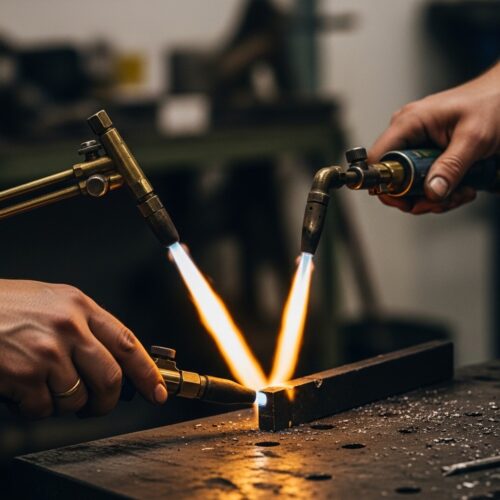
MAPP gas is a mixture of gases, primarily methylacetylene and propadiene. It burns hotter than propane, reaching temperatures up to 3,730°F. This makes it ideal for specific applications like welding and brazing.
Key characteristics of MAPP gas:
- Composition: Methylacetylene and propadiene.
- Burning Temperature: Up to 3,730°F.
- Applications: Mostly in industrial settings for welding and metalworking.
- Cost: Generally more expensive than propane due to its specialized uses.
What is Propane?
Propane, often called liquefied petroleum gas (LPG), is a common fuel. It consists mainly of propane molecules and is widely used for heating, cooking, and powering appliances.
Table of Contents
Key characteristics of propane:
- Composition: Primarily propane molecules.
- Burning Temperature: Up to 3,600°F.
- Applications: Commonly used in residential heating, cooking, and outdoor grilling.
- Cost: Typically cheaper and more widely available than MAPP gas.
Quick Comparison Table
| Feature | MAPP Gas | Propane |
|---|---|---|
| Composition | Methylacetylene & Propadiene | Propane molecules |
| Burning Temperature | 3,730°F | 3,600°F |
| Common Uses | Welding, brazing | Heating, cooking, grilling |
| Cost | More expensive | Generally cheaper |
When deciding between MAPP gas and propane, consider what you need the gas for. For high-heat industrial tasks, MAPP gas is a better choice. For everyday cooking and heating, propane is the way to go.
Comparing Burning Temperatures and Flame Characteristics
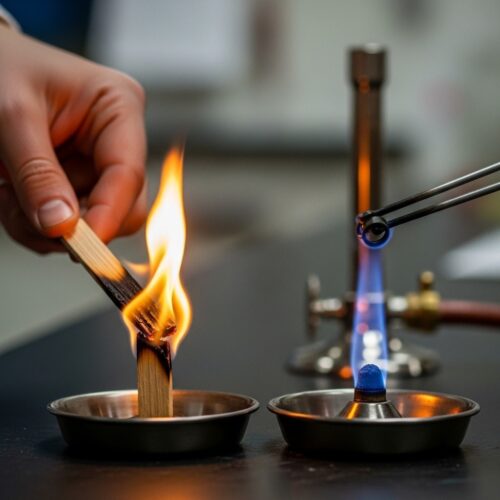
When choosing between MAPP gas and propane, one key factor is their burning temperatures. This affects how well they perform in different applications. Let’s break it down.
Maximum Flame Temperatures
- MAPP Gas: Burns at a maximum temperature of 3,730°F.
- Propane: Burns at a maximum temperature of 3,600°F.
MAPP gas has a higher burning temperature, which makes it ideal for tasks requiring intense heat. For example, it’s perfect for welding and brazing where precision and high temperatures are crucial.
Impacts on Cooking and Industrial Applications
Here’s how the burning temperatures influence their use:
| Application | MAPP Gas | Propane |
|---|---|---|
| Welding/Brazing | Excellent choice for high-heat tasks. | Not suitable for high-heat applications. |
| Cooking | Can be used but is overkill for most home recipes. | Perfect for grilling and general cooking. |
| Heating | Good for industrial heating but not for home use. | Commonly used in homes for heating. |
For cooking, propane is the go-to option. It provides sufficient heat for grilling without the excessive temperature of MAPP gas. If you’re just making dinner, propane saves energy and reduces costs.
When considering which gas to use, think about your needs. For high-temperature industrial work, MAPP gas is better. For everyday cooking, propane is the clear winner.
Safety Considerations for MAPP Gas and Propane
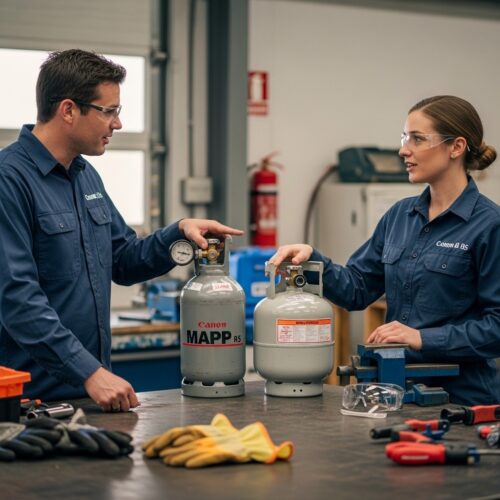
When working with MAPP gas and propane, safety is key. Both gases have unique risks that users should understand to avoid accidents. Let’s dive into the essential safety considerations for each.
Toxicity and Inhalation Risks
MAPP gas is not toxic in small amounts, but inhaling it can cause dizziness or headaches. Prolonged exposure in poorly ventilated spaces can be dangerous.
On the other hand, propane is generally considered safe for cooking and heating. It’s non-toxic and does not pose a health risk in normal use. However, like MAPP gas, it can be hazardous in confined areas. Always ensure good ventilation.
Safe Storage and Handling Practices
Handling both gases requires caution. Here’s a quick checklist for safe usage:
- Storage:
- Keep cylinders upright and secured.
- Store in a cool, ventilated area away from heat sources.
- Handling:
- Always check for leaks before use. Use soapy water to find leaks; bubbles will form if there’s a problem.
- Use proper regulators and equipment recommended for each gas.
- Never mix MAPP gas and propane equipment without confirmation from the manufacturer.
- Usage:
- Avoid using MAPP gas for tasks that don’t require high temperatures.
- Always follow the manufacturer’s instructions for your specific equipment.
Decision Framework for Choosing the Right Gas
When deciding between MAPP gas and propane, consider these factors:
- Application Needs: For high-temperature tasks, MAPP gas is ideal. For everyday cooking, propane is the better option.
- Safety Precautions: Evaluate your workspace. If ventilation or safety measures are lacking, propane may be the safer choice.
- Cost and Availability: Propane is generally cheaper and easier to find. If budget is a concern, propane is often the go-to fuel.
By understanding these safety considerations, you can choose the right gas for your needs while minimizing risks.
Cost Comparison of MAPP Gas vs. Propane
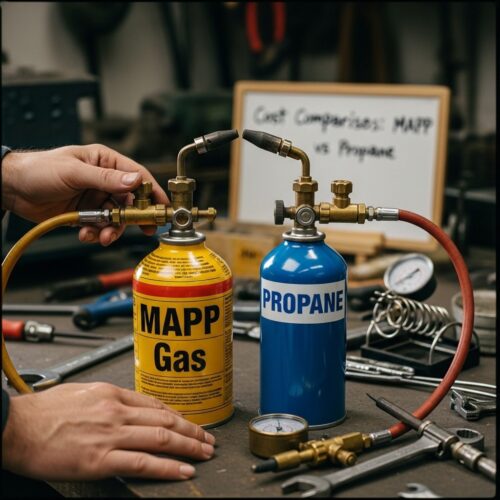
When it comes to choosing between MAPP gas and propane, cost plays a significant role. Let’s break down the initial purchase costs and long-term usage expenses.
Initial Purchase Costs
- MAPP Gas: Typically, MAPP gas is more expensive than propane. The higher cost reflects its specialized use and limited availability. Expect to pay around $20 to $30 for a standard cylinder.
- Propane: Propane is widely available and more budget-friendly. A standard propane cylinder usually costs between $15 and $25.
Long-term Usage Costs
Now, let’s look at how these gases stack up over time.
- MAPP Gas:
- Higher initial cost means more upfront investment.
- Ideal for specific tasks that require high temperatures, but you’ll use it less frequently.
- Long-term, it can be more economical for specialized applications, like metalworking or soldering.
- Propane:
- Lower initial cost and easily available.
- Great for regular use in cooking, heating, and outdoor grilling.
- Over time, the cost savings add up, especially for frequent users.
Cost Breakdown by Application
Here’s a quick comparison of costs for different applications:
| Application | MAPP Gas Cost | Propane Cost |
|---|---|---|
| Cooking | Higher | Lower |
| Metalworking | Lower overall (due to efficiency) | Not suitable |
| Heating | Higher | Lower |
| BBQ Grilling | Higher | Lower |
Decision Insights
When deciding which gas is better for your needs, consider these points:
- Frequency of Use: If you plan to use it often for grilling or heating, propane will save you money in the long run.
- Type of Work: For high-heat applications, MAPP gas may be worth the extra cost.
- Budget: If you’re on a tight budget, propane is the clear winner.
Understanding these factors can help you make an informed choice between MAPP gas and propane, focusing on both immediate costs and long-term savings.
Applications of MAPP Gas and Propane
MAPP gas and propane serve different purposes in various industries. Understanding their applications can help you choose the right one for your needs.
Industrial Uses of MAPP Gas
MAPP gas is often the go-to choice for specialized applications. Here are some common uses:
- Welding and Brazing: MAPP gas burns hotter than propane, making it ideal for welding metals. It can reach temperatures of up to 3,730°F, which is perfect for tasks requiring intense heat.
- Glassblowing: Artists use MAPP gas for glassblowing due to its high flame temperature. It allows for precise control over the heating of glass.
- Plumbing: MAPP gas can be used for soldering pipes, especially in situations where a high flame is required.
Choosing MAPP gas is beneficial when you need that extra heat for specific tasks. However, be mindful of safety when using it in equipment not designed for MAPP gas.
Common Uses for Propane
Propane is known for its versatility and affordability. Here’s where you’ll typically find it:
- Cooking: From backyard grills to commercial kitchens, propane is widely used for cooking. It’s easy to control and heats evenly.
- Heating: Many homes rely on propane for heating. It’s commonly used in furnaces, water heaters, and outdoor heaters.
- Recreational Use: Propane is popular for RVs and camping stoves. It’s portable and convenient for outdoor activities.
For most everyday applications, propane is a practical choice. It’s widely available and cost-effective, making it suitable for regular use.
Decision Framework for Choosing
When deciding between MAPP gas and propane, consider the following factors:
- Type of Application: If you need high heat for welding or glassblowing, MAPP gas is your best bet. For cooking or heating, propane is ideal.
- Cost Efficiency: Propane is generally cheaper and easier to find, making it a better choice for everyday tasks.
- Safety Considerations: Ensure that the equipment you’re using is compatible with the gas type. MAPP gas may require special tools.
By evaluating these points, you can make a more informed decision based on your specific needs.
Environmental Impact of MAPP Gas vs. Propane
When it comes to environmental considerations, both MAPP gas and propane have their pros and cons. Understanding their emissions and sustainability will help you make an informed choice.
Emissions from MAPP Gas
MAPP gas burns hotter than propane, producing a high-temperature flame. However, this efficiency comes with a cost. MAPP gas emits higher levels of certain harmful pollutants compared to propane. These include carbon dioxide (CO2) and other greenhouse gases.
- Higher emissions: MAPP gas can contribute more to air pollution.
- Specialized use: It’s typically used for industrial applications, where emissions can be managed better.
Emissions from Propane
Propane is often lauded for being a cleaner-burning fuel. It produces fewer pollutants and emits lower levels of CO2. Here are some key points:
- Lower emissions: Propane burns more cleanly, making it a better choice for residential use.
- Less environmental impact: It’s generally considered more sustainable due to its lower emissions and higher efficiency.
Decision Factors for Environmental Impact
When choosing between MAPP gas and propane, consider the following:
- Application: If you’re using the gas for industrial purposes, MAPP gas might be acceptable despite its higher emissions. For home use, propane is the cleaner choice.
- Sustainability practices: Look for suppliers who focus on sustainable sourcing and delivery methods.
In summary, while MAPP gas has its specialized uses, propane is often the better option for reducing environmental impact.
Final Thoughts on MAPP Gas vs. Propane
When it comes to choosing between MAPP gas and propane, it’s all about your specific needs. Each gas has its unique advantages and considerations. Let’s break it down.
Key Differences
- Burning Temperature: MAPP gas burns hotter, reaching up to 3,730°F, making it suitable for high-heat applications. Propane, while slightly cooler at 3,600°F, is still effective for most cooking and heating needs.
- Cost: MAPP gas is generally more expensive than propane. If budget is a concern, propane is the way to go.
- Safety: Propane is non-toxic and widely deemed safer for home use. MAPP gas requires more caution due to its higher combustion temperature and potential hazards if misused.
When to Use Each Gas
- MAPP Gas: Best for specialized tasks like metalworking or when you need intense heat. It’s ideal for professionals or specific industrial applications.
- Propane: Perfect for everyday cooking, heating, and even outdoor grilling. Its availability and safety make it a go-to choice for residential use.
Decision Framework
Here’s a quick checklist to help you decide:
- Purpose: Are you welding or doing high-heat projects? Go with MAPP gas. For cooking or heating, choose propane.
- Budget: If you’re looking to save, propane wins.
- Safety Concerns: For general home use, propane is the safer option.
By weighing these factors, you can make an informed choice that best fits your needs.
Frequently Asked Questions
These quick answers cover the most common questions about this topic, including key details, practical tips, and common concerns.
Is MAP gas better than propane?
MAP gas burns hotter than propane, reaching temperatures up to 3,730°F, making it ideal for high-heat industrial tasks like welding and brazing. However, for everyday applications such as cooking, heating, or outdoor grilling, propane is more practical, affordable, and widely available. The choice depends on your specific needs—MAPP is better for specialized high-temperature work, while propane suits general use.
Why is MAPP gas no longer sold?
MAPP gas was phased out primarily due to safety concerns and the development of alternative fuels. Its high combustion temperature posed increased risks during handling and use. Additionally, the production of MAPP became less economical, leading manufacturers to discontinue it in favor of safer, more efficient gases like propane and other alternatives.
What is the 80/20 rule for propane?
The 80/20 rule for propane refers to the typical composition of commercial propane, which is about 80% propane and 20% other hydrocarbons, mainly butane. This mixture helps optimize storage, handling, and combustion properties. It ensures consistent performance in appliances and reduces the risk of freezing in colder temperatures.
Will MAPP gas melt gold?
No, MAPP gas will not melt gold. Gold melts at around 1,948°F, which is well below MAPP gas’s maximum burning temperature of approximately 3,730°F. MAPP gas can easily reach temperatures sufficient to melt or solder gold, but it is not typically used for gold melting, as specialized equipment and controlled environments are preferred.
How do I safely use MAPP gas?
Use MAPP gas in well-ventilated areas with appropriate protective gear, including gloves and eye protection. Always check for leaks with soapy water before igniting. Use equipment designed specifically for MAPP gas, and follow manufacturer instructions carefully. Store cylinders upright in cool, ventilated spaces away from heat sources.
How to store propane safely?
Store propane cylinders upright in a cool, dry, and well-ventilated area, away from direct sunlight and heat sources. Keep cylinders away from open flames and electrical sparks. Regularly check for leaks using soapy water, and ensure valves are closed when not in use. Never store cylinders indoors or in enclosed spaces.
Can I use MAPP gas for cooking?
While technically possible, MAPP gas is not recommended for cooking. Its high temperature and intense flame are overkill for culinary purposes and could pose safety risks. Propane is the standard fuel for cooking because it burns cleanly, is safer for kitchen use, and provides sufficient heat control.
What are the environmental impacts of MAPP gas and propane?
Propane burns cleaner than MAPP gas, producing fewer greenhouse gases and pollutants. MAPP gas’s higher combustion temperature can result in increased emissions of CO2 and other pollutants, especially in industrial settings. For environmentally conscious choices, propane is generally the better option due to its lower emissions profile.