
A crawl space is a shallow area beneath a building that provides access to plumbing and electrical systems while serving as a foundation type. This guide will cover everything beginners need to know about crawl spaces, including their types, advantages, disadvantages, and maintenance tips.
Understanding Crawl Spaces: Definition and Purpose
A crawl space is a unique space found beneath many homes. It’s designed to provide access to essential systems while acting as a foundation type. Let’s dive into its purpose and how it differs from other foundations.
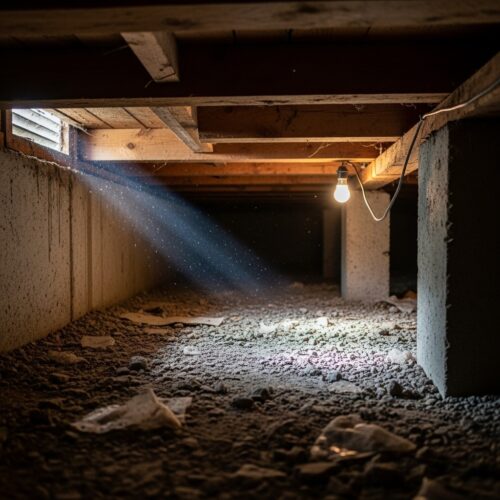
What is the function of a crawl space?
Crawl spaces serve multiple important functions in home construction:
- Access: They offer easy access to plumbing, electrical systems, and HVAC units. This makes repairs and maintenance straightforward.
- Ventilation: They help ventilate the area, reducing moisture and humidity when designed correctly.
- Foundation Support: They elevate the home above ground level, helping to prevent water damage and ensuring stability.
How does a crawl space support structural integrity?
Crawl spaces play a crucial role in maintaining the structural integrity of a home. Here’s how:
- Elevation: By raising the house above the ground, crawl spaces protect it from flooding and water damage.
- Weight Distribution: They provide a stable base, distributing the weight of the home evenly and reducing stress on the foundation.
- Pest Prevention: When properly sealed, crawl spaces can deter pests, keeping your home safe from unwanted guests.
Comparison with Other Foundation Types
Crawl spaces differ from basements and slab foundations in several ways:
Table of Contents
| Feature | Crawl Space | Basement | Slab Foundation |
|---|---|---|---|
| Height | Low (crawl in) | Full height | None (flat) |
| Access | Limited access | Full living space | No access |
| Cost | Moderate | Higher | Lower |
| Moisture Risk | Moderate (can be managed) | Low (if sealed) | Low |
Understanding these differences helps homeowners make informed choices about their foundation options. When considering a crawl space, think about your local environment and how moisture control is crucial for its longevity.
Types of Crawl Spaces: Vented vs. Encapsulated
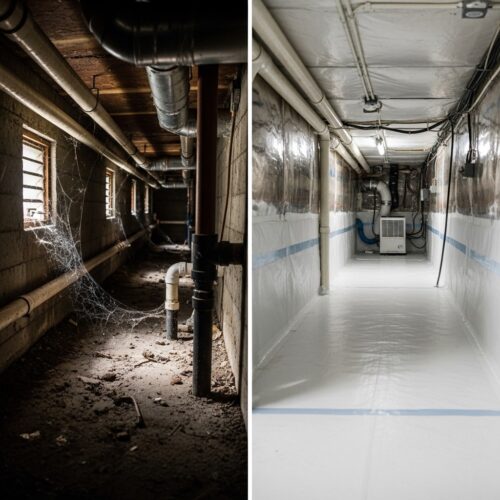
Crawl spaces come in two main types: vented and encapsulated. Each has its own construction style and characteristics. Let’s break it down.
Characteristics of Vented Crawl Spaces
Vented crawl spaces rely on natural airflow. They have vents that allow outside air to circulate. While this might seem like a good idea, it can lead to some problems.
Key Features:
- Airflow: Open vents facilitate air exchange.
- Moisture Issues: Humidity can creep in, often leading to mold and mildew.
- Pests: Vents can invite pests like insects and rodents.
- Insulation: Generally less insulated, which can lead to temperature fluctuations.
Pros and Cons of Vented Crawl Spaces:
| Pros | Cons |
|---|---|
| Lower initial cost | Higher moisture risk |
| Easier access for inspections | Potential for pest infestations |
| May work in drier climates | Less energy-efficient |
Benefits of Encapsulated Crawl Spaces
Encapsulated crawl spaces, also known as conditioned crawl spaces, are sealed off from the outside. This makes them a popular choice for homeowners seeking to protect their homes.
Key Features:
- Sealed Environment: They use a vapor barrier to keep moisture out.
- Controlled Temperature: Better insulation helps maintain a stable temperature.
- Pest Prevention: Fewer entry points for pests.
- Dehumidification: Often include a dehumidifier to manage humidity levels.
Pros and Cons of Encapsulated Crawl Spaces:
| Pros | Cons |
|---|---|
| Superior moisture control | Higher initial cost |
| Reduced risk of mold and pests | Requires regular maintenance |
| Energy-efficient | May need a dehumidifier |
Quick Reference Table: Vented vs. Encapsulated
| Feature | Vented Crawl Spaces | Encapsulated Crawl Spaces |
|---|---|---|
| Airflow | Open vents | Sealed environment |
| Moisture Control | Moderate risk | High protection |
| Pest Control | Vulnerable | Strong prevention |
| Cost | Lower | Higher |
| Insulation | Limited | Comprehensive |
When deciding between the two, consider your local climate and specific needs. A well-maintained encapsulated crawl space can save you money in the long run by preventing costly damage from moisture and pests.
Advantages and Disadvantages of Crawl Spaces
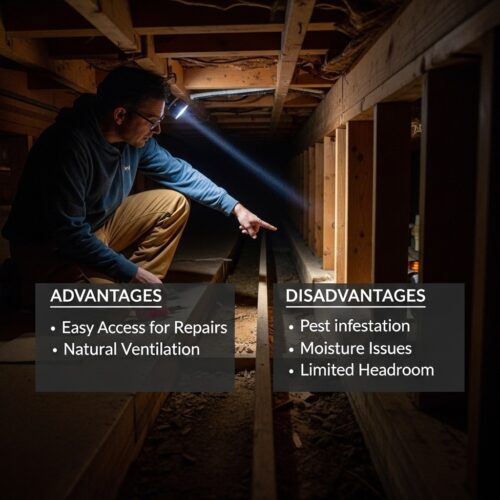
Crawl spaces can be a bit of a mixed bag. They offer various benefits, but there are also some drawbacks to consider. Let’s break it down.
Key Benefits of Crawl Spaces
1. Cost-Effective Foundation: Crawl spaces are generally less expensive to build than basements. They provide a good balance between cost and functionality.
2. Access to Utilities: They offer easy access to plumbing and electrical systems. This makes repairs and maintenance simpler.
3. Improved Ventilation: Vented crawl spaces allow for air circulation, which can help reduce moisture levels in some climates.
4. Pest Control: An encapsulated crawl space can significantly reduce the risk of pests, as seals keep them out.
5. Protection Against Water Damage: In dry climates, a crawl space can elevate your home, protecting it from flooding and moisture-related issues.
Potential Issues to Consider
1. Moisture Problems: Vented crawl spaces are susceptible to humidity and mold growth. This can lead to serious structural issues over time.
2. Limited Storage: While crawl spaces can be used for storage, the space is often cramped. You might not get much room for your seasonal decorations.
3. Pest Infestations: Without proper encapsulation, crawl spaces can become a haven for pests like rodents and insects.
4. Maintenance Needs: Regular inspections and maintenance are essential. Neglect can lead to costly repairs down the line.
Checklist for Evaluating a Crawl Space
- Location: Is your home in a humid area, or is it generally dry?
- Current Condition: Are there signs of moisture or pest damage?
- Access: Can you easily get in and out for maintenance?
- Encapsulation: Is the crawl space encapsulated for moisture control?
- Ventilation: Are there vents and are they functioning properly?
Considering these factors can help you decide if a crawl space is right for your home and environment.
Common Crawl Space Problems and Maintenance Tips
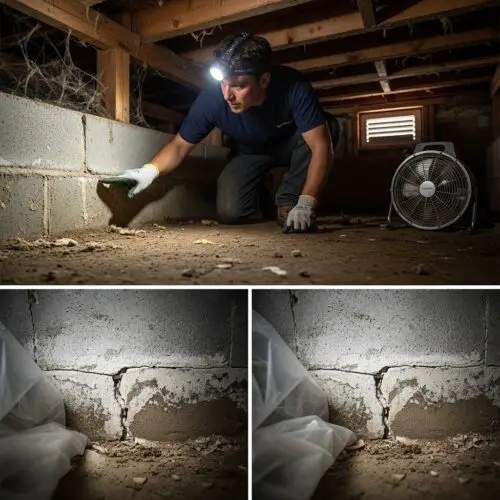
Crawl spaces can be a bit tricky. They’re hidden away and often neglected, but they play a crucial role in your home’s health. Let’s dive into the common issues you might face and how to keep your crawl space in tip-top shape.
Identifying Moisture Problems
Moisture is Public Enemy Number One for crawl spaces. It can lead to mold, mildew, and even structural damage. Here are some signs of moisture problems to watch out for:
- Dampness: Is the air musty or humid?
- Water stains: Look for discoloration on walls or beams.
- Mold growth: Check for dark spots on surfaces.
- Puddles: Are there standing water or damp spots?
To tackle moisture, consider these control strategies:
- Install a vapor barrier: This helps keep moisture from the ground out of your crawl space.
- Ensure proper drainage: Make sure gutters and downspouts direct water away from your foundation.
- Use a dehumidifier: A good dehumidifier can work wonders in keeping humidity levels down.
Preventing Pest Infestations
Pests love crawl spaces just as much as moisture. They can sneak in and cause all sorts of trouble. Here’s how to keep them at bay:
- Seal entry points: Close off any cracks or gaps in the foundation.
- Clear debris: Remove leaves and clutter from around the crawl space entrance.
- Regular inspections: Check for signs of pests like droppings or chewed materials.
Maintenance Schedule Template
Regular maintenance is key to keeping your crawl space healthy. Here’s a simple checklist to follow:
- Monthly:
- Inspect for signs of moisture and pests.
- Check the vapor barrier and insulation.
- Seasonally:
- Clean gutters and check drainage systems.
- Look for cracks in the foundation and seal them.
- Annually:
- Schedule a professional inspection if you notice any issues.
- Consider encapsulation if you live in a humid area.
By keeping an eye on these factors, you can maintain a healthy crawl space and protect your home from potential problems down the road.
Cost Considerations for Crawl Space Construction and Encapsulation
Building and maintaining a crawl space involves various costs. Understanding these can help you make informed decisions. Let’s break down the expenses related to constructing and encapsulating a crawl space.
Construction Costs for Crawl Spaces
The cost to build a crawl space varies based on several factors, including size and location. On average, you might expect to pay between $7,000 and $21,000. Here’s a simple breakdown:
- Small home (up to 1,200 sq. ft.): $7,000 – $10,000
- Medium home (1,200 – 2,500 sq. ft.): $10,000 – $15,000
- Large home (2,500+ sq. ft.): $15,000 – $21,000
These costs include excavation, materials, and labor. It’s wise to get multiple quotes from contractors to find the best deal.
Average Costs for Encapsulation
Encapsulation is a protective measure that can save you money in the long run by preventing moisture issues. The cost of encapsulating a crawl space generally ranges from $1,500 to $15,000, depending on the size and complexity. Here’s a look at typical costs:
- Small crawl space: $1,500 – $3,000
- Medium crawl space: $3,000 – $7,000
- Large crawl space: $7,000 – $15,000
This process often includes installing a vapor barrier, insulation, and possibly a dehumidifier.
Cost Scenario Example
Let’s say you own a medium-sized home with a crawl space. Here’s how the costs might break down:
- Crawl Space Construction: $12,000
- Encapsulation: $5,000
- Total Initial Investment: $17,000
However, investing in encapsulation can prevent future repairs from mold or pests. It’s a smart choice for maintaining your home’s health.
Decision Rule
When considering whether to build or encapsulate a crawl space, ask yourself:
- Is my home in a humid area?
- Do I plan to use the crawl space for storage?
- What is my budget for maintenance and potential repairs?
This approach can guide you to make the best choice for your situation.
Crawl Space vs. Other Foundation Types: A Comparative Overview
When it comes to choosing a foundation for your home, you have options: crawl spaces, basements, and slab foundations. Each one has its pros and cons, so let’s break them down.
Crawl Space vs. Basement: Key Differences
Crawl Spaces:
- Height: Usually low, requiring you to crawl.
- Access: Easier access to plumbing and electrical systems.
- Cost: Generally cheaper than basements.
- Moisture Control: Can be more vulnerable to moisture unless encapsulated.
Basements:
- Height: Tall enough for standing.
- Usability: Can be finished into living spaces.
- Cost: More expensive due to excavation and construction.
- Moisture Control: Can be prone to flooding if not properly managed.
Comparison Takeaway:
If you want extra space for storage or living, a basement is ideal. But if you’re looking for a simple, cost-effective solution, a crawl space might be the way to go.
Crawl Space vs. Slab Foundation: Which is Better?
Crawl Spaces:
- Ventilation: Can be vented or encapsulated.
- Pest Control: More susceptible to pests without proper care.
- Flexibility: Easier to access utilities.
Slab Foundations:
- Height: No space underneath, so no access to plumbing or electrical systems.
- Cost: Often the cheapest option for foundation.
- Pest Control: Less risk for pest infestations since it’s directly on the ground.
Comparison Takeaway:
If you live in a dry area and need easy access to utilities, go for a crawl space. If you want a low-maintenance option, a slab foundation is a solid choice.
Decision Matrix
Here’s a quick decision matrix to help you choose:
| Foundation Type | Cost | Usability | Maintenance | Pest Control |
|---|---|---|---|---|
| Crawl Space | Moderate | Limited | Requires upkeep | Moderate |
| Basement | High | High | Requires management | Moderate |
| Slab Foundation | Low | None | Low | Low |
Consider your budget, space needs, and maintenance willingness before deciding. Each option has its unique benefits and challenges, so choose what fits your lifestyle best!
Conclusion: Navigating the World of Crawl Spaces
Crawl spaces play an essential role in home design and maintenance. They are not just empty spaces beneath your house; they serve as crucial foundations, providing access to plumbing and electrical systems. Understanding their types and functions can help you maintain your home better.
Understanding Crawl Space Types
There are mainly two types of crawl spaces: vented and encapsulated.
- Vented Crawl Spaces: These have vents that allow outside air to flow in. While they can be cost-effective, they are more prone to moisture, mold, and pests.
- Encapsulated Crawl Spaces: Also known as conditioned crawl spaces, these are sealed off from the elements. They offer better protection against moisture and pests, making them a superior choice for many homeowners.
Advantages and Disadvantages
Each type of crawl space comes with its pros and cons.
- Advantages of Encapsulated Spaces:
- Better moisture control
- Reduced risk of mold
- Pest prevention
- Disadvantages of Vented Spaces:
- Higher risk of moisture issues
- More susceptible to pest infestations
Maintenance and Moisture Control Strategies
Proper maintenance is key for the longevity of your crawl space. Here are some tips:
- Regular Inspections: Check for signs of moisture, pests, or structural damage. Aim for inspections at least twice a year.
- Moisture Barriers: Use a vapor barrier to prevent moisture from seeping in.
- Dehumidifiers: Consider installing a dehumidifier in encapsulated spaces to maintain low humidity levels.
Future of Crawl Spaces in Home Construction
As home design evolves, crawl spaces are becoming more refined. With an increasing focus on energy efficiency and pest control, encapsulated crawl spaces are likely to become the standard. Homeowners are recognizing their benefits and investing in better solutions to ensure a healthier living environment.
Understanding crawl spaces empowers you to make informed decisions about your home. Whether you’re building new or maintaining an existing home, knowing their role can save you time and money in the long run.
Frequently Asked Questions
These quick answers cover the most common questions about this topic, including key details, practical tips, and common concerns.
What not to store in a crawl space?
You should avoid storing items that can be damaged by moisture or pests, such as paper, cardboard, clothing, and food. These materials can attract pests or mold if the crawl space is damp. Also, avoid storing heavy or bulky items that block airflow or ventilation, which can lead to moisture buildup and structural issues.
Can you sprinkle baking soda in a crawl space?
Yes, sprinkling baking soda can help absorb odors and reduce mold growth temporarily. However, it is not a long-term solution for moisture or mold problems. For effective moisture control, consider installing vapor barriers, dehumidifiers, and proper sealing rather than relying solely on baking soda.
How long can water sit in a crawl space?
Water should not sit in a crawl space for more than 24 to 48 hours. Prolonged standing water can lead to mold growth, wood rot, and structural damage. If you notice standing water, it’s important to address the source of the water and dry out the area promptly.
What is the average cost to encapsulate a crawl space?
Encapsulation typically costs between $1,500 and $15,000, depending on the size and condition of the crawl space. Smaller spaces are on the lower end, while larger or more complex projects cost more. The investment usually includes vapor barriers, insulation, sealing, and sometimes dehumidifiers.
How do I know if my crawl space needs encapsulation?
Signs include persistent moisture, mold or mildew, musty odors, pest infestations, or visible water stains. If your crawl space is vented and experiences high humidity or water issues, encapsulation can help control moisture and improve home energy efficiency.
What are the signs of moisture problems in a crawl space?
Indicators include damp or wet insulation, mold growth, a musty smell, water stains on walls or beams, and rusted metal components. Excess humidity may also cause condensation on surfaces and promote pest activity.
How often should I inspect my crawl space?
Inspect your crawl space at least twice a year—preferably in spring and fall. Regular inspections help catch issues early, such as moisture buildup, pest entry, or structural damage. More frequent checks are recommended if you live in a humid or flood-prone area.
What should readers know about detailed visual guides or diagrams of crawl space types?
Visual diagrams can help you identify whether your crawl space is vented, encapsulated, or a different type. They clarify construction differences and show where to look for issues like vents, vapor barriers, or insulation. Consulting these visuals aids in understanding maintenance needs and repair options.
What should readers know about comprehensive inspection checklists?
A thorough checklist covers signs of moisture, pests, structural damage, insulation condition, and ventilation. Regularly using a checklist ensures you don’t miss critical issues and helps maintain a healthy crawl space, ultimately protecting your home’s foundation.
What should readers know about real-world case studies of repairs and encapsulation success stories?
Case studies demonstrate how proper maintenance, moisture control, and encapsulation can prevent costly repairs. They show real examples of homeowners improving energy efficiency, eliminating pests, and avoiding mold problems through professional interventions. These stories highlight best practices and the long-term benefits of proactive crawl space management.