
Deciding between a zero-turn mower and a lawn tractor depends on your lawn size and specific needs. Zero-turn mowers excel in speed and maneuverability, making them ideal for complex lawns, while lawn tractors offer versatility and ease of use for varied terrains. This guide will help you choose the right one for your yard.
Understanding Zero-Turn Mowers and Lawn Tractors
When it comes to lawn care, choosing between a zero-turn mower and a lawn tractor can be a game-changer. Each has its strengths and ideal applications. Let’s break down what each one is all about.
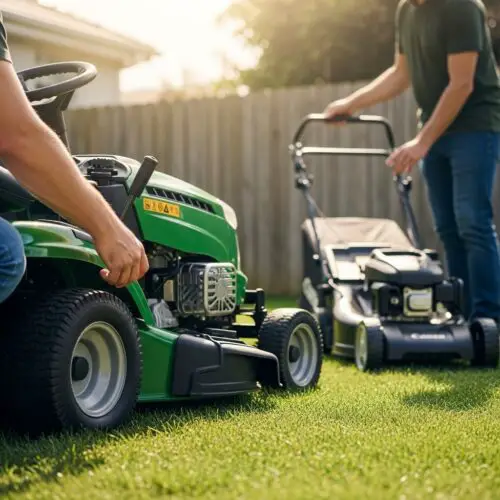
What is a Zero-Turn Mower?
A zero-turn mower is designed for agility. With a unique steering system, it allows you to pivot 360 degrees easily. This means you can zip around obstacles like trees and flower beds without missing a beat.
Key Features:
- Maneuverability: The independent controls for each rear wheel let you make tight turns.
- Speed: Zero-turn mowers can cut your mowing time significantly.
- Ideal Use: Best for large, flat areas and yards with various landscaping features.
Popular Models:
Table of Contents
- Husqvarna Z254F 54 in. 26 HP Zero Turn Mower: Great for residential lawns with lots of curves and obstacles. Check Price on Amazon.
What is a Lawn Tractor?
Lawn tractors, on the other hand, are the workhorses of lawn care. They are versatile and can handle various tasks beyond mowing. If your yard includes slopes or diverse terrain, a lawn tractor might be the way to go.
Key Features:
- Versatility: Can tow attachments like trailers and spreaders.
- User-Friendliness: Easy to operate, making them suitable for different lawn conditions.
- Ideal Use: Perfect for yards with hills, multiple landscaping features, or larger areas requiring varied tasks.
Popular Models:
- John Deere X350: Excellent for gentle slopes and can handle attachments for added functionality.
Quick Comparison
| Feature | Zero-Turn Mower | Lawn Tractor |
|---|---|---|
| Maneuverability | Excellent for tight spaces | Good, but not as agile |
| Speed | Faster cutting times | Slower, but steady |
| Versatility | Primarily for mowing | Can tow and perform multiple tasks |
| Best Terrain | Flat, obstacle-rich yards | Slopes and varied landscapes |
Choosing the right mower depends on your specific lawn conditions and needs. If you have a flat yard with lots of obstacles, a zero-turn mower is likely your best bet. For varied terrains and additional tasks, consider a lawn tractor.
Key Differences in Design and Functionality

When choosing between a zero-turn mower and a lawn tractor, design and functionality play a crucial role. Each has its own unique features that cater to different mowing needs.
Maneuverability and Cutting Precision
Zero-turn mowers are champions of maneuverability. They can pivot 360 degrees, making them perfect for navigating tight spaces and around obstacles. This agility allows for precise cutting around flower beds, trees, and other landscaping features.
On the other hand, lawn tractors have a more traditional steering mechanism. They don’t turn quite as sharply, which can make them less ideal for intricate lawns. However, they excel in open spaces where you can make wide turns without much hassle.
Speed and Efficiency
Speed is another key difference. Zero-turn mowers typically have wider cutting decks and faster speeds. This means they can cover large areas quickly, which is a huge time-saver for big lawns. For example, a zero-turn mower can finish mowing a flat yard in less time compared to a lawn tractor.
Lawn tractors, while slower, offer steady cutting performance. They are better suited for uneven terrains and slopes, where maintaining speed can be tricky.
Quick Comparison Table
| Feature | Zero-Turn Mower | Lawn Tractor |
|---|---|---|
| Maneuverability | Excellent for tight spaces | Good, but less agile |
| Cutting Speed | Faster cutting times | Slower, but steady |
| Terrain Suitability | Best for flat, obstacle-rich yards | Ideal for slopes and varied landscapes |
| Additional Functions | Primarily for mowing | Can tow and perform multiple tasks |
When deciding, consider your lawn’s layout and your mowing needs. If you prioritize speed and maneuverability, a zero-turn mower like the Husqvarna Z254F 54 in. 26 HP Zero Turn Mower might be your best option. If you need versatility for various tasks, a lawn tractor could be the way to go.
Cost Analysis: Initial Investment vs Long-Term Savings

When choosing between a zero-turn mower and a lawn tractor, cost is a big factor. Let’s break down the initial costs and what you can expect in terms of maintenance over time.
Upfront Costs
Starting with the upfront costs, zero-turn mowers tend to be on the pricier side. A good zero-turn mower can set you back anywhere from $2,500 to $5,000. In contrast, lawn tractors are usually more budget-friendly, with prices starting around $1,200.
Here’s a quick comparison:
| Mower Type | Price Range |
|---|---|
| Zero-Turn Mower | $2,500 – $5,000 |
| Lawn Tractor | $1,200 – $3,000 |
Maintenance Costs Over Time
Next, let’s talk maintenance. Both mowers require upkeep, but the costs can vary.
- Zero-Turn Mowers: These machines often need more frequent servicing. Expect to pay around $150 to $300 annually for maintenance, depending on usage. Routine tasks include oil changes, blade sharpening, and tire replacements.
- Lawn Tractors: Generally, they have lower annual maintenance costs, around $100 to $200. They’re designed for versatility and often come with features that simplify upkeep.
Example Scenario: If you use either mower for about five years, here’s how the costs might stack up:
- Zero-Turn Mower Total Costs: $3,500 (average purchase price) + $1,500 (maintenance over 5 years) = $5,000
- Lawn Tractor Total Costs: $1,800 (average purchase price) + $800 (maintenance over 5 years) = $2,600
Choosing the right mower for your lawn isn’t just about the initial cost. It’s crucial to consider how much you’ll spend on maintenance too. If you’re leaning towards speed and efficiency, a zero-turn mower like the Husqvarna Z254F 54 in. 26 HP Zero Turn Mower might be worth the investment. However, if you’re looking for versatility and lower maintenance, a lawn tractor could be your best bet.
Terrain Suitability: Choosing the Right Mower for Your Lawn
The terrain of your yard plays a huge role in deciding between a zero-turn mower and a lawn tractor. Each type has its strengths and weaknesses depending on the landscape.
Ideal Conditions for Zero-Turn Mowers
Zero-turn mowers shine in flat, obstacle-rich areas. Their design allows for tight turns, making them perfect for lawns with curves and landscaping features like trees and flower beds. Here are some ideal conditions for using a zero-turn mower:
- Flat Terrain: They excel on level ground where speed and maneuverability are key.
- Obstacles: Great for navigating around trees, gardens, and flower beds without missing spots.
- Larger Spaces: They can cover more ground quickly, reducing your mowing time.
For example, if you have a sprawling lawn with lots of curves and obstacles, a zero-turn mower can help you mow quickly and efficiently. You’ll spend less time going back over missed patches.
When to Opt for a Lawn Tractor
Lawn tractors are the go-to choice for uneven or sloped terrain. They offer more stability and can handle different landscaping needs. Here are some situations where a lawn tractor might be better:
- Sloped Areas: Their weight distribution makes them safer and more stable on hills.
- Versatility: They can handle various tasks, like towing attachments for gardening or hauling.
- Rough Terrain: Better suited for uneven ground where a zero-turn might struggle.
If your yard has significant slopes or varying terrain, a lawn tractor will provide the stability and versatility you need.
Quick Comparison Checklist
| Feature | Zero-Turn Mower | Lawn Tractor |
|---|---|---|
| Terrain Suitability | Flat, obstacle-rich | Sloped, uneven |
| Maneuverability | High | Moderate |
| Speed | Fast | Slower |
| Versatility | Limited | High |
| Maintenance | Higher | Lower |
In summary, the best choice depends on your lawn’s specific conditions. Consider the layout, slopes, and obstacles before making a decision.
Pros and Cons of Zero-Turn Mowers and Lawn Tractors
Choosing between a zero-turn mower and a lawn tractor can be tricky. Each has its strengths and weaknesses. Here’s a breakdown to help you decide.
Advantages of Zero-Turn Mowers
- Maneuverability: Zero-turn mowers can pivot 360 degrees. This makes it easy to navigate around trees and flower beds.
- Speed: They cut grass faster than lawn tractors, saving you time on larger properties.
- Cutting Precision: With a tighter turning radius, you’ll miss fewer patches of grass, resulting in a cleaner look.
- Efficiency: Great for flat, obstacle-rich yards. You can get more done in less time.
Disadvantages of Lawn Tractors
- Speed: Lawn tractors are generally slower, which can be a downside if you have a large area to cover.
- Maneuverability: They struggle in tight spaces. If your yard has many obstacles, you might find it challenging to get around.
- Weight: Heavier than zero-turn mowers, they can be tougher on uneven terrain.
- Cost: While often less expensive than zero-turn mowers, the cost can still add up, especially with maintenance.
Quick Pros and Cons Comparison
| Feature | Zero-Turn Mower | Lawn Tractor |
|---|---|---|
| Maneuverability | High | Moderate |
| Speed | Fast | Slower |
| Cutting Precision | Excellent | Good |
| Terrain Suitability | Flat, obstacle-rich | Sloped, uneven |
| Maintenance Costs | Higher | Lower |
When deciding, think about your yard’s layout and your mowing preferences. If you value speed and precision and have a flat yard, a zero-turn might be for you. If your lawn has slopes and you need versatility, a lawn tractor could be the better choice.
Final Recommendations: Which Should You Buy?
Choosing between a zero-turn mower and a lawn tractor can feel overwhelming. Each has its strengths and is suited for different needs. Let’s break it down to help you make the best choice for your yard.
Key Considerations for Your Decision
1. Yard Size and Layout
- Zero-Turn Mower: Best for large, flat areas with obstacles. Their speed and maneuverability shine here.
- Lawn Tractor: Ideal for properties with slopes or uneven terrain. They handle bumps better and offer a smoother ride.
2. Mowing Style and Frequency
- If you mow frequently and want quick results, go for a zero-turn. They cut down mowing time significantly.
- If your lawn has varying needs, like bagging leaves or pulling attachments, a lawn tractor offers more versatility.
3. Maintenance and Costs
- Zero-Turn Mowers: Generally have higher maintenance costs. They need more care due to their complex systems.
- Lawn Tractors: Typically have lower maintenance costs. They are simpler and easier to repair.
Quick Pros and Cons
| Feature | Zero-Turn Mower | Lawn Tractor |
|---|---|---|
| Maneuverability | High | Moderate |
| Speed | Fast | Slower |
| Cutting Precision | Excellent | Good |
| Terrain Suitability | Flat, obstacle-rich | Sloped, uneven |
| Maintenance Costs | Higher | Lower |
Decision Framework
Ask yourself these questions:
- What is the size and shape of your lawn?
- Do you prioritize speed or versatility?
- How much time and money can you dedicate to maintenance?
By answering these, you can narrow down your options. If speed on a flat lawn is your priority, a zero-turn is the way to go. If you need versatility and smoother handling on slopes, a lawn tractor is your best bet.
With these insights, you’re better equipped to make a choice that fits your lawn care needs perfectly!
Frequently Asked Questions
These quick answers cover the most common questions about this topic, including key details, practical tips, and common concerns.
Zero-turn vs a lawn tractor: Which should you buy?
Choosing between a zero-turn mower and a lawn tractor depends on your lawn’s size, terrain, and your mowing needs. Zero-turns excel in speed and maneuverability on flat, obstacle-rich lawns, while lawn tractors are better for larger, uneven, or hilly areas. Consider your yard layout and tasks to determine the best fit.
Should I get a zero-turn mower or a lawn tractor?
If you have a flat yard with many obstacles and want quick, precise cuts, a zero-turn mower is ideal. For larger properties with slopes or varied terrain, a lawn tractor offers better stability and versatility. Your decision should also factor in maintenance costs and budget.
What are the disadvantages of zero-turn mowers?
Zero-turn mowers tend to be more expensive upfront and may require more frequent maintenance. They are less suitable for hilly or uneven terrain due to stability issues. Additionally, their complex steering systems can be harder for beginners to operate.
How long would it take to mow 3 acres with a zero-turn?
A zero-turn mower can typically mow 3 acres in about 1 to 2 hours, depending on the mower’s deck size, speed, and terrain. Larger decks and higher speeds reduce mowing time, making zero-turns highly efficient for big lawns.
What riding mower has the least problems?
Generally, well-known brands like John Deere, Toro, and Husqvarna are recognized for reliability. Regular maintenance and proper operation are key to minimizing issues. Models with simple designs and accessible parts tend to have fewer problems over time.
Can a lawn tractor handle rough terrain?
Yes, many lawn tractors are designed to handle slopes and uneven ground. Look for models with heavy-duty tires, a low center of gravity, and sturdy frames. Proper usage and maintenance also improve their performance on rough terrain.
Is it worth investing in a zero-turn mower?
If you prioritize mowing speed, precision, and have a flat, obstacle-filled lawn, a zero-turn mower can be a worthwhile investment. Its efficiency can save you time and effort, especially on larger properties. However, consider the higher initial cost and maintenance needs.
What features should I look for in a lawn mower?
Key features include deck size, engine power, maneuverability, and ease of maintenance. For zero-turns, look for adjustable steering controls and comfortable seats. For lawn tractors, consider towing capacity and attachment compatibility. Durability and brand reputation are also important.