
Rose lower classifications are categories based on specific features such as flower form, growth habit, and historical origin, helping gardeners select and understand different rose varieties.
This article explains the main criteria used to classify roses into lower categories, including hybrid teas, floribundas, and shrub roses. It clarifies how these distinctions influence gardening choices and the characteristics to look for when selecting roses for different purposes.
Introduction to Rose Classifications
Understanding how roses are categorized helps gardeners, breeders, and enthusiasts select the right types for their purposes. Classification into different groups is not arbitrary; it reflects both the historical development of roses and their botanical traits. By grouping roses based on shared characteristics, growers can better predict how a rose will perform in specific climates, how it might grow, and what care it might need. This system also aids in conservation efforts by highlighting the diversity and origins of various rose varieties.
Disclosure: As an Amazon Associate I earn from qualifying purchases.
For gardeners looking to optimize their rose care, suitable tools can support better cultivation practices. Shop suitable gardening tools for rose cultivation on Amazon (affiliate link).
Table of Contents
1. How classification helps growers
- Facilitates identification of suitable rose types for different climates and soil conditions.
- Streamlines the breeding process by identifying parent plants with desired traits.
- Improves maintenance and care by understanding growth habits, flowering times, and disease resistance.
2. Overview of botanic and historical grouping
Rose classifications traditionally divide into categories based on both botanical origins and historical hybridization records. Botanical classifications, such as species and subspecies, examine the plant’s natural lineage and native environments, which can date back centuries or even millennia. Conversely, historical classifications focus on how roses were bred and hybridized over time, often beginning in the 18th and 19th centuries, resulting in groups like Hybrid Teas or Floribundas. This dual system provides a comprehensive framework, encompassing both natural relationships and human-influenced hybridization, helping to clarify the complex and rich diversity of roses.
By understanding these classifications — their categories, origins, and development timeline — rose cultivators can make more informed decisions, improve cultivation techniques, and deepen appreciation for the intricate history behind these beloved plants.
Main Categories of Roses and Their Criteria
Roses are classified into broad categories based on their botanical features and historical emergence. These classifications help gardeners and collectors understand their origins, growth habits, and physical characteristics, guiding cultivation and appreciation choices.
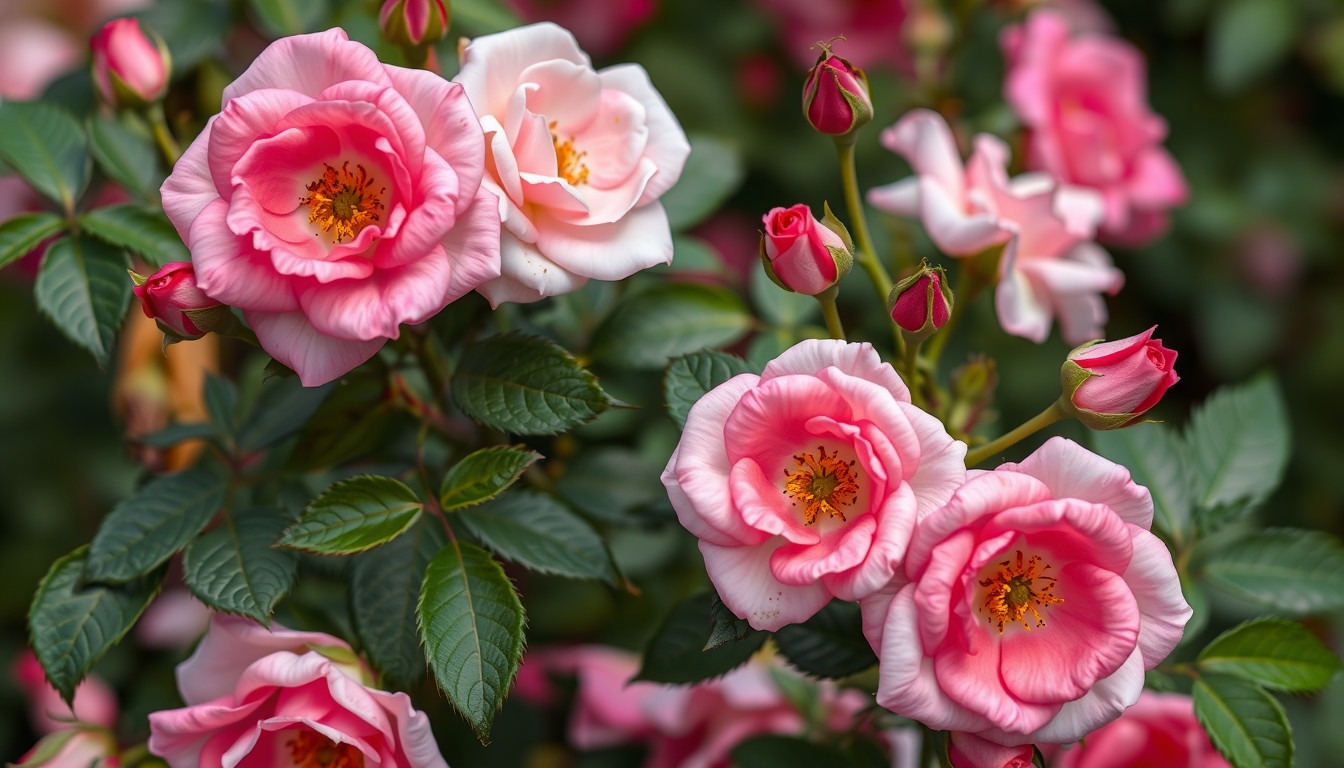
You can see how classification helps in identifying roses suited for specific purposes, as discussed in [LINK]descriptive anchor[/LINK] to understand how these classifications impact garden design and maintenance, which explains the variations in physical traits.
1. Species (Wild Roses)
These are natural, undomesticated roses that grow without human intervention. Typically, species roses have simple, five-petaled flowers and woody, thorny stems. They often have a vigorous growth habit, are hardy, and propagate easily through seed and root suckers. Their flower sizes vary from small to medium, and leaves are usually pinnately compound with serrated margins. They are foundational to many cultivated roses, serving as the ancestors of hybrid varieties.
If you're interested in exploring native or wild roses, identification guides can be useful. Shop suitable wild rose identification guides on Amazon (affiliate link).
2. Old Garden Roses (Pre-1867)
This group comprises roses cultivated before the Victorian era, featuring varieties bred from naturally occurring species or early hybridizations. They are valued for their strong fragrance, hardy nature, and enduring bloom cycles. Many old garden roses bloom only once a season, producing large, often fragrant, full-petaled roses. Their growth habit tends toward sprawling or shrub-like forms, often forming dense bushes with lush foliage. Examples include Damask, Gallica, and Centifolia roses, which have contributed traits to modern breeding but are less resistant to diseases compared to newer varieties.
3. Modern Roses (Post-1867)
Following the advent of hybridization techniques, this category includes roses developed after 1867, focusing on repeat blooming and improved disease resistance. They are often classified into groups such as Hybrid Teas, Floribundas, and Polyanthas. Modern roses tend to have a more compact growth habit with bushy, upright forms suitable for formal gardens. Flowers are generally larger, with a broader color palette, and many varieties are bred for their continuous blooming ability throughout the growing season. Hybridization has also enhanced their resilience, making them more adaptable to different climates.
| Classification Category | Physical Characteristics | Origin and Emergence |
|---|---|---|
| Species (Wild Roses) | Small to medium flowers, five petals, thorny stems, simple leaves | Natural, existing before domestication |
| Old Garden Roses | Large, fragrant, full petals, once-blooming, shrub-like habit | Before 1867, hybrids or selections from wild species |
| Modern Roses | Large flowers, multiple blooms per season, various colors, compact | Post-1867, developed through hybridization for repeat blooming and disease resistance |
Physical Traits Sent to Classification
When classifying roses into lower categories, observable physical traits provide the most reliable clues. These traits include the size and shape of the flowers, the duration and pattern of blooming, and the growth habit of the plant itself. Recognizing these characteristics helps gardeners and horticulturists determine the appropriate category for a rose, which in turn influences planting choices, care routines, and aesthetic expectations.
Learning to observe physical traits is crucial for classification, as elaborated in [LINK]descriptive anchor[/LINK] for identifying physical traits in roses that influence their classification and care, which covers how these traits affect care.
1. Flower size and shape
The size of the rose blooms is one of the primary distinguishing traits. For instance, miniature roses produce flowers typically less than 2 inches in diameter, whereas shrub roses tend to have larger, more expansive blooms. Shape is another variable — some roses exhibit classic cups or rosettes, while others display more open, flat, or even hipped formations. These physical details are consistent within categories and aid in quick identification and classification.
For those who collect or arrange roses, quality scissors can help achieve perfect cuts. Shop suitable flower arranging scissors on Amazon (affiliate link).
2. Blooming period
The length and pattern of the blooming period provide significant classification cues. Some roses, like many shrub or woodland species, bloom only once per season, producing a burst of flowers over a few weeks. Conversely, many floribunda or hybrid tea roses bloom repeatedly throughout the growing season, sometimes in waves. The duration of bloom influences the perceived classification and helps distinguish between the more ephemeral or persistent types.
3. Growth habit
The overall growth form of the rose plant further refines classification. Climbing roses, for example, exhibit long, arching canes that require support structures, setting them apart from bush or shrub varieties with more compact, rounded shapes. Rose lower categories often correspond to specific plant forms; for instance, a groundcover rose forms a low, spreading mat, whereas a standard rose develops into a tall, single-stemmed shrub. These physical traits not only assist in classification but also inform care requirements and planting considerations.
Understanding these observable traits is essential for accurate classification in the lower categories of roses. Each trait — flower size and shape, blooming period, and growth habit — contributes vital information that helps determine the most suitable cultivation practices and aesthetic expectations, ultimately leading to healthier plants and more satisfying garden displays.
Historical and Botanical Factors in Classification
The classification of roses, particularly the lower categories, often reflects both the evolutionary history of the genus Rosa and specific botanical features. Historically, the formal grouping of roses began in the 19th century, with significant developments around 1867, which remains a key date for distinguishing between older, traditional varieties and more recent hybrids. Botanical features, such as petal arrangement, flower structure, and foliage, also play a critical role in differentiating lower classifications, providing concrete observable traits that align with evolutionary lineage.
The influence of botanical features and evolution on classification is discussed in depth in [LINK]descriptive anchor[/LINK] that explores how evolutionary and botanical features shape classification, offering insight into botanical criteria.
1. Pre- and Post-1867 Development
Prior to 1867, rose classifications primarily focused on traditional or regional groupings, often based on local horticultural practices and superficial differences. The year is significant because, following the advent of hybridization and greater botanical understanding, the American Rose Society and other organizations began to formalize classification schemes that incorporated evolutionary insights. Roses in existence before 1867, known as Old Garden Roses, tend to exhibit traits that are closer to wild ancestors, such as simpler flower forms and often fragrance. Post-1867, new classifications emerged, including modern hybrids, with a focus on hybridization success and repetitive blooming patterns, which were not a feature of older classes.
2. Genetic Markers and Flower Structure
Modern classification increasingly relies on genetic markers, which allow botanists to identify relationships and distinct lineages within the genus Rosa with precision. These molecular techniques complement traditional morphological traits by revealing evolutionary linkages that are not visually apparent. For example, specific DNA sequences can indicate whether a rose belongs to a particular species or hybrid, aiding the placement of lower classifications such as miniature roses, floribundas, or grandifloras. Flower structure features—such as petal count, arrangement, and the presence or absence of fragrance—continue to be practical criteria for classifying roses into these categories, reflecting both their evolutionary development and horticultural qualities.
Implications for Gardeners and Rose Collectors
Understanding rose classification and its influence on garden use helps enthusiasts select varieties that match their desired outcomes, whether for aesthetics, maintenance, or historical significance. Proper classification guides choices among hybrid types and heritage roses, shaping garden design and long-term care strategies.
1. Choosing Easy-Care Versus Show Roses
Classification plays a key role in determining a rose’s suitability for different garden styles and maintenance levels. For example, shrub roses and species roses are generally more resilient and require less attention, making them ideal for low-maintenance landscapes. Conversely, hybrid teas and grandifloras, with their large, showy blooms, often need precise pruning and disease management, fitting for dedicated rose gardens where visual impact is prioritized.
Heritage roses and old garden varieties tend to have a more forgiving nature due to their adaptation over centuries, making them accessible options for amateur gardeners. Hybrid types, especially those bred for specific traits like color or bloom form, often demand more focused care. Recognizing the classification category helps gardeners balance their interest in elegant, high-impact roses with their capacity for ongoing maintenance.
2. Matching Classification to Landscape Style
Different rose classifications suit various landscape themes. Climbing roses and ramblers, which fall under specific classifications based on their growth and bloom characteristics, excel along fences, arbors, or pergolas, creating vertical accents in formal gardens. Groundcover and shrub roses blend well into naturalized settings, reducing the need for frequent pruning while providing consistent color and structure.
Hybrid types, such as floribundas with their clustered blooms, lend themselves to manicured, symmetrical beds, while species roses with their natural form complement wild or cottage-style gardens. Heritage roses often evoke a sense of history and tradition, making them fitting for historic garden restorations or theme gardens focused on botanical preservation. Correct classification ensures the chosen roses enhance the intended aesthetic style and functional purpose of the landscape.
Furthermore, molecular techniques now aid botanists in identifying relationships within the genus Rosa, which helps in accurately placing lower classifications—like miniature roses, floribundas, or grandifloras—based on both evolutionary lineage and horticultural traits. Flower structure features such as petal count, fragrance, and bloom form remain practical identifiers, but the integration of DNA analysis offers a deeper understanding for serious collectors aiming to preserve or expand specific classifications.
Frequently Asked Questions
1. What are the main categories of roses?
The main categories are Species (Wild Roses), Old Garden Roses, and Modern Roses, distinguished by their origin, history, and flowering habits.
2. How do physical traits influence rose classification?
Flower size, shape, growth habit, and blooming pattern are key traits that help identify and classify roses into specific groups.
3. Why is the date 1867 significant in rose history?
1867 marks the beginning of modern hybrid roses, with the introduction of the hybrid tea ‘La France’, shifting rose breeding towards repeat-blooming, disease resistance, and new classifications.
4. How are hybrid roses classified?
Hybrid roses are typically classified as Modern Roses, including groups like Hybrid Teas and Floribundas, based on their hybrid origins, bloom patterns, and physical traits.
5. Can a rose belong to more than one classification?
Usually, roses are assigned to a primary category based on their dominant characteristics, but some cultivars may share traits and fit into multiple groups temporarily or as they evolve.
6. How does classification affect rose care?
Classification guides care by indicating growth habits, flowering times, and disease resistance, helping gardeners tailor watering, pruning, and protection strategies.
7. Are old garden roses and heritage roses the same?
Often used interchangeably, both terms refer to roses cultivated before 1867, valued for fragrance and hardy nature, but ‘heritage’ may also include some older or historically significant varieties.